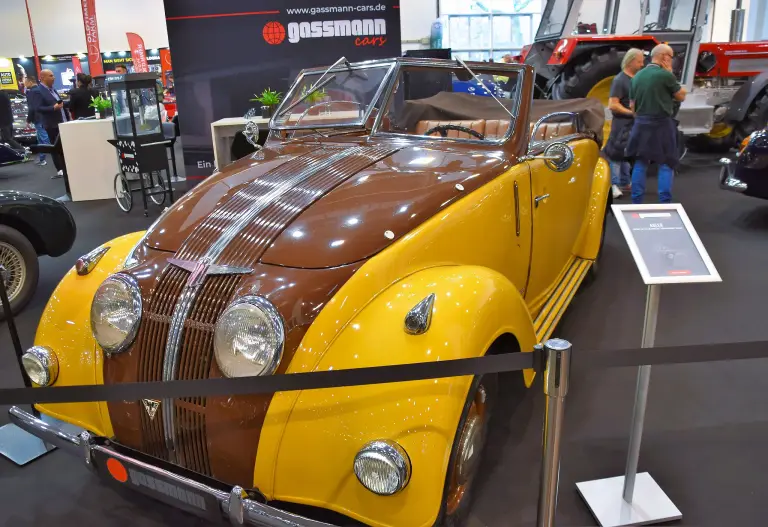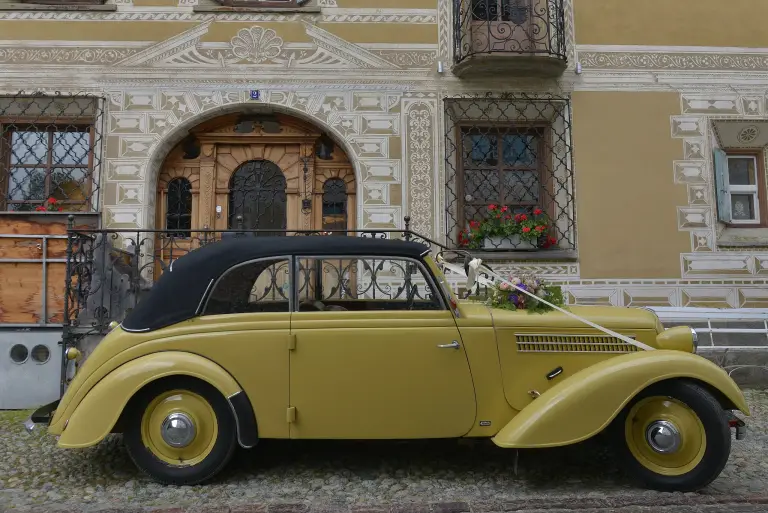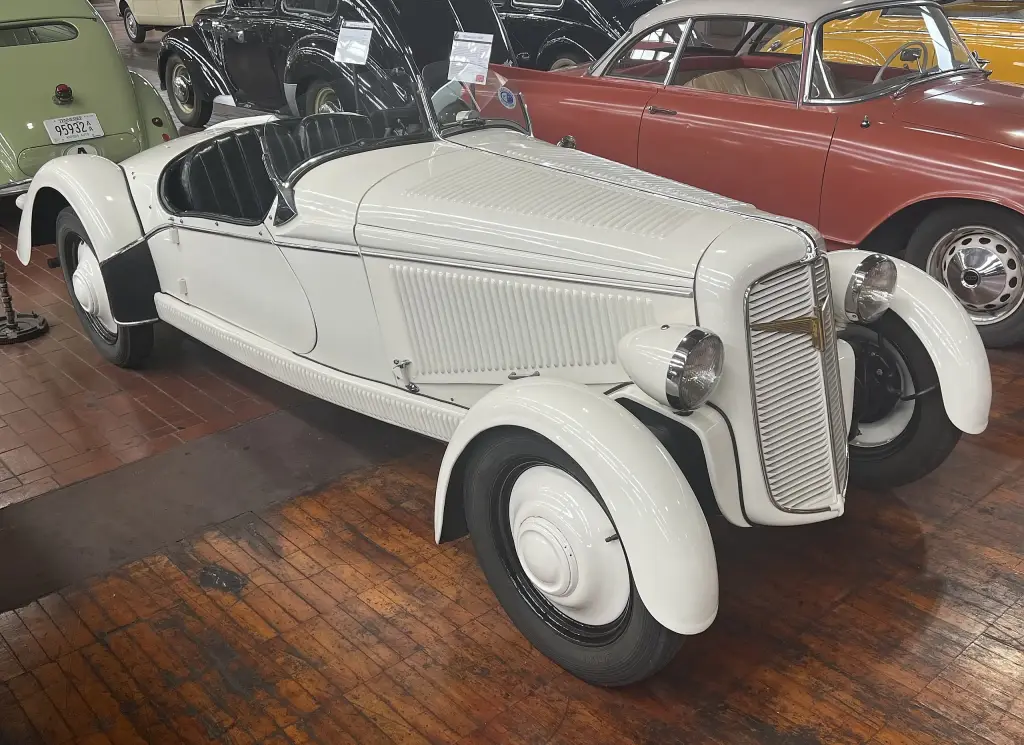
The Adler Trumpf Junior was a small family car introduced by Adler early in 1934. It was conceived as a smaller version of the Adler Trumpf, already on sale for two years, and was meant to win a share of the growing market that DKW was creating with its inexpensive front-wheel-drive cars. Development was shared between Hans Gustav Röhr and Adler chief engineer Josef Dauben.
Adler Trumpf Junior at a glance
| Maker | Adlerwerke, Frankfurt am Main |
|---|---|
| Production | 1934–1941 |
| Engine | 995 cc four-cylinder, side valves |
| Power | 25 PS at 4,000 rpm |
| Top speed | 90 km/h |
| Drive | front-wheel drive |
| Gearbox | four-speed manual, column-mounted lever |
| Wheelbase | 2,630 mm |
| Price in 1934 | 2,750 Marks Limousine, 2,650 Cabrio-Limousine |
| Built | 23,013 of the 1G; 78,827 of the 1E |
History of the Adler Trumpf Junior
Small car, advanced chassis
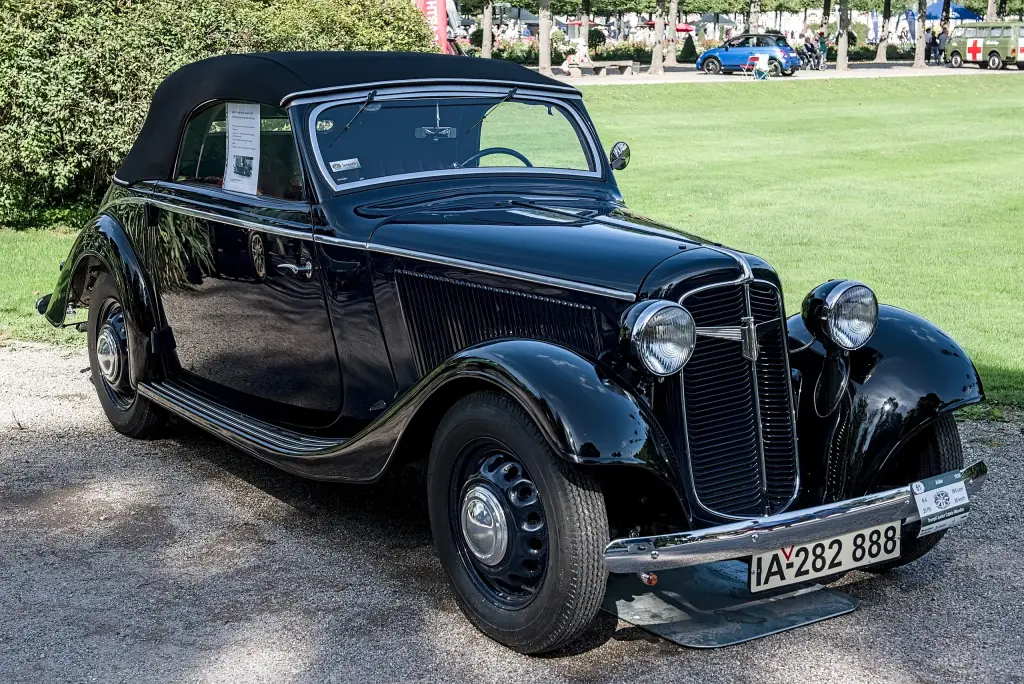
The Trumpf Junior used a 995 cc four-cylinder side-valve engine with 25 PS at 4,000 rpm and a claimed 90 km/h top speed. Power went to the front wheels through a four-speed gearbox with a column-mounted lever. Under the skin the chassis was more advanced than the engine: independent suspension used two transverse leaf springs at the front and trailing arms with torsion bars at the rear. Cable brakes and a side-valve engine were less modern, as the German Wikipedia notes.
Timber, then steel
At launch in 1934 buyers chose between a two-door Limousine at 2,750 Marks and a two-door Cabrio-Limousine with a folding canvas roof at 2,650 Marks. DKW’s Meisterklasse F4 cost 2,500 and 2,600 Marks respectively, so the comparison was unavoidable. The 1935 range grew to include two- and four-seat cabriolets and two-seat sports models, topped by a sports version with 25 PS at 4,150 Marks. Early bodies used a timber frame covered in synthetic leather, which had a tendency to rot; from 1935 a part-steel body was offered, and from 1936 the saloon could be had with an all-steel Ambi-Budd body at 2,950 Marks, the same price as the timber-framed car. After a 250 Mark cut for the steel car in 1937, the steel body became the cheaper option. The Ambi-Budd steel saloon was known as the “Jupiter” body.
The 1E and the 100,000th car
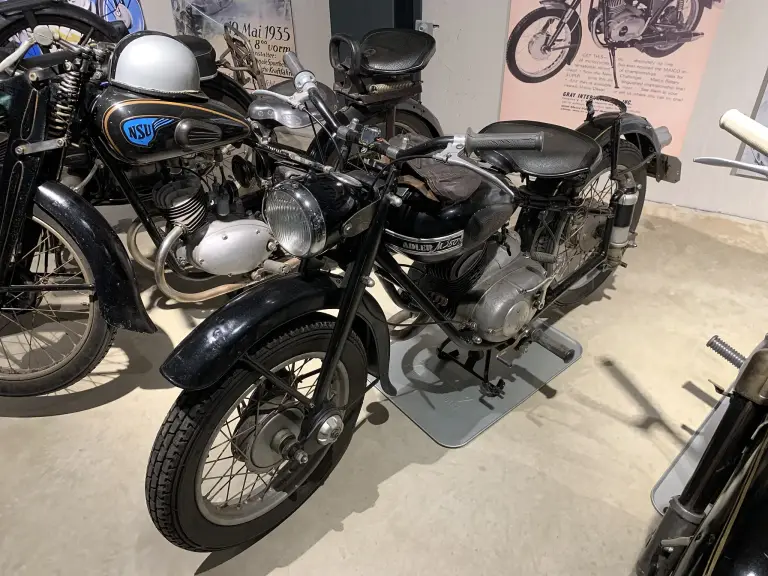
At the start of 1936 the Trumpf Junior 1G was replaced by the 1E. The engine and 2,630 mm wheelbase stayed the same, but the bodies were 390 mm longer and more streamlined; those standard bodies remained in production until 1941. Ambi-Budd built the Limousine and Cabrio-Limousine, four-seat cabriolet bodies were split between Ambi-Budd and Karmann, and the two-seat cabriolets came from coachbuilders including Wendler of Reutlingen. In August 1939 Adler produced the 100,000th Trumpf Junior, by then its best-selling car ever. Of the total, 23,013 were 1934–35 1G cars and 78,827 were 1936–41 1E cars. After the war two prototypes with Wendler and Karmann bodies were built in 1948, but Adler decided to make only motorcycles and the prototypes were scrapped.
Design and features
- Front-wheel drive: the same layout as the larger Trumpf, in a smaller package.
- Independent suspension: transverse leaf springs at the front, torsion bars at the rear.
- Lightweight bodies: timber frame with synthetic leather, then part-steel and all-steel.
- Jupiter steel saloon: the Ambi-Budd all-steel body from 1936.
- Adler’s best seller: more than 100,000 built by 1941.
Adler Trumpf Junior versions
- Trumpf Junior 1G (1934–1935): two-door Limousine and Cabrio-Limousine.
- 1935 range: two- and four-seat cabriolets and two-seat sports models.
- Part-steel and all-steel bodies: from 1935 and 1936 respectively.
- Trumpf Junior 1E (1936–1941): longer, more streamlined bodies.
- Two-seat cabriolet: coachbuilt bodies including Wendler of Reutlingen.
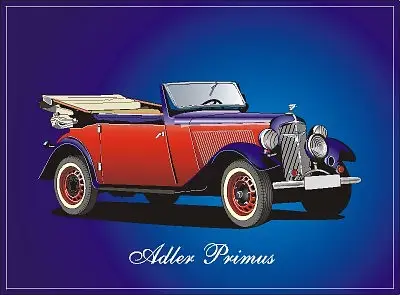
The Trumpf Junior was the smaller brother of the Adler Trumpf and the Adler Primus; the six-cylinder Adler Diplomat headed the range. More Adler cars are in the Adler collection.
Sources
- Adler Trumpf Junior, English Wikipedia: history, engines, bodies, prices, production
- Adler Trumpf Junior, German Wikipedia: chassis details, body materials, post-war prototypes