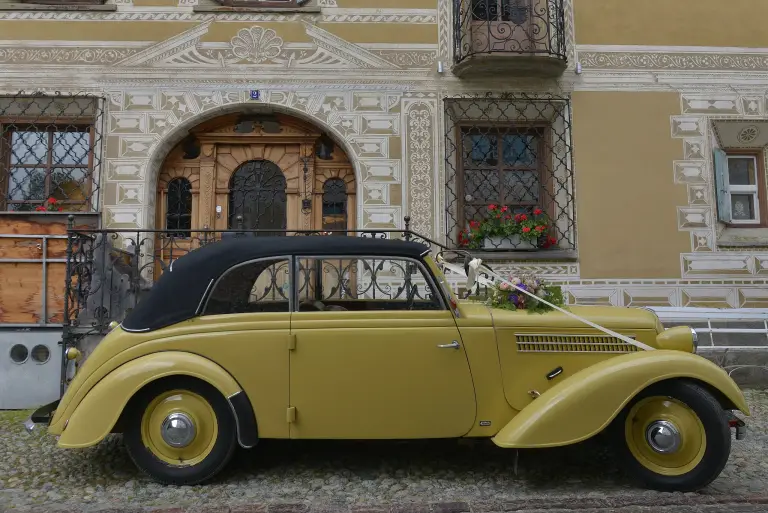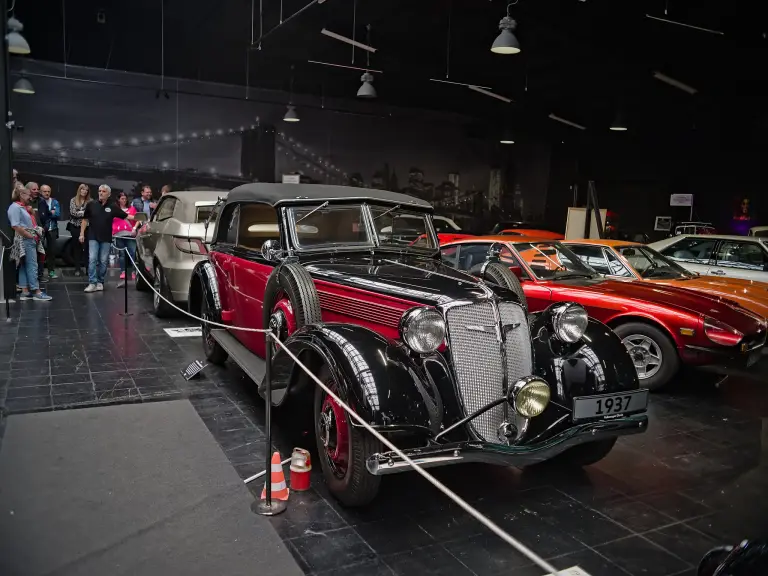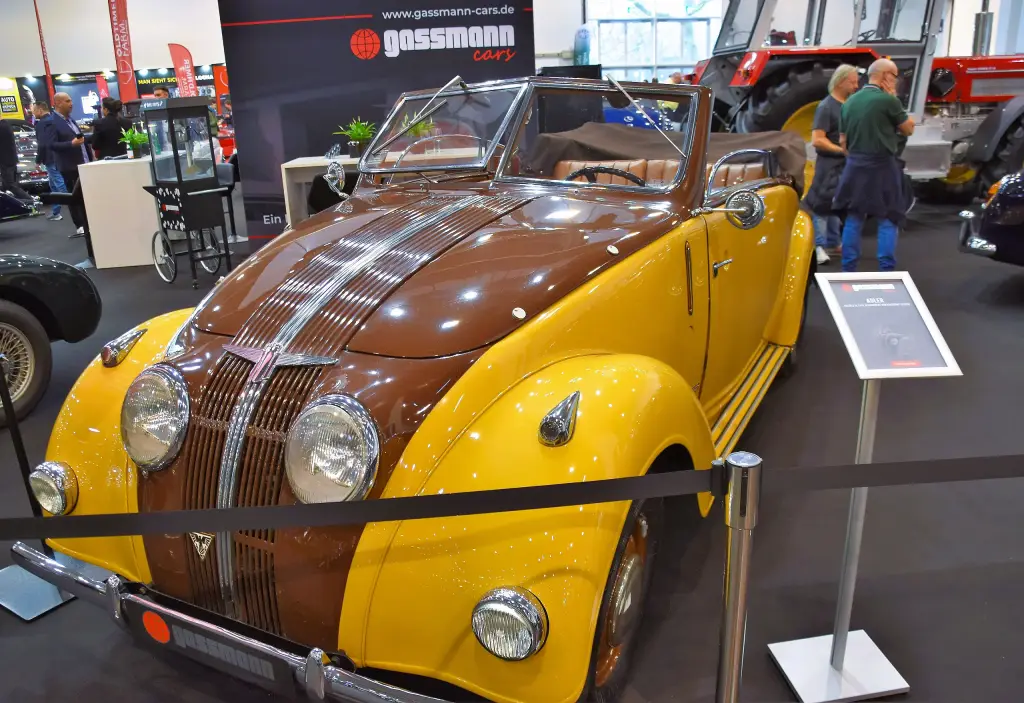
The Adler 2.5-litre caused a sensation when Adler presented it at the Berlin Motor Show early in 1937, though the interest did not turn into sensational sales. Production began in November 1937. It was intended as a successor to the six-cylinder Adler Diplomat and was a streamlined executive saloon designed by Karl Jenschke, who had been director of engineering at Steyr-Daimler-Puch until 1935.
Adler 2.5-litre at a glance
| Maker | Adlerwerke, Frankfurt am Main |
|---|---|
| Also called | Adler 2,5 Liter, Autobahn Adler |
| Production | 1937–1940 |
| Designer | Karl Jenschke |
| Engine | 2,494 cc straight-six, side valves |
| Power | 58 PS; 80 PS in the 2.5 Sport |
| Drive | rear-wheel drive |
| Gearbox | four-speed manual, synchromesh on top three |
| Drag coefficient | 0.36 |
| Price in 1937 | 5,750 Marks for the Limousine |
| Built | 5,295 |
History of the Adler 2.5-litre
Jenschke’s streamlined shape
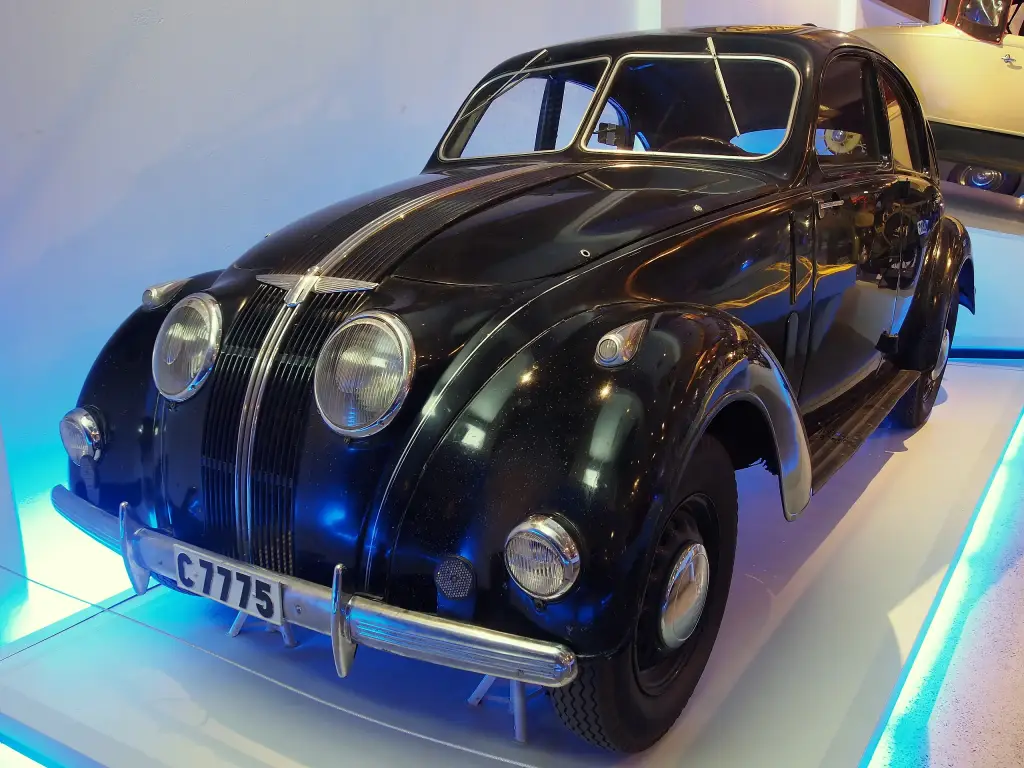
Karl Jenschke had designed the Steyr 50 before joining Adler, and the Adler 2.5-litre closely resembled that smaller car. Its uncompromisingly streamlined silhouette, combined with Germany’s first Autobahn construction boom, earned the car the popular name Autobahn Adler. The four-door fastback saloon body came from Ambi-Budd of Berlin, while the two- and four-door cabriolets were built by Karmann of Osnabrück.
Engine, chassis and body
The engine was a water-cooled 2,494 cc straight-six with side valves, a four-bearing crankshaft and pressure lubrication, driving the rear wheels through a four-speed gearbox with synchromesh on the top three ratios and a gear lever sprouting from the centre of the dashboard. The welded box chassis had a floor platform and side members bowed outward to make the cabin roomy, which left the car more than 100 mm wider than contemporary Mercedes-Benz and BMW rivals. Front suspension used wishbones and quarter-elliptical springs; the rear had a swing axle with a transverse leaf spring and tie rods. Hydraulic shock absorbers and hydraulic drum brakes were fitted all round, and steering was the ZF Ross system.
The steel fastback body was welded to the frame and quoted a drag coefficient of 0.36, remarkable for the period. It had four doors hinged on the B-pillar and a huge steel sunroof panel reaching almost the full width of the roof. The headlights sat close together beside the grille and proved inadequate, so a second pair of wide-beam lamps was set into the wings in 1938, though from that year only one was permitted. In 1939 the sunroof was made smaller, the luggage compartment gained a full external lid, the rear wheels received spats and the dashboard was redesigned with clearer instruments.
The Sport and the market
In 1938 the range grew with the Adler 2.5-litre Sport, a two-door body by Gläser of Dresden that was lower and slightly longer than the saloon and consequently cramped. It shared the 2,494 cc six but used three carburettors instead of one, a higher compression ratio and lower bottom gear ratios, raising claimed output from 58 PS to 80 PS. The first cars were delivered in November 1937 at 5,750 Marks for the standard Limousine, with cabriolets a few hundred Marks more and the Sport at 8,750 Marks. The Mercedes-Benz 230 saloon cost 5,875 Marks in 1937. Between 1937 and 1940 Adler built 5,295 cars, far fewer than BMW’s 15,936 of the smaller 326, in a German market of little more than 200,000 cars a year.
Design and features
- Streamlined body: a fastback steel saloon with a quoted drag coefficient of 0.36.
- Autobahn Adler: the nickname earned by its shape and its timing.
- Wide cabin: bowed chassis side members made it over 100 mm wider than rivals.
- Large steel sunroof: almost the full width of the roof, reduced in size in 1939.
- 2.5 Sport: three carburettors and 80 PS in a lower two-door body.
Adler 2.5-litre versions
- Limousine (1937–1940): four-door fastback saloon by Ambi-Budd.
- Cabriolet: two- and four-door open bodies by Karmann.
- 2.5 Sport (1938–1940): two-door sports saloon by Gläser with 80 PS.
- 1939 update: smaller sunroof, external luggage lid, rear wheel spats.
- Wide-beam lamps: added to the wings in 1938.
The 2.5-litre succeeded the six-cylinder Adler Diplomat and sat above the smaller Adler Trumpf and Adler Primus. More Adler cars are in the Adler collection.
Sources
- Adler 2.5-litre, English Wikipedia: history, body, engine, chassis, prices, production
- Adler 2,5 Liter, German Wikipedia: model history, Sport details, production