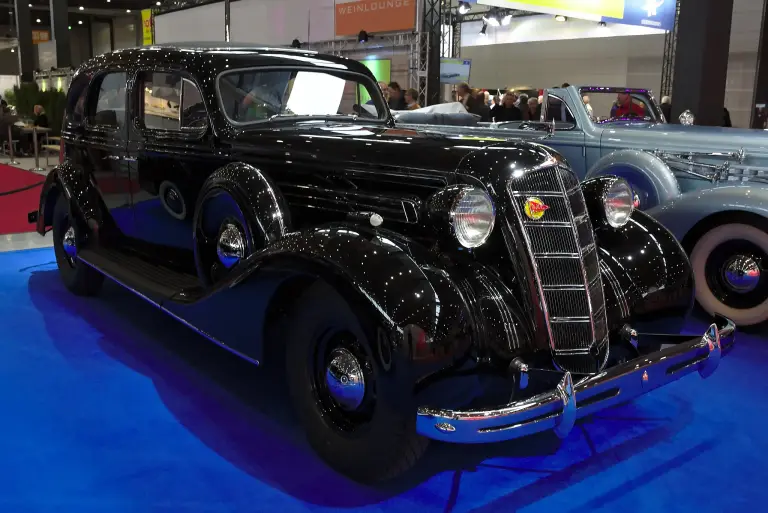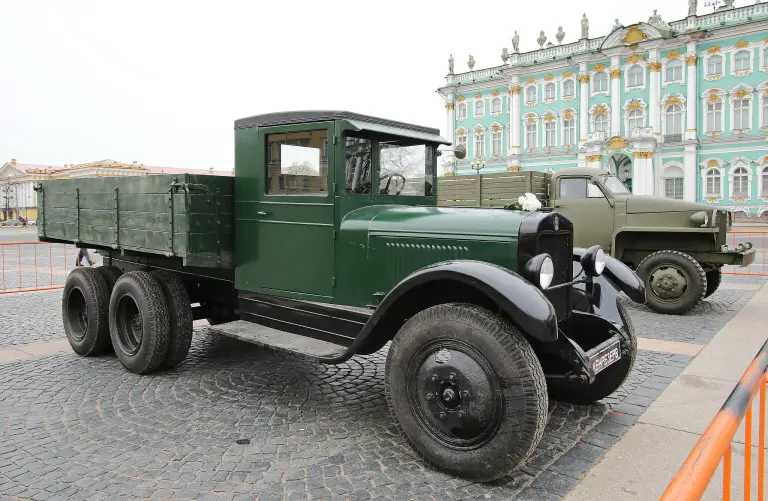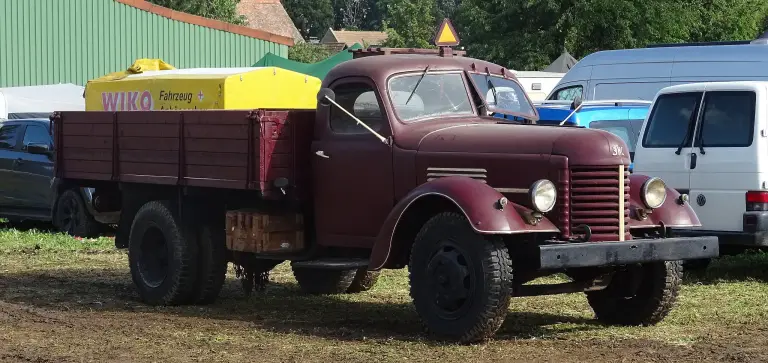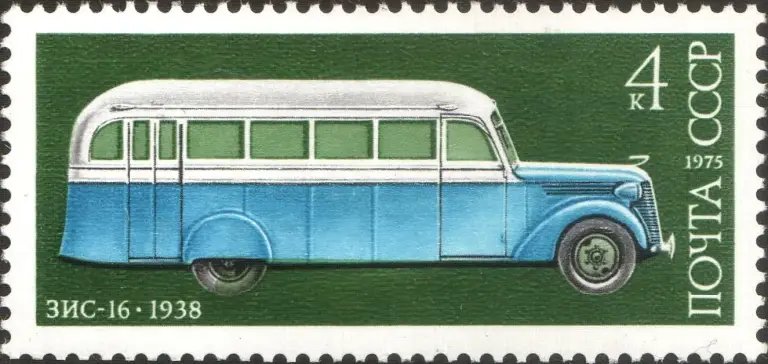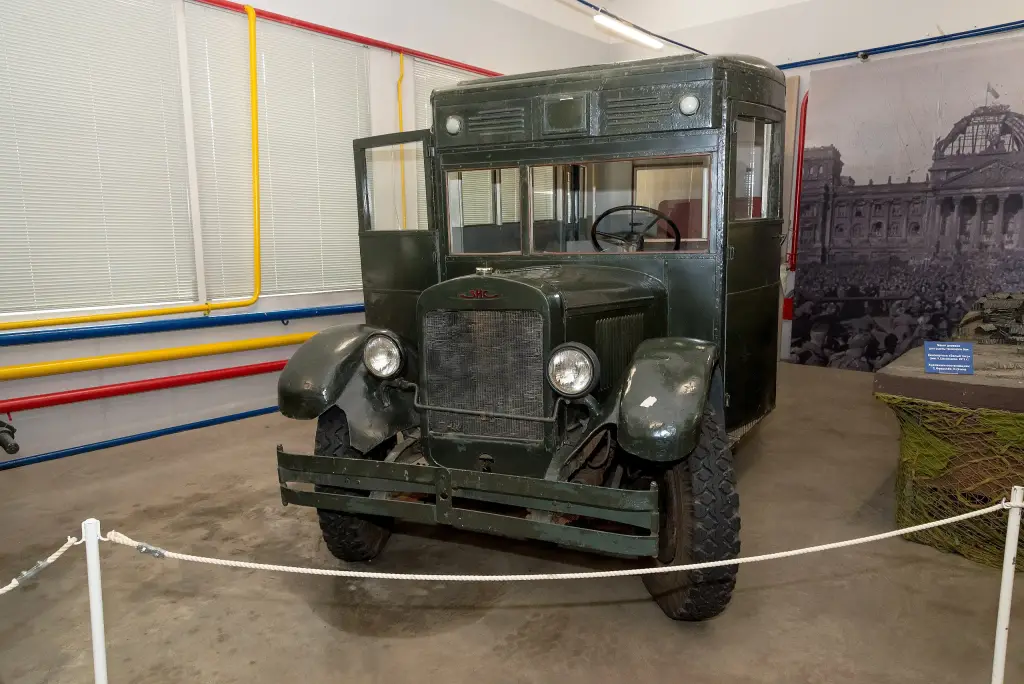
The ZIS-8 was a Soviet city bus built at the Moscow Stalin works from 1934 to 1936. It used a long-wheelbase ZIS-5 chassis and was the first Soviet bus to be exported.
ZIS-8 at a glance
| Maker | Zavod Imeni Stalina (ZIS), Moscow |
|---|---|
| Production | 1934–1936 at ZIS; later by repair plants |
| Chassis | ZIS-11, a long-wheelbase ZIS-5 |
| Engine | ZIS-5 six-cylinder, 5,555 cc, 73 PS |
| Capacity | 29 passengers, 21 seated |
| Top speed | 60 km/h |
| Length | 7,370 mm |
| Weight | 4,200 kg empty; 5,670 kg gross |
| Built by ZIS | 547 |
| Export | 16 buses to Turkey in 1934 |
There is no English article; the page is based on the Russian and German Wikipedia articles.
History of the ZIS-8
The ZIS-8 was a Soviet city bus on the long-wheelbase chassis of the ZIS-11, an extended version of the ZIS-5 whose wheelbase grew from 3.81 to 4.42 metres. It was produced at the Moscow Stalin works from 1934 to 1936. The bus had 21 seats and carried 29 passengers in total.
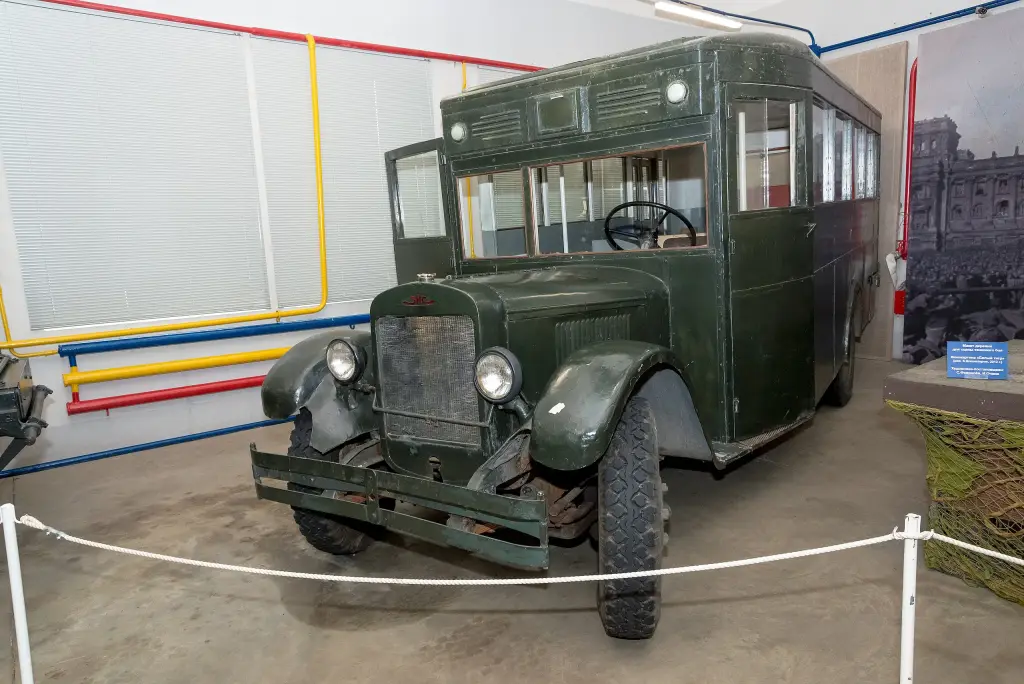
The ZIS-8 had a six-cylinder inline carburettor engine of 5.55 litres and 73 hp, which allowed the 6.1-tonne bus to reach 60 km/h. In construction it differed little from its predecessor, the AMO-4, and its body of the 1932 ‘new standard’ type remained essentially unchanged. The main changes concerned the chassis: the frame was reinforced with a plate along the side members, the engine became more powerful through a larger piston diameter, the front hydraulic brakes were replaced by mechanical ones, and a new cardan shaft with Spicer No. 500 joints and an additional support was fitted. The bus also received a larger fuel tank of 110 litres instead of 60, a larger radiator and a 12-volt electrical system.
The body had a wooden frame made from various woods and was covered with metal. It was designed by the engineer N. I. Frantsev and the ZIS artist I. F. German. Instead of the usual practice of building the wooden frame as a single non-detachable cage, German proposed making pre-assembled frame elements that were then put together into a complete unit: the sides, rear and front walls, doors, roof and floor base were made separately and then assembled. This greatly simplified and reduced the cost of assembly. The bus had nickel-plated bumpers and an illuminated route indicator above the windscreen. Besides the main version there was a Lux variant with leather upholstery and a single entrance door, and a version with a folding fabric roof for southern regions.
Production and derivatives
The first ZIS-8 was built at the Moscow Stalin works in December 1933, and series production ran from 1934 to 1936, with 547 vehicles built by the plant. ZIS-8 buses were also produced by the Aremkuz works in Moscow and by repair plants and body shops in Leningrad, Tula, Kharkov, Rostov-on-Don, Irkutsk and other cities. Because of the reconstruction of the Stalin works in the second half of 1936, production of the ZIS-8 had to stop, but bus depots and body shops continued to build bus bodies on ZIS chassis from the factory drawings; in Tula, Kaluga and Leningrad, for example, bodies were more streamlined than the ZIS drawings specified. In late 1936 the second repair plant of the Leningrad transport administration produced the AL-2 bus with a 6×2 layout, using the lengthened ZIS-8 frame and an additional axle beam. The body department of NATI also designed a resort bus on the ZIS-8 chassis in 1935, and specialised vans for meat, bread, manufactured goods and fire fighting were built on the same chassis.
The ZIS-8 buses became the first Soviet buses to be exported: in 1934 a batch of 16 went to Turkey, shortly after the first batch of 100 export ZIS-5 trucks arrived there. Aremkuz produced ZIS-8-type buses until 1941, and a high level of bus body production existed in Leningrad, where vehicles almost indistinguishable from the Moscow ones were built from 1934. No completely original ZIS-8 is known to survive; one bus was restored in 2011 after serving as a trailer and later as a shed, but only parts of the frame and axles were original, and the entire wooden body had to be rebuilt from old photographs.
Design and features
- Long-wheelbase chassis: the ZIS-11 chassis extended the ZIS-5 wheelbase to 4.42 metres.
- Wooden-framed body: the metal-skinned body used pre-assembled wooden frame elements, which simplified production.
- Comfort details: nickel-plated bumpers and an illuminated route indicator above the windscreen.
- First exported Soviet bus: 16 ZIS-8 buses were sold to Turkey in 1934.
ZIS-8 versions
- ZIS-8 (1934–1936): the standard city bus, 547 built by ZIS.
- Lux: variant with leather upholstery and one entrance door.
- Southern version: bus with a folding fabric roof.
- Local production: buses built by Aremkuz and by repair plants in Leningrad, Tula, Kharkov, Rostov-on-Don and other cities.
- AL-2 (1936): 6×2 bus on a lengthened ZIS-8 frame with an additional axle.
The ZIS-8 was replaced by the ZIS-16 and used the chassis and engine of the ZIS-5 truck. More buses are in the ZIS collection.
Video: 3D Model of City Bus ZiS-8 Review
Video on YouTube.
Sources
- ЗИС-8, Russian Wikipedia: design, production, local variants and export
- ZIS-8, German Wikipedia: production years, technical data and survivors