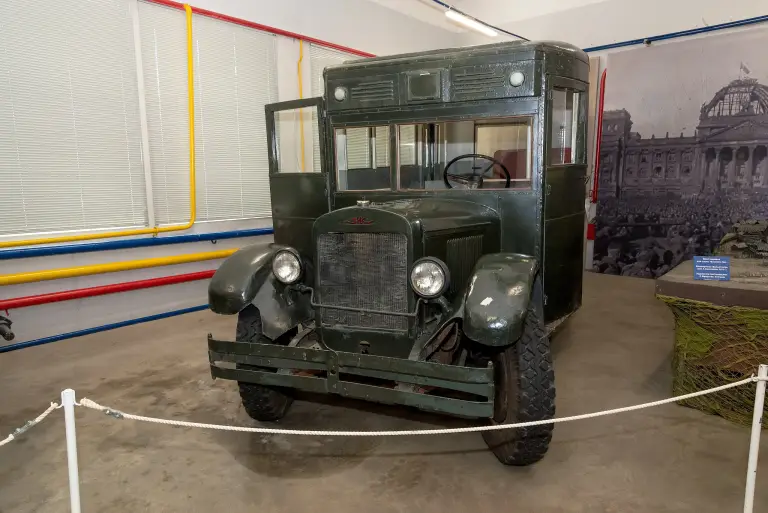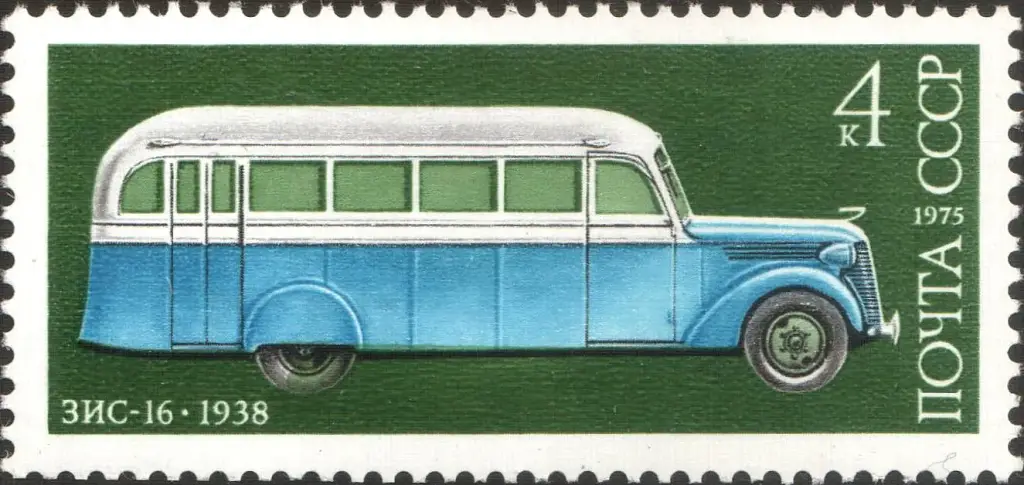
The ZIS-16 was a Soviet city bus produced from 1938 until August 1941. It replaced the ZIS-8 and was considered a more advanced model, with a streamlined body that followed the automotive fashion of the time.
ZIS-16 at a glance
| Maker | Zavod Imeni Stalina (ZIS), Moscow |
|---|---|
| Production | 1938–1941 (some sources say 1942) |
| Replaced | ZIS-8 |
| Engine | ZIS-16 six-cylinder, 5,555 cc, 85 PS |
| Capacity | 34 passengers, 26 seated |
| Top speed | 65 km/h |
| Length | 8,525 mm |
| Weight | 5,100 kg empty; 6,920 kg gross |
| Body | streamlined body on a wooden frame |
| Built | 3,250 |
| Ambulance version | ZIS-16S from 1939 |
There is no English article; the page is based on the Russian and German Wikipedia articles.
History of the ZIS-16
The ZIS-16 entered production in 1938 as a replacement for the ZIS-8. It was equipped with the engine of the ZIS-5 truck, but with light-alloy cylinder heads and a higher compression ratio, which raised output from 73 to 85 PS; because of the increased power and its installation in the bus, the engine was renamed the ZIS-16. The chassis was taken from the ZIS-5 with slight modifications.
The bus had a streamlined body that followed the automotive fashion of the time, but it was still built on a wooden frame. It was considered comfortable for its day, with upholstered seats and hydraulic shock absorbers, although it sat on a truck frame of 1920s design and the central aisle was very narrow. The ZIS-16 could carry up to 34 passengers with 26 seats, and its engine accelerated the 7.13-tonne vehicle to 65 km/h.
From 1939 a limited series of the ZIS-16S ambulance was produced, with a separate cab from the ZIS-5 and room for 10 stretchers and 12 to 14 seated patients. A total of 3,250 ZIS-16 buses were built. Part of the fleet that was not mobilised into the Red Army in the first period of the war was fitted in 1943 with gas-generator and gas-cylinder equipment, which was removed in 1945.
Wartime and post-war use
During the Second World War some buses were converted into ambulances, and the Red Army used the type, usually in khaki, for transporting the wounded and as a mobile command post. Some buses were captured by the Wehrmacht and used by it. Because of its modern and recognisable appearance, the ZIS-16 became a characteristic feature of the Moscow street scene from the late 1930s to the early 1950s.
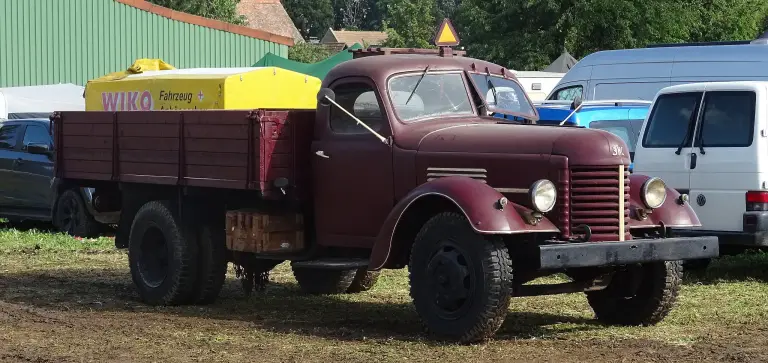
After the war a significant part of the ZIS-16 fleet was rebuilt at Aremkuz and other enterprises, with the body transferred to new ZIS-150 chassis using the front sheet metal of that truck. These rebuilt buses, designated AKZ-1, allowed the ZIS-16 to serve on the suburban routes of the capital until the mid-1950s and, in some cities, longer. By 1953 almost all had disappeared from public service. No original ZIS-16 survives; the example in the National Automobile Museum in Vsevolozhsk was assembled from parts of three vehicles found in forests and gardens and a new wooden body frame.
Design and features
- Streamlined body: a modern shape for the late 1930s, although the body still used a wooden frame.
- More powerful engine: the ZIS-5 engine was developed to 85 PS with light-alloy cylinder heads and a higher compression ratio.
- Comfortable interior: upholstered seats and hydraulic shock absorbers were notable for a Soviet bus of the period.
- Ambulance version: the ZIS-16S could carry 10 stretchers and 12 to 14 seated patients.
ZIS-16 versions
- ZIS-16 (1938–1941): the standard city bus.
- ZIS-16S (from 1939): ambulance version with a separate ZIS-5 cab.
- Military buses: khaki vehicles used for wounded transport and as mobile command posts.
- AKZ-1 (1947–1948): post-war rebuild on the ZIS-150 chassis with a shortened body.
The ZIS-16 replaced the ZIS-8 and shared its engine and chassis with the ZIS-5 truck. More buses are in the ZIS collection.
Sources
- ЗИС-16, Russian Wikipedia: production, capacity, ambulance and post-war rebuilds
- ZIS-16, German Wikipedia: development, engine, technical data and wartime use