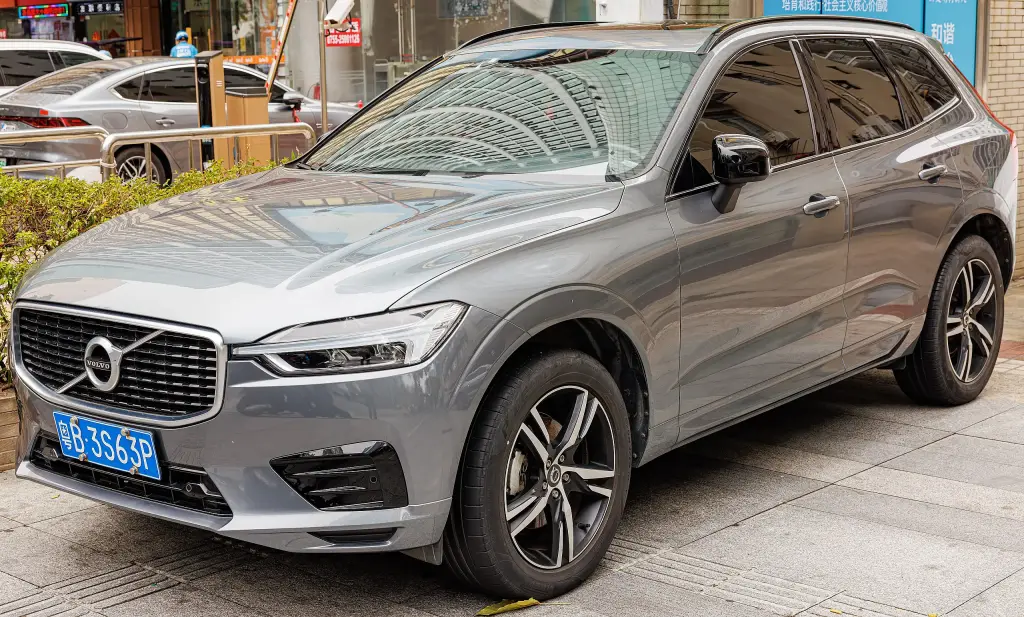
The Volvo XC60 is a compact luxury crossover built since 2008. It is part of Volvo’s 60 Series alongside the S60 and V60, and it has been the company’s best-selling car since 2009.
Volvo XC60 at a glance
| Production | since 2008 |
|---|---|
| Concept | XC60 concept at the 2007 Detroit Auto Show |
| First generation | 2008–2017, P3 platform |
| Built at | Volvo Car Gent, Ghent, Belgium |
| Platform sharing | developed alongside the Land Rover Freelander |
| Engines | five- and six-cylinder petrol and diesel; T6 with paddle shifters |
| R-Design | available from April 2010 |
| Refresh | February 2013 for the 2014 model year |
| Second generation | 2017, on the SPA platform |
| Award | Car of the Year Japan 2017–2018 |
History of the Volvo XC60
The XC60 concept was shown at the 2007 Detroit Auto Show with a glass roof, a newly styled grille, a new shifting mechanism, an electronic boot lid and 20-inch wheels; it introduced the styling cues Volvo then spread across the range. The production car was unveiled at the 2008 Geneva Motor Show, went on sale in Europe in the third quarter of 2008 and reached North America in early 2009 as a 2010 model.
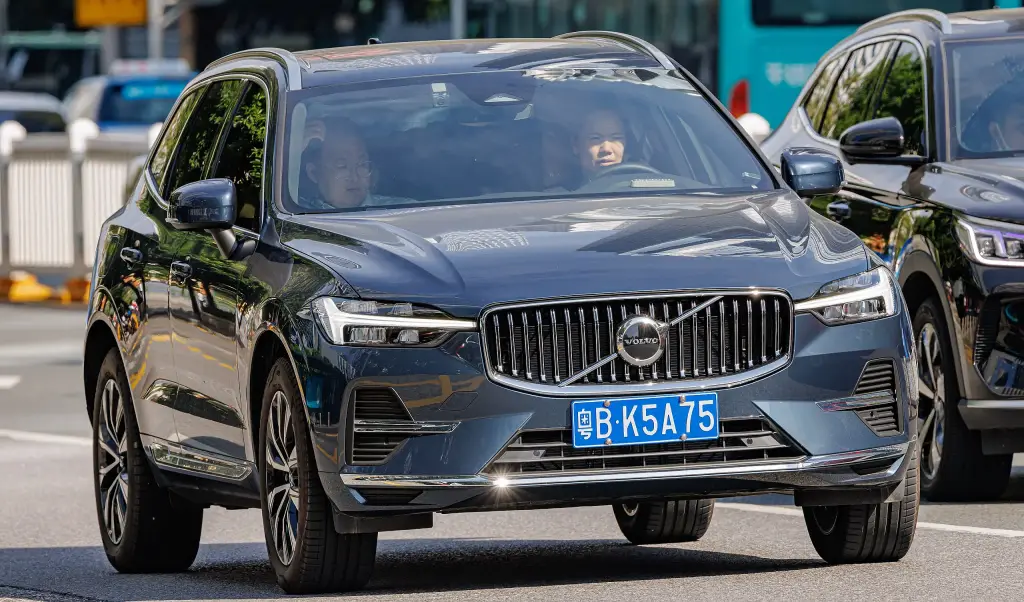
The first generation was built by Volvo Car Gent in Ghent on the P3 platform and shared technology with the Land Rover Freelander of 2007. Both firms were owned by Ford at the time and development was split between them: Volvo did most of the engineering and tuning in Sweden, while off-road capability was developed at Land Rover in England.
Versions
An R-Design variant arrived in April 2010 with a colour-matched body kit, a stiffer chassis and damping and unique trim. In February 2013 Volvo showed a refreshed XC60 for the 2014 model year, with changes to the grille and front driving lights, the loss of black cladding along the lower door sills, new materials and dashboard trims, paddle shifters on the T6 and a seven-inch display. A special blue colour was introduced in 2014. A plug-in hybrid concept shown at the 2012 North American International Auto Show paired a 270 hp turbo four driving the front wheels with a 70 hp electric motor at the rear for 350 hp in total, 56 km of electric range and a 970 km total range, but it was never produced.
Safety and success
The XC60 carried Volvo’s usual safety equipment, including WHIPS whiplash protection, side impact protection, roll stability control, stability and traction control, inflatable curtains, hill descent control on all-wheel-drive cars and collision warning with brake support. It also introduced City Safety, a driver support system that uses a closing velocity sensor to prevent or reduce vehicle-on-vehicle collisions below 30 km/h. The second generation arrived in 2017 as the first model on the 60 Series built on the Scalable Product Architecture, and it was named Car of the Year Japan for 2017–2018.
Design and features
- City Safety: automatic low-speed collision avoidance, introduced on the XC60.
- Shared development: engineering with Volvo and off-road work by Land Rover.
- Ghent production: built in Belgium for the first generation.
- R-Design and T6: sporty trim and a six-cylinder turbo option.
- Best seller: Volvo’s most popular model since 2009.
Volvo XC60 versions
- XC60 (2008): first generation on the P3 platform.
- XC60 R-Design (2010): stiffer chassis and sports trim.
- XC60 T6: turbocharged six with paddle shifters from 2014.
- XC60 Plug-in Hybrid concept (2012): 350 hp show car, not produced.
- XC60 (2017): second generation on the SPA platform.
The XC60 sits between the Volvo XC70 and the larger Volvo XC90, and shares its 60 Series family with the Volvo S60. More cars are in the Volvo collection.
Sources
- Volvo XC60, English Wikipedia: concept, generations, development, versions, safety