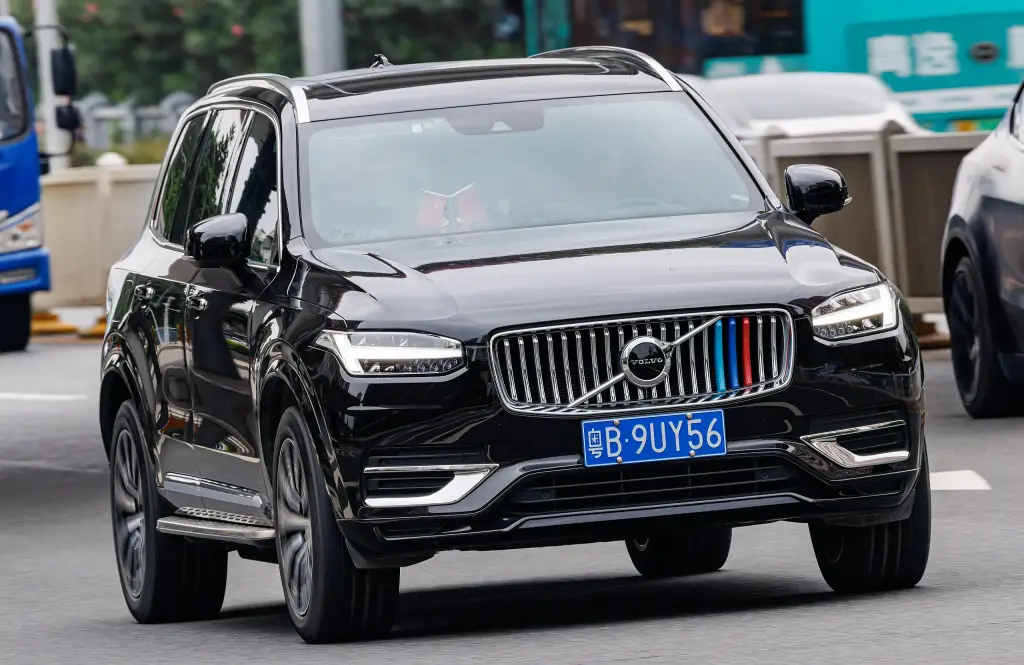
The Volvo XC90 is a mid-size luxury SUV built since 2002. It was Volvo’s first SUV, and both of its generations have won Motor Trend’s SUV of the Year award on their debuts.
Volvo XC90 at a glance
| Production | since 2002 |
|---|---|
| First generation | 2002–2014, P2 platform |
| Built at | Torslandaverken, Sweden, then China as the XC Classic |
| Launch engines | 2.5 T of 208 hp and T6 of 268 hp |
| V8 | Yamaha-built 4.4-litre from 2005, 315 PS |
| 2007 update | 3.2-litre six of 235 hp replaced the base five in the US |
| Second generation | end of 2014, Scalable Product Architecture |
| Electric successor | EX90, late 2022 |
| Production begins | August 2002 at Torslanda |
History of the Volvo XC90
In January 2001 Volvo showed its Adventure Concept Car at the North American International Auto Show to gauge reaction to the styling of a future SUV. A teaser image of the front followed in November 2001, and the full XC90 was unveiled in January 2002; production started in August 2002 at Torslanda in Sweden, using the P2 platform shared with the first-generation S80.
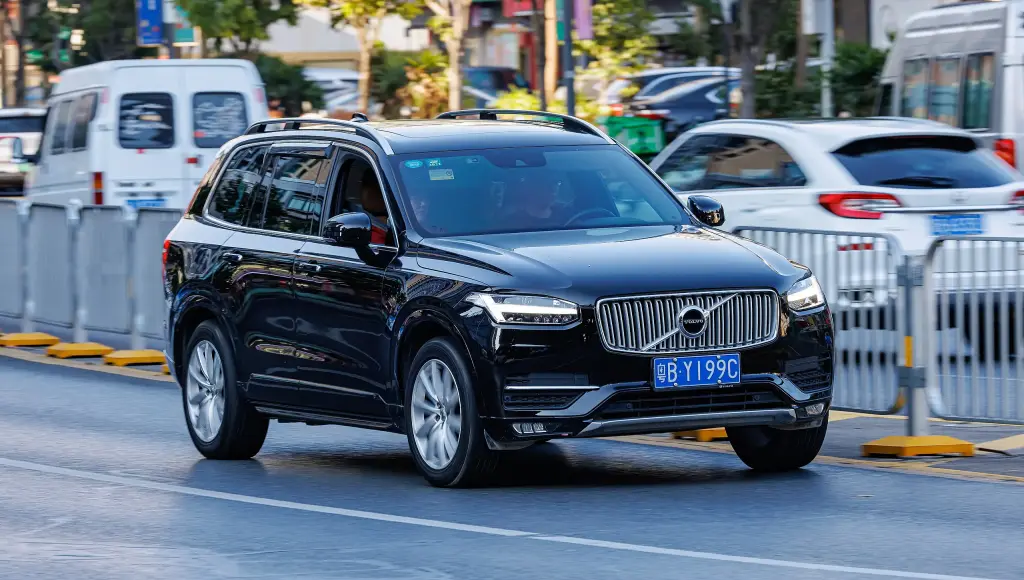
At its American launch for the 2003 model year the XC90 came in two trims. The 2.5 T had a 2.5-litre turbocharged five of 208 hp and 320 Nm with an Aisin co-developed five-speed automatic and front-wheel drive, with a Haldex all-wheel-drive system as an option. The T6 used a 2.9-litre twin-turbocharged straight six of 268 hp and 380 Nm with a GM-sourced, Volvo-modified four-speed automatic and all-wheel drive as standard. In 2005 Volvo added a Yamaha-built 4.4-litre V8 of 315 PS and 441 Nm, and sold just over 40,000 XC90s in North America that year.
Updates
The XC90 won the North American Car of the Year award and Motor Trend’s Sport/Utility of the Year for 2003. For 2007 it received a facelifted front and rear and a revised interior, and the American base model moved to a 3.2-litre straight six of 235 hp. Later changes were smaller: a new rear logo in 2009, painted wheel arches and a larger circular grille badge in 2010, LED tail lamps on some models for 2012 and a cosmetic refresh with standard LED daytime lights, body-colour bumpers and silver trim for 2013.
Second generation and after
Production of the first generation moved to China at the end of 2014, where the car was renamed the Volvo XC Classic. The second generation arrived at the end of 2014 on the new Scalable Product Architecture. In late 2022 Volvo introduced the electric EX90 as the XC90’s successor, but in September 2024 it launched a second facelift of the XC90 and said both models would be sold together for the foreseeable future.
Design and features
- Volvo’s first SUV: the model that opened a new segment for the company.
- Two launch engines: a turbo five and a twin-turbo six.
- Yamaha V8: a 4.4-litre unit of 315 PS from 2005.
- Awards: North American Car of the Year and Motor Trend SUV of the Year.
- Long life: the first generation continued in China as the XC Classic.
Volvo XC90 versions
- XC90 2.5 T (2002): turbo five with optional all-wheel drive.
- XC90 T6 (2002): twin-turbo six with standard all-wheel drive.
- XC90 V8 (2005): Yamaha-built 4.4-litre engine.
- XC90 (2014): second generation on the SPA platform.
- XC Classic: first generation built in China.
The XC90 was Volvo’s first SUV and shares its range with the smaller Volvo XC60 and XC70. More cars are in the Volvo collection.
Sources
- Volvo XC90, English Wikipedia: concept, launch engines, V8, updates, generations, EX90