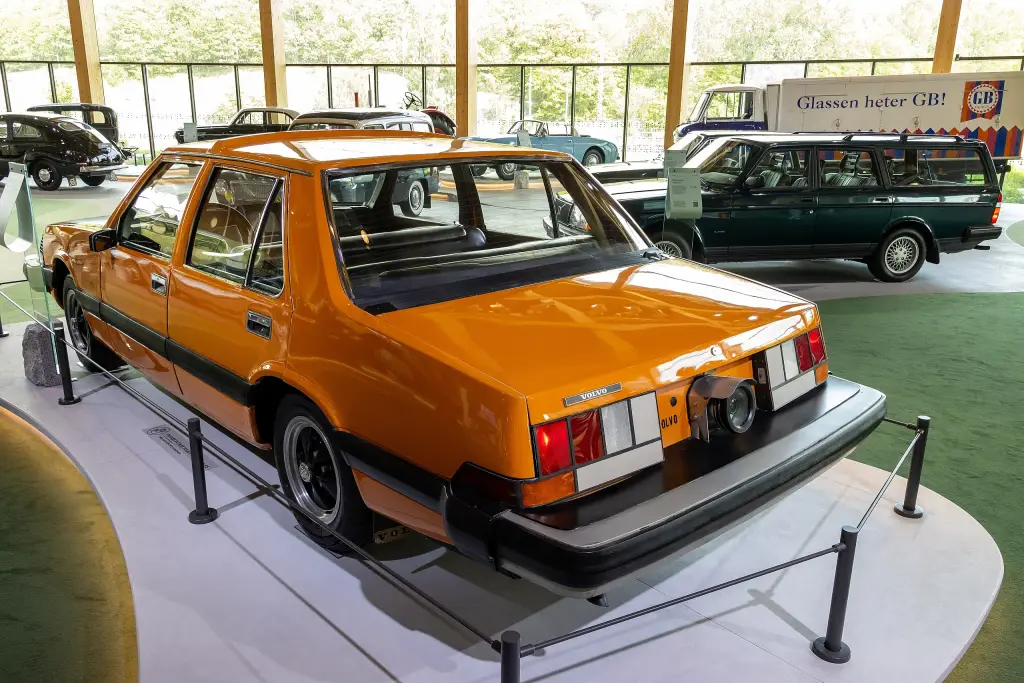
The Volvo VESC, or Volvo Experimental Safety Car, was a concept car unveiled at the Geneva Motor Show in 1972 to show a range of passenger safety ideas. Much of it, above all the front end, shaped the Volvo 200 Series launched in 1974.
Volvo VESC at a glance
| Unveiled | Geneva Motor Show, 1972 |
|---|---|
| Length | 5,520 mm |
| Type | experimental safety vehicle |
| Frontal design | survive a crash at 80 km/h |
| Roof strength | no more than 75 mm of intrusion in a 2.4 m inverted fall |
| Brakes | anti-lock brakes |
| Restraints | three-point seatbelts that tightened in a crash |
| Airbags | front and rear |
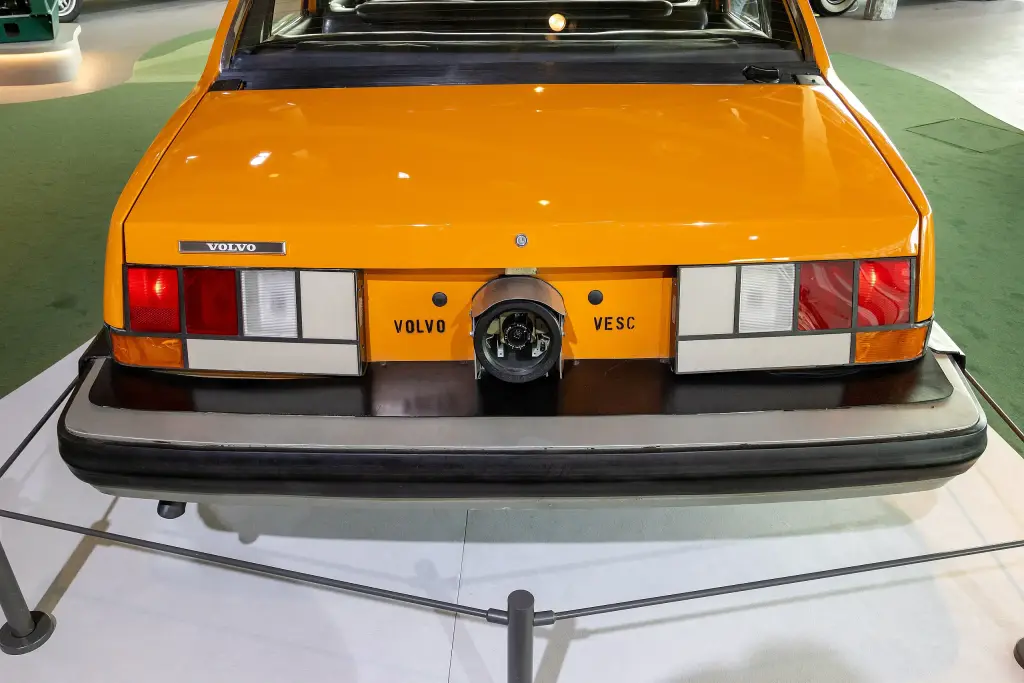
| Camera | early rear-view camera by Mitsubishi Electric |
| Legacy | front end used on the 200 Series |
History of the Volvo VESC
In the late 1960s Volvo ran a safety project called P1560, which produced several prototypes before being cancelled in 1971, partly because of uncertainty about future safety rules, especially in the United States. The next project followed the experimental safety vehicle programmes of American makers and used a V8 engine in a car significantly larger than earlier Volvos; ten prototypes were planned, some of them already built into a new model intended to complement the 140 Series and replace the 164. That project was also cancelled, but much of its design and its finished prototypes went into the VESC.
How it was built to survive
The 5,520 mm car was designed to survive a frontal collision at 80 km/h. The front bumper area was made particularly long, and in a crash the engine would be forced down under the cabin floor by a suitably shaped and reinforced firewall. A spring pulled the steering column into the dashboard, at a time when drivers were still commonly injured between wheel and seat, and large cushions behind the front seatbacks protected rear passengers. Strong reinforcements and crumple zones in the doors gave protection in a side impact, and the roof was designed not to be pushed in more than 75 mm in an inverted 2.4-metre fall. The head restraints folded into the seats and extended automatically in a collision.
The equipment list was remarkable for 1972: anti-lock brakes, a back-up warning signal, an integrated roll cage, three-point seatbelts that tightened during a crash, front and rear airbags, headlamp washers and wipers, automatic ride height control, a centre-mounted fuel tank with automatic fuel shutoff, warning lights in the doors and an early rear-view camera from Mitsubishi Electric, using a 6.5 mm Cosmicar lens between the tail lamps and feeding a television screen in the cabin.
Much of the VESC, especially its front, heavily influenced the Volvo 200 Series launched in 1974. A VESC is on display at the Volvo Museum in Gothenburg.
Design and features
- 80 km/h frontal protection: a long, sacrificial front structure.
- Engine under the floor: a shaped firewall pushed the engine down in a crash.
- Airbags and tightening belts: front and rear airbags plus pretensioned three-point belts.
- Rear-view camera: an early Mitsubishi Electric system in 1972.
- Influence on production: the front end of the 200 Series.
Volvo VESC versions
- VESC (1972): the single experimental safety car.
The VESC directly influenced the Volvo 200 Series and followed the earlier Volvo 164 project it was meant to complement. More cars are in the Volvo collection.
Sources
- Volvo VESC, English Wikipedia: history, structural design, equipment, legacy