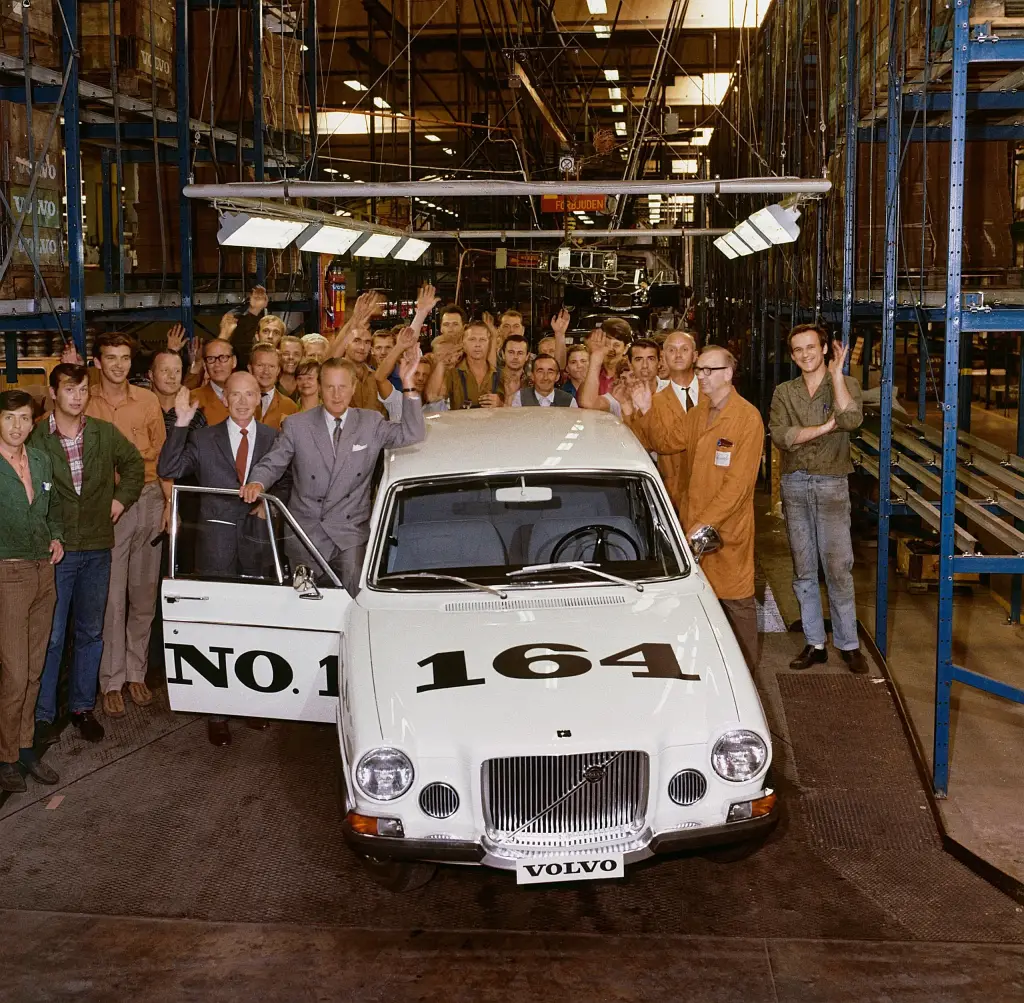
The Volvo 164 was a four-door, six-cylinder luxury saloon shown at the Paris Motor Show in October 1968 and sold from 1969. It was a 140 Series car with a longer front end to take a three-litre straight six, and it was Volvo’s first proper attempt at the luxury market since the PV60 of 1950.
Volvo 164 at a glance
| Production | 1969–1975 (to 1976 for the US and Japan) |
|---|---|
| Body | four-door saloon, six-cylinder |
| Engine | 3.0-litre B30 overhead-valve straight six |
| Power (164E) | 160 PS, 0–100 km/h in 8.7 s, 193.5 km/h top speed |
| Transmission | four-speed manual M400, M410 with overdrive, three-speed Borg-Warner automatic |
| Injection | Bosch D-Jetronic from 1972, standard from 1974 |
| Built | 146,008 (some sources 153,179) |
| Replaced by | Volvo 264 |
| Special edition | 164TE, 1974, for Britain, Germany and Australia |
History of the Volvo 164
Jan Wilsgaard sketched what became the 164 in the late 1950s as a concept called the P358 with a V8 engine. The production car arrived in 1968 as a luxury version of the 140 Series. The wings, grille, front bumper, bonnet, headlamp bezels and front indicators were all unique, and the wheelbase, wings and bonnet were longer to fit the long six. From the windscreen back the body was essentially that of the 140, with a simulated woodgrain dashboard and leather seats.
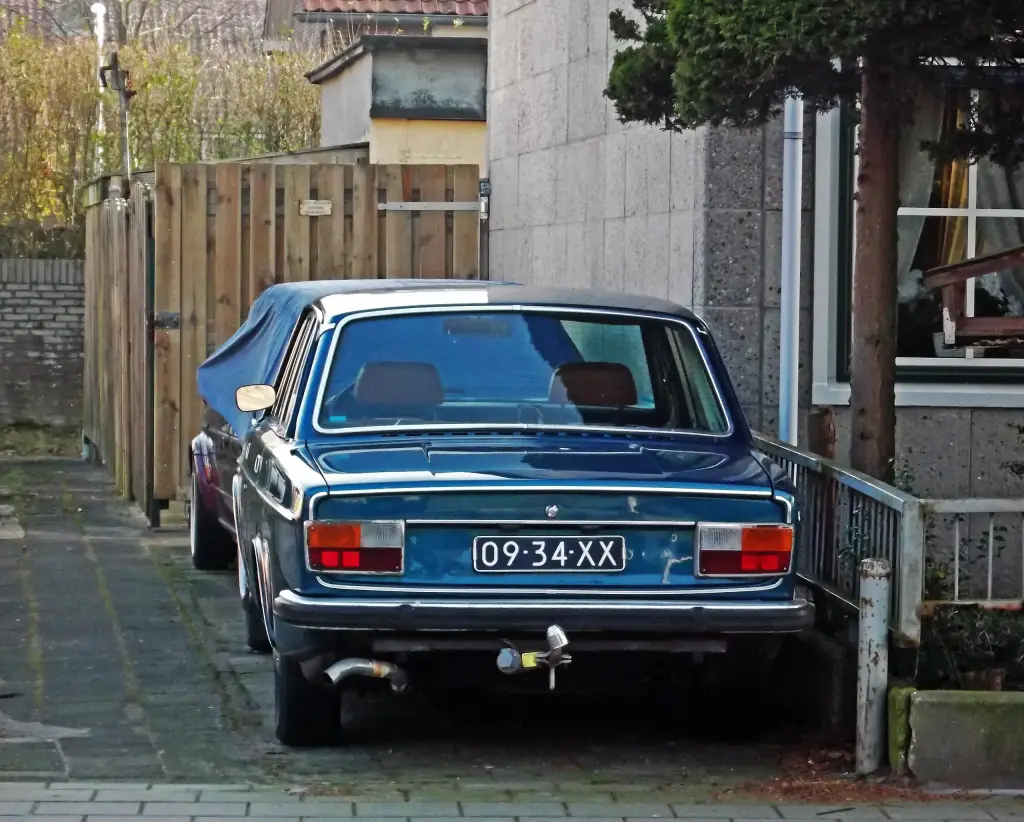
Volvo pitched the 164 against the Mercedes-Benz 250 and the Jaguar XJ6, and it was launched in the same year as the BMW E3. Road testers found its fuel economy compared well with six-cylinder rivals such as the BMW 530.
Changes through the years
For 1972 the 164 gained Bosch D-Jetronic fuel injection in the B30E (high compression) and B30F (low compression), sold as the 164E. The dashboard was revised, a centre console appeared and flush pull-type door handles were fitted. A major facelift for 1973 brought new rear and side lamps, a flatter grille, a straight front bumper and the new instrument cluster shared with the 140.
In 1974 the 164 received large safety bumpers, stronger doors, the loss of the front quarter lights and one of the earliest heated-seat options. The floor pan was revised and the fuel tank moved from under the boot floor to a safer position near the rear axle. For 1975 the 264 with the PRV V6 took over, but the 164 stayed in limited production for another year for the United States and Japan because the new V6 could not immediately meet federal emissions rules.
The 164TE
A limited edition, the 164TE, was built only in 1974 and only for Great Britain, Germany and Australia. It came with air conditioning, an eight-track player with four speakers, headlamp wash-wipe, rear head restraints, rear reading lamps and a carpeted, lit boot, in three metallic colours only.
Design and features
- Straight six: the 3.0-litre B30 was a six-cylinder derivative of the B20 four.
- Longer body: wheelbase, wings and bonnet grew to house the six; the rest was 140 Series.
- Early electronic injection: Bosch D-Jetronic from 1972, standard from 1974.
- Luxury fittings: leather seats, woodgrain dashboard and optional air conditioning.
- Comfort and safety: heated seats and a fuel tank moved ahead of the rear axle for 1974.
Volvo 164 versions
- 164 (1969–1971): twin Zenith-Stromberg carburettors, 3.0-litre six.
- 164E (1972–1975): Bosch D-Jetronic injection, 160 PS.
- 164TE (1974): fully equipped edition for three markets.
- 1975 model: larger six-panel tail lamps, electronic ignition, electric front windows.
The 164 shared its body with the Volvo 140 Series and was replaced by the Volvo 200 Series. More cars are in the Volvo collection.
Sources
- Volvo 164, English Wikipedia: history, engines, performance, yearly changes
- Volvo 140 Series, English Wikipedia: shared body, context