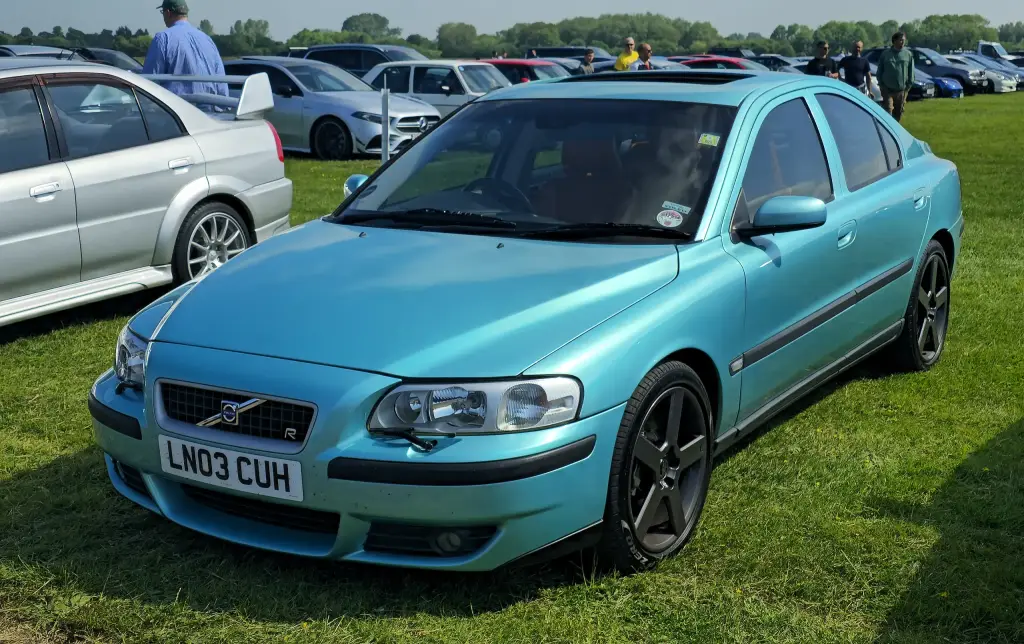
The Volvo S60 is a compact executive saloon built since 2000 in three generations. It replaced the S70, has always been paired with an estate (the V70 and then the V60), and its third generation became the first Volvo produced in the United States.
Volvo S60 at a glance
| Production | since 2000 |
|---|---|
| Generations | 2000 (P2), 2010, 2018 (SPA) |
| Estate sister | Volvo V70, then Volvo V60 |
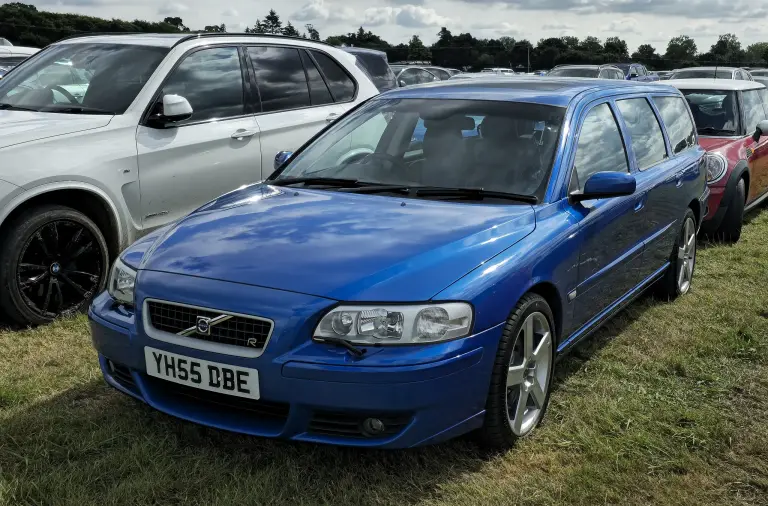
| Performance model | S60 R, from 2002 |
| Drag coefficient | 0.28 on the first generation |
| Safety | SIPS with side airbags, WHIPS, curtain airbags |
| US production | Ridgeville, South Carolina, from the third generation |
| End of production | 2024 for North America and Europe |
| Rivals | BMW 3 Series, Mercedes-Benz C-Class, Alfa Romeo 156 |
History of the Volvo S60
The first S60 arrived in 2000 as a 2001 model on Volvo’s P2 platform, shared with the S80, V70, XC70 and eventually the XC90. Its styling drew on the ECC concept car and the S80, with a cab-forward shape, an organic surface treatment and a pronounced shelf along the beltline that helped it reach a drag coefficient of 0.28. Volvo aimed it at the BMW 3 Series, Mercedes-Benz C-Class and Alfa Romeo 156, but kept it in production for nine years with several facelifts, unlike its shorter-lived rivals.
Safety and equipment
Volvo fitted front and rear crumple zones, dual-threshold front airbags with a collapsible three-stage steering column, SIPS side impact protection with side airbags, curtain airbags for front and rear passengers, anti-submarine seats, five padded head restraints with WHIPS and automatic seatbelt pre-tensioners. In 2004 PremAir became standard on the radiator surface, converting up to 75% of ground-level ozone in the cooling air into oxygen, while the Interior Air Quality System monitored pollutants and recirculated air automatically. Recyclable sheet metal and other metals reached 85% of the car.
The S60 R of 2002 added the Four-C adaptive chassis, which later became an option on other S60s, and a Haldex all-wheel-drive system. In 2004 the T5 engine grew from 2.3 to 2.4 litres with variable valve timing and 10 hp more, the 2.5 gained ULEV certification and the D5 diesel rose from 163 to 185 PS. Three transmissions were offered, including a five-speed Geartronic automatic with a manual mode.
Later generations
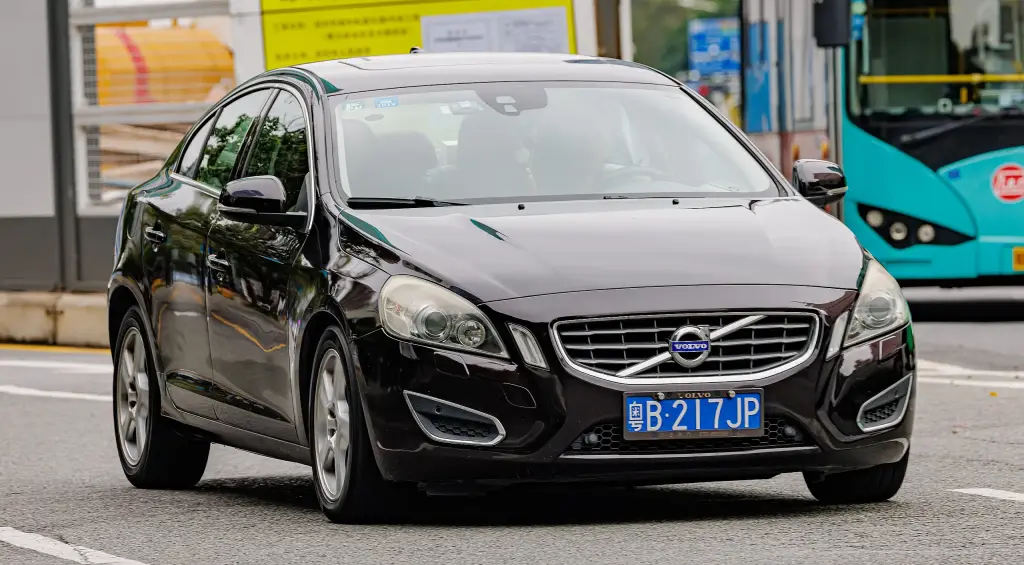
The second generation came in 2010 with the V60 as its estate counterpart, and the third in 2018 on Volvo’s Scalable Product Architecture. That car became the first Volvo built in the United States, at Ridgeville in South Carolina, and for a time the American plant was the sole global source of the S60 saloon after Chinese production paused in early 2019. Production for North America and Europe ended in 2024, while Chinese production continued for China and selected Asia-Pacific markets.
Design and features
- P2 platform: the first generation shared its underpinnings with the S80 and V70.
- S60 R: the 2002 performance model with Four-C chassis and all-wheel drive.
- Safety package: SIPS, WHIPS, curtain airbags and anti-submarine seats.
- Clean air: PremAir radiator coating and an interior air quality system from 2004.
- American build: the third generation was made in South Carolina.
Volvo S60 versions
- S60 (2000): first generation on the P2 platform.
- S60 R (2002): high-performance version with Four-C chassis.
- S60 T5 and D5: turbo petrol and diesel models.
- S60 (2010): second generation with the V60 estate.
- S60 (2018): third generation on the SPA platform.
The S60 replaced the Volvo S70 and shares its platform history with the Volvo S80 and V70. More cars are in the Volvo collection.
Sources
- Volvo S60, English Wikipedia: generations, platform, styling, safety, engines, production