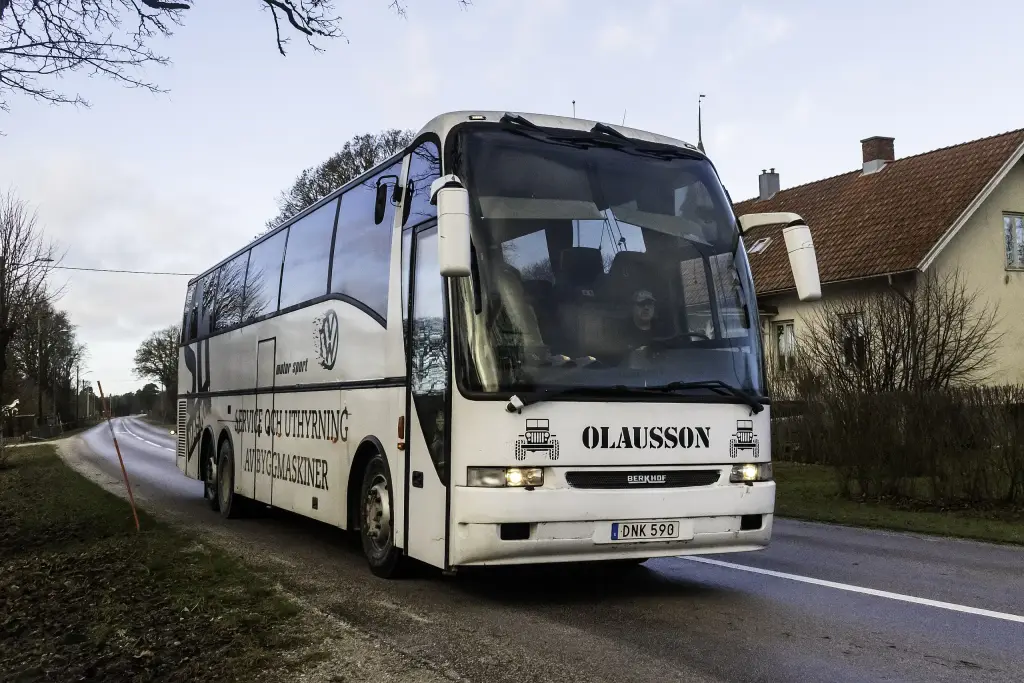
The Volvo B12, also called the B12R in some markets, was a heavy coach chassis built in Sweden from 1991 to 2001 and in Brazil from 1997 to 2011. It was Volvo’s first large coach chassis with a vertically mounted engine, and the only rear-engined coach chassis the company offered as a tri-axle.
Volvo B12 at a glance
| Production | 1991–2001 in Sweden, 1997–2011 in Brazil |
|---|---|
| Type | rear-engined heavy coach chassis |
| Engines | 12.0-litre TD122/TD123, 12.1-litre D12A from 1995 |
| Power | 340 to 420 bhp in the Swedish D12A range |
| Layout | vertical engine, limiting the bodies that would fit |
| Tri-axle | yes, the only rear-engined Volvo coach chassis so offered |
| Drögmöller models | B12-500 EuroPullman and B12-600 EuroComet |
| Successor | B12B from 2001 |
| Brazilian versions | B12B from 1997, B12R from 2003, quad-axle from 2010 |
History of the Volvo B12
The B12 was Volvo’s first large coach chassis with the engine mounted vertically, which limited the body designs that could be fitted over it. It started with the 12.0-litre TD122, replaced in 1995 by the 12.1-litre D12A. Because of the height of the engine it was probably less popular than the lower B10B, but it was the only rear-engined Volvo coach chassis available as a tri-axle; the alternative, the mid-engined B10M, put the engine where operators wanted luggage space.
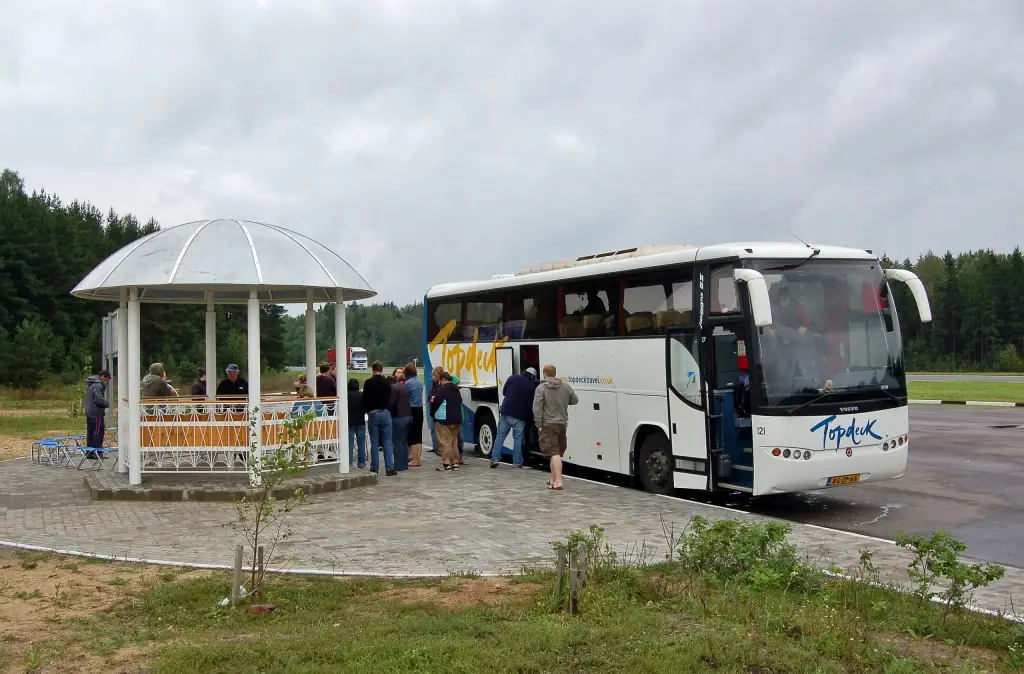
After Volvo bought Drögmöller in 1994, the German coachbuilder switched from building complete chassis-less coaches to building on Volvo chassis, and the B12 was the obvious choice. Only two Drögmöller models became Volvos from 1995: the E320 EuroPullman as the B12-500 and the E330H EuroComet as the B12-600, both 12 metres long. The B12-600 later became the basis of the 9900.
Brazil
Swedish production ended in 2001 in favour of the B12B, which had the same engine mounted horizontally. At Curitiba the chassis had first been imported from Sweden and was launched locally as the B12B in 1997, built until 2001 and then replaced by a vertical-engined B10R until 2003. In 2003 the B12 returned as the B12R with a newer 12.1-litre engine, and in 2010 a four-axle version was added for the largest double-deckers. Brazilian production ended in 2011 and the B11R took over in 2012 under output-based names.
Engines
Swedish chassis used the TD122 from 1991 with 356 or 396 bhp, the TD123 from 1992 with up to 405 bhp, and from 1995 the D12A at 340, 380 or 420 bhp to Euro II. The Brazilian B12R used the D12D at the same three outputs.
Design and features
- Vertical engine: Volvo’s first large coach chassis laid out this way.
- Tri-axle option: the only rear-engined Volvo coach chassis that offered it.
- Drögmöller heritage: the B12-500 and B12-600 came from Heilbronn designs.
- Long Brazilian life: built at Curitiba until 2011.
- Coach comfort: a 12-litre engine for long-distance work.
Volvo B12 versions
- B12 (1991): Swedish-built chassis with the TD122 engine.
- B12 with D12A (1995): 340, 380 or 420 bhp.
- B12-500 and B12-600: Drögmöller EuroPullman and EuroComet.
- Brazilian B12R (2003): vertical 12.1-litre engine, later four-axle.
- B12R in Australia: the name used for standard Swedish-built chassis.
The B12 was replaced by the Volvo B11R family and its B12-600 version grew into the Volvo 9900. More buses are in the Volvo collection.
Sources
- Volvo B12, English Wikipedia: history, engines, Drögmöller models, Brazilian production