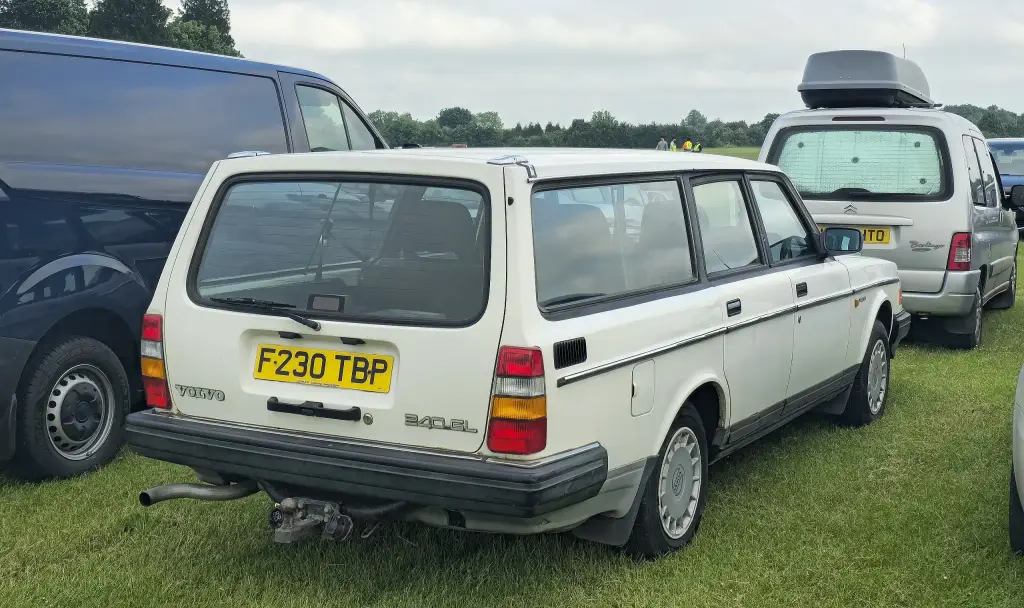
The Volvo 200 Series, sold as the 240 and 260, was built from 1974 to 1993. Developed from the 140 Series, it applied the lessons of Volvo’s VESC experimental safety car to a production family car and became the model most people picture when they think of a Volvo.
Volvo 200 Series at a glance
| Production | 1974–1993 |
|---|---|
| Models | 240 (242, 244, 245) and 260 (262C, 264, 265) |
| Design | Jan Wilsgaard |
| Bodies | two- and four-door saloons, estate, limited convertible |
| Engines | overhead-cam fours based on the B20; PRV V6 in the 260 |
| Safety | VESC-derived crumple zones, later side impact protection |
| Suspension | MacPherson struts front, modified 140 rear |
| Built | over 2.8 million |
| 260 ended | 1984 |
| Last 240 | 14 May 1993 |
Based on one source, the English Wikipedia article on the 200 Series.
History of the Volvo 200 Series
The 240 and 260 arrived in the autumn of 1974 with six versions of the 240 (242L, 242DL, 244DL, 244GL, 245L and 245DL) and two of the 260 (264DL and 264GL). The cars looked much like the 140 and 164 and shared the basic body shell from the cowl back, but the front was completely restyled with the “shovel nose” taken from the Volvo VESC safety prototype of 1972. The 200 also brought overhead-cam engines derived from the B20, MacPherson strut front suspension and rack-and-pinion steering.
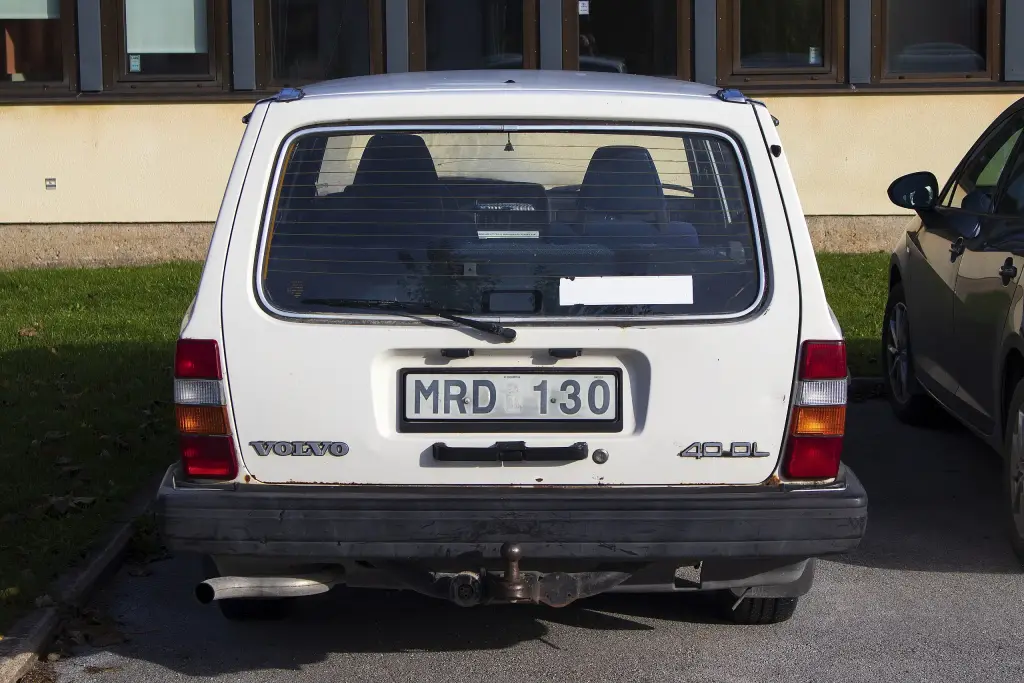
The range grew through the 1970s. The 265 DL estate with a six-cylinder engine appeared for 1976, and at the Paris Motor Show that year Bertone showed the stretched 264 TE, a seven-seat limousine on a 3,430 mm wheelbase built in Italy; King Carl XVI Gustav of Sweden used one, as did much of East Germany’s political leadership. The sporty 242 GT arrived for 1977, and a 1979 facelift brought flush square headlamps and new wraparound tail lamps.
Filling out the range
A turbodiesel six arrived late in 1979, the GLT replaced the GT in 1980, and the Turbo came in 1981 with a larger 2.8-litre six for the 260. The 260 was discontinued in 1984 and replaced by the 700 Series, but the four-cylinder 240 was too popular to drop and carried on for another nine years.
The last 240 left the line on 14 May 1993, ending almost two decades of production and more than 2.8 million cars. The 200 Series did as much as any single model to establish Volvo’s reputation for safety and durability, and many are still in everyday use.
The 262C
A separate luxury coupé, the 262C, was built by Bertone in Turin from 1977, with a lowered roof and a PRV V6. It shared the 200 Series floor pan and most of the 260’s panels.
Design and features
- VESC safety: large front and rear crumple zones and a front end taken from the 1972 safety prototype.
- Overhead-cam engines: a new family derived from the pushrod B20, with fuel injection available.
- Better chassis: MacPherson struts and rack-and-pinion steering instead of the 140’s arrangement.
- Long life: built for 19 years with only minor facelifts.
- Coachbuilt options: Bertone’s 262C coupé and the stretched 264 TE limousine.
Volvo 200 Series versions
- 242: two-door saloon, including the 242GT of 1977.
- 244 and 245: the four-door saloon and estate that made up most sales.
- 262C: Bertone-built coupé with a lower roof and V6 engine.
- 264 and 265: V6 saloon and estate, including the 264 TE limousine.
- Turbo and GLT: performance versions from 1980–1981.
The 200 Series followed the Volvo 140 Series and was joined by the Volvo 262C coupé. More cars are in the Volvo collection.
Sources
- Volvo 200 Series, English Wikipedia: history, models, facelifts, production