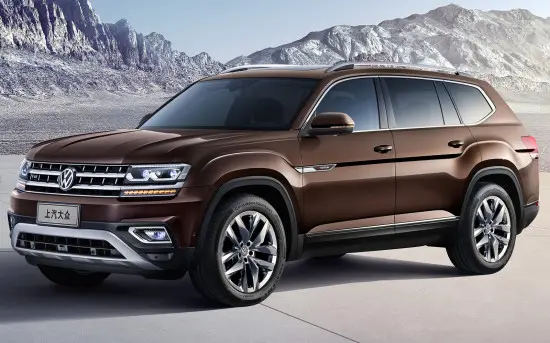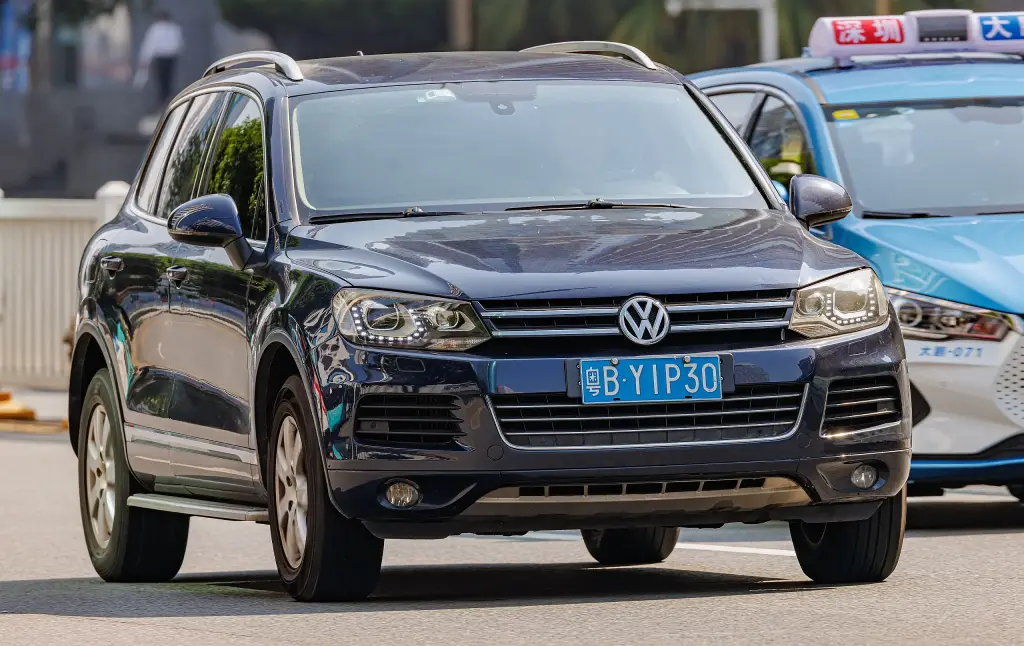
The Volkswagen Touareg is a mid-size luxury crossover SUV produced from August 2002 until March 2026 and named after the Tuareg people of the Sahara. It was Volkswagen’s flagship SUV throughout its life and was built at the Bratislava plant in Slovakia. It was developed jointly with the Porsche Cayenne and the Audi Q7, all three sharing the Volkswagen Group PL71 platform in the first generation, and over its three generations it took victory in the 2005 DARPA Grand Challenge with the autonomous Stanley and won stages of the Dakar Rally.
Volkswagen Touareg at a glance
| Maker | Volkswagen |
|---|---|
| Production | August 2002 – March 2026 |
| Plant | Bratislava, Slovakia; CKD assembly in Malaysia from 2024 |
| First generation | Typ 7L, 2002–2010, on the PL71 platform |
| Platform partners | Porsche Cayenne and Audi Q7 |
| Second generation | 2010–2018, on the PL72 platform, with a full hybrid |
| Third generation | 2018–2026, on the MLB Evo platform, with a plug-in hybrid |
| Engines, first generation | from five to twelve cylinders |
| W12 | 6.0 litres, 2005–2010, 0–100 km/h in 5.9 s |
| V10 TDI | 2002–2008 |
| Ground clearance | 160 mm at load, 244 mm off-road, 300 mm at maximum |
| North America | sales ended with the 2019 model year |
History of the Volkswagen Touareg
The Touareg, internally the Typ 7L, was developed as a joint project between Porsche and the Volkswagen Group, involving both Audi and Volkswagen. A team in Weissach led by Klaus-Gerhard Wolpert created the PL71 platform that underpinned the Touareg, the Audi Q7 and the Porsche Cayenne; the Touareg and Cayenne seated five, while the Q7’s longer wheelbase took a third row for seven. Porsche was still independent of the Volkswagen Group during development, and its chief executive Wendelin Wiedeking wanted to diversify beyond sports cars, which led to the Cayenne as Porsche’s first four-door model. The Touareg and Q7 were built in Bratislava, while Porsche set up a Cayenne line in Leipzig.
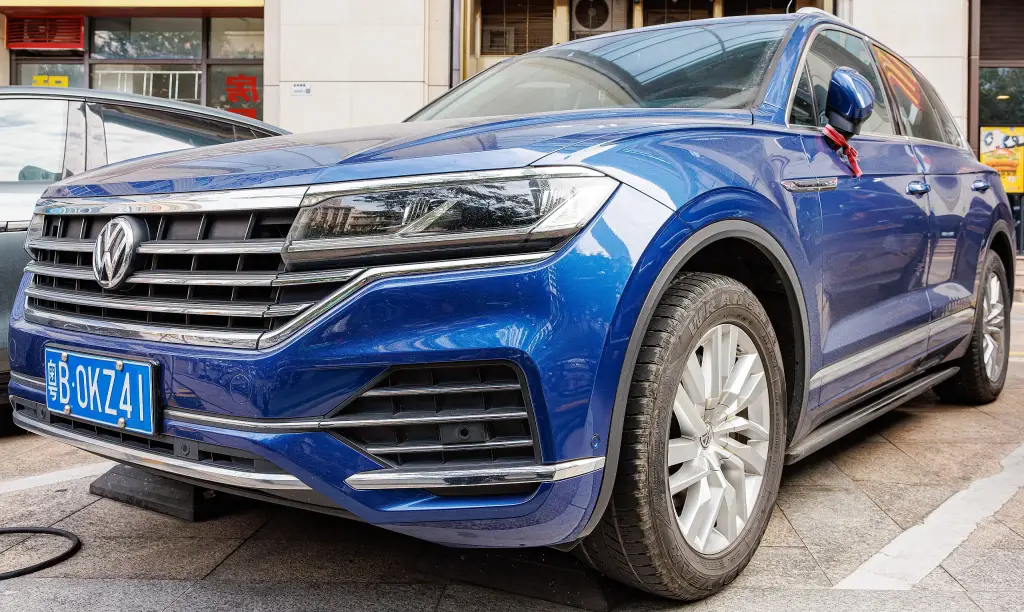
The first-generation Touareg came with a 4XMotion four-wheel-drive system with an automatically and progressively locking centre differential, a manual override and a low range, optional four-wheel active air suspension that could raise the ride height on demand, an optional locking rear differential and, unusually, an optional front locking differential. Ground clearance was 160 mm at load level, 244 mm in the off-road setting and 300 mm at maximum height. The engine range was unusually broad, from five to twelve cylinders. The 6.0-litre W12 of 2005 to 2010 was meant as a limited edition of 500 cars, about 330 of them for Saudi Arabia and the rest for Europe, with none sold in the United States, but it became an unrestricted variant; Volkswagen quoted 0 to 100 km/h in 5.9 seconds and a limited 250 km/h. The V10 TDI was sold from 2002 to 2008, though emissions rules took it off the American market for a while and stricter California standards cut its 2008 availability to 43 states before it was dropped there.
The first facelift was shown at the 2006 Paris Motor Show and reached North America at the 2007 New York show as a 2008 model. It brought the shield grille shared with other Volkswagens, more than 2,300 redesigned parts and new technology: ABS Plus, which worked with the traction control to shorten braking distances by up to 25 per cent on loose surfaces; Front Scan, an adaptive cruise control that could slow or stop the car in traffic; and Side Scan, a blind-spot monitor with rear radar. In the United States and Canada the facelifted car was sold as the Touareg 2 for 2008 to 2010. The R50 of 2007 was the third Volkswagen, after the Golf and the Passat, to get the R treatment. The second generation of 2010 shared the PL72 platform and added a full hybrid, and the third of 2018 moved to the MLB Evo architecture shared with the Cayenne, Q7, Q8, Bentley Bentayga and Lamborghini Urus, adding a plug-in hybrid; a facelift came for 2024 and production of all variants ended in March 2026. Volkswagen stopped selling the Touareg in North America from 2019, pointing to lower demand than for the larger and cheaper Atlas.
Design and features
- Group flagship SUV: built with the Porsche Cayenne and Audi Q7 on shared platforms.
- Off-road hardware: low range, locking differentials and air suspension with up to 300 mm of clearance.
- W12: a 6.0-litre twelve-cylinder version of 2005–2010 with 5.9-second acceleration.
- Stanley: a Touareg won the 2005 DARPA Grand Challenge as an autonomous vehicle.
- Three generations: from the PL71 of 2002 to the MLB Evo car of 2018–2026.
Volkswagen Touareg versions
- Touareg 7L (2002–2010): the first generation, from five to twelve cylinders.
- V10 TDI (2002–2008): the ten-cylinder diesel.
- W12 (2005–2010): the 6.0-litre flagship.
- R50 (2007): the performance version.
- Touareg 2 (2008–2010): the facelifted first generation in North America.
- Second and third generations: 2010–2018 and 2018–2026.
The Touareg is the largest SUV of the range above the Tiguan, and it took the flagship role once held by the Phaeton. More cars are in the Volkswagen collection.
Video: Ps Profis – VW Touareg V10 TDI
Video by PS Profis on YouTube.
Sources
- Volkswagen Touareg, English Wikipedia: development, generations, engines, facelift, end of production