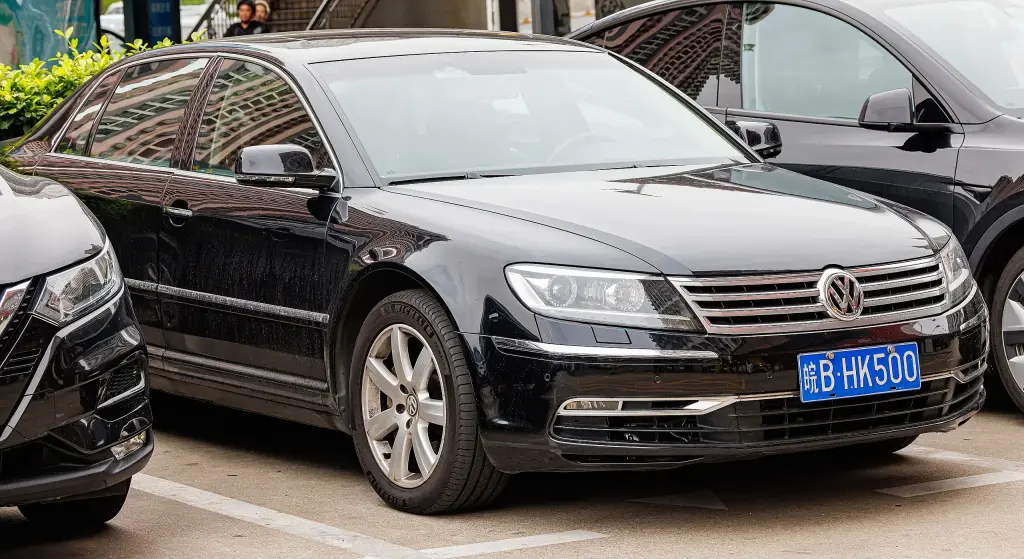
The Volkswagen Phaeton, internally the Typ 3D, is a full-size luxury saloon that Volkswagen called its premium class vehicle. It was introduced at the 2002 Geneva Motor Show and sold worldwide, with North American sales ending in 2006 and global sales in 2016. Its name comes from Phaëton, the son of Helios in Greek mythology, by way of the phaeton carriage body style. Production ended in March 2016 and the Dresden Transparent Factory began assembling the e-Golf instead from April 2017.
Volkswagen Phaeton at a glance
| Maker | Volkswagen |
|---|---|
| Internal code | Typ 3D |
| Production | 2002 – March 2016 |
| Debut | Geneva Motor Show, 2002 |
| North American sales | ended in 2006 |
| Platform | D1, a steel version of the group D platform |
| Shared with | Bentley Continental GT and Flying Spur |
| Drive | Torsen 4motion four-wheel drive, optional on the 3.2 VR6 |
| Suspension | adaptive air suspension with continuous damping control |
| Climate | four zones, draught-free |
| Torsional rigidity | 37,000 N·m per degree |
| Patents | more than a hundred specific to the car |
History of the Volkswagen Phaeton
The Phaeton was conceived by Ferdinand Piëch, then chairman of the Volkswagen Group, who wanted a car that would surpass Mercedes-Benz and BMW in the German prestige market, partly as a response to their move into Volkswagen’s own territory with the A-Class and the 3 Series Compact. Although the group already had the Audi A8, the Phaeton was meant to be a comfort-oriented limousine in the manner of the Mercedes-Benz S-Class and Lexus LS, and it was to move the Volkswagen brand upmarket as its flagship. Development under the internal code VW611 began with Piëch giving his engineers ten parameters: among them, the car had to be capable of running all day at 300 km/h with an outside temperature of 50 °C while keeping the interior at 22 °C, the oil pressure warning light had to stay off after a long flat-out run and an emergency stop, torsional rigidity had to reach 37,000 N·m per degree against 27,500 for the Mercedes-Benz S-Class W221, and the climate system had to be draught-free with four zones. The interior mock-up was, according to Volkswagen’s head of interior design, the most expensive in the company’s history, and a programmable auxiliary heater with its own fuel pump warmed the car before the passengers arrived. A design study called the Concept D at the 1999 Frankfurt show previewed the production car.
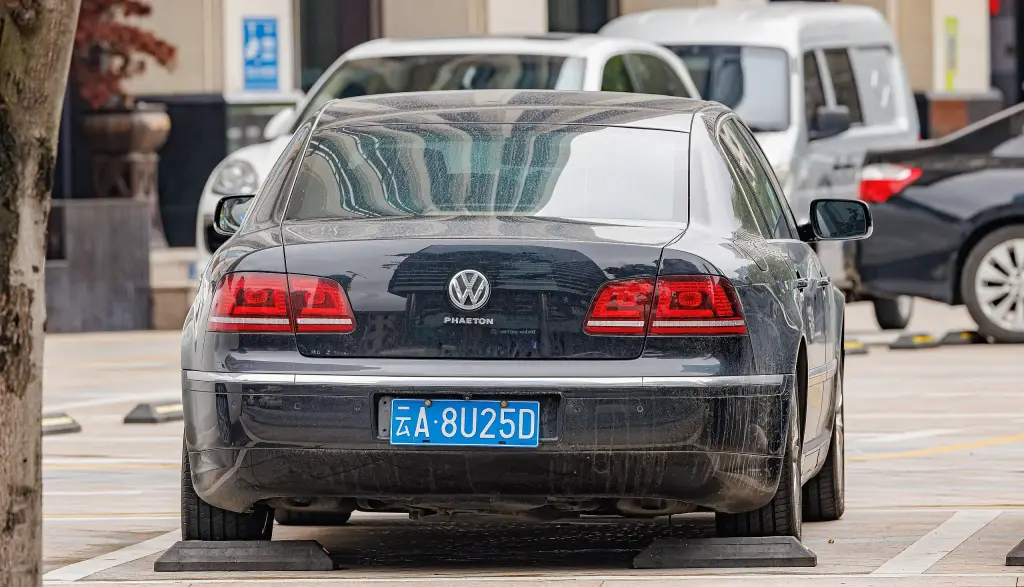
The Phaeton used a special version of the group D platform designated D1, shared with the Bentley Continental GT and Flying Spur. Unlike the Audi A8 with its aluminium space frame, the Phaeton had an all-steel body, and some systems such as the automatic transmission and certain engines were shared with the A8. Compared with the Audi A8L 4.2 FSI quattro it was 247 kg heavier, but still competitive in most driving tests thanks to more power, 335 hp against 330, and a shorter final drive of 3.65:1 against 3.32, although the weight cost it acceleration and fuel economy. Its wheelbase was the longest in the Volkswagen passenger car range, and its development produced more than a hundred patents specific to the car.
Standard equipment included Torsen-based 4motion four-wheel drive, optional on the 3.2-litre VR6, the four-zone climate system, an automatic window anti-fogging system and double-glazed windows with UV protection. The five-seat interior had 12-way electrically adjustable heated front seats with memory, with an optional 18-way driver and 16-way passenger system standard on the W12 that added ventilation and massage; the memory stored seat, seat-belt height, steering column and mirror positions. The rear bench could be heated or upgraded with six-way power lumbar support for the outer seats, ventilation and massage, and an optional four-seat layout replaced it with two individual 10-way seats, which also allowed the front passenger seat to be adjusted from the rear. Options included the auxiliary heater, a sunroof with integrated solar cells that powered the ventilation when the car was off, and electroluminescent licence plates. For comfort the car introduced front and rear adaptive air suspension with continuous damping control.
Design and features
- Piëch’s flagship: a luxury saloon meant to beat Mercedes-Benz and BMW at their own game.
- Steel D1 platform: shared with the Bentley Continental GT and Flying Spur.
- Extreme brief: 300 km/h in 50 °C heat with a 22 °C cabin, and 37,000 N·m per degree of rigidity.
- Four-zone climate: draught-free, with a programmable auxiliary heater.
- Adaptive air suspension: with continuous damping control front and rear.
Volkswagen Phaeton versions
- Phaeton (2002–2016): the standard five-seat car.
- Four-seat layout: two individual rear seats with memory and Easy Entry.
- W12: the flagship with 18-way driver and 16-way passenger seats as standard.
- Concept D (1999): the design study that previewed the production car.
The Phaeton sat above the Passat and the CC as the brand’s flagship. More cars are in the Volkswagen collection.
Video: Test VW Phaeton
Video by auto motor und sport on YouTube.
Sources
- Volkswagen Phaeton, English Wikipedia: origins, brief, platform, equipment, end of production