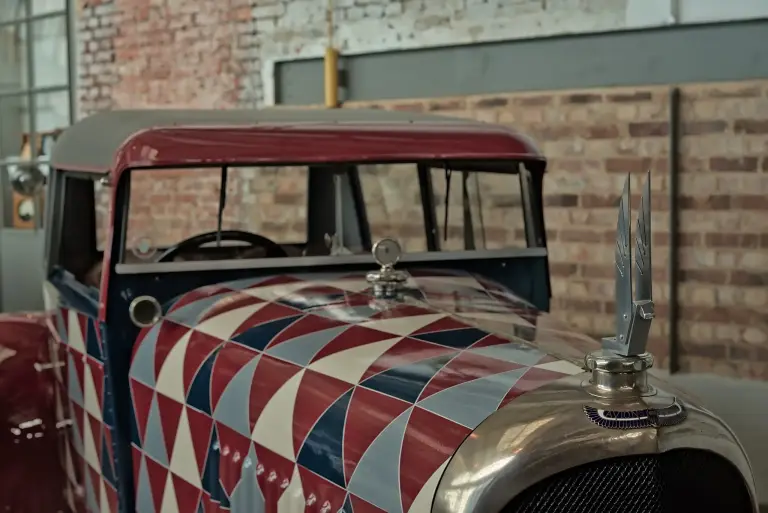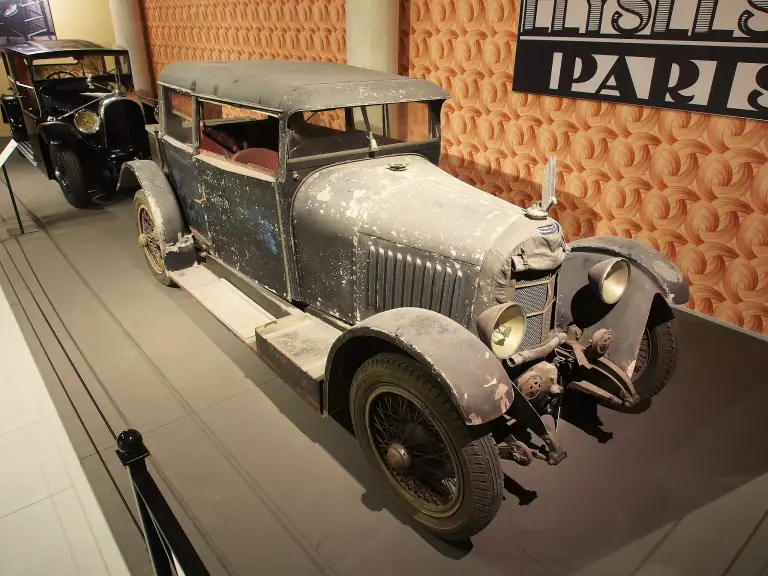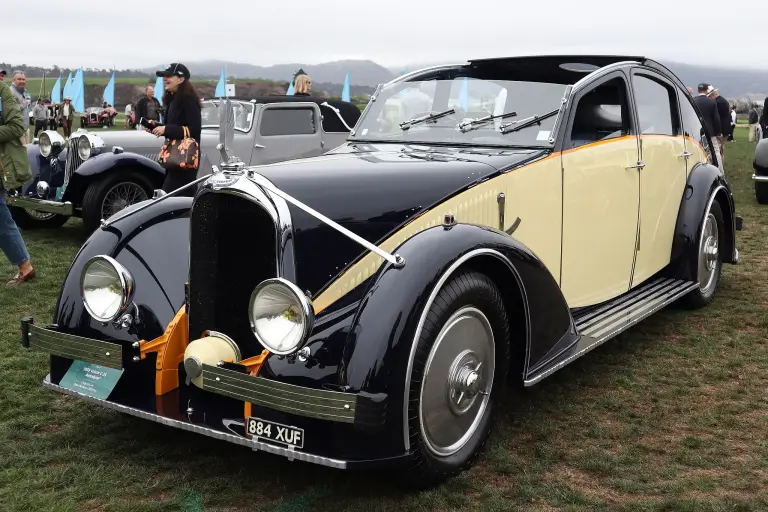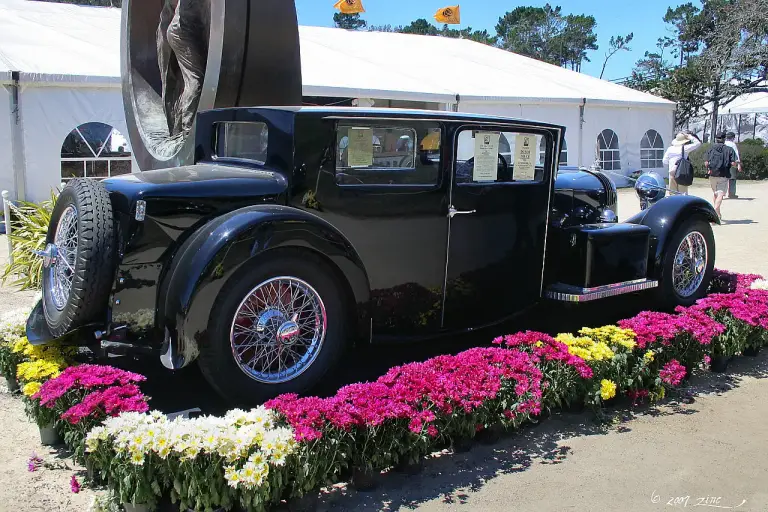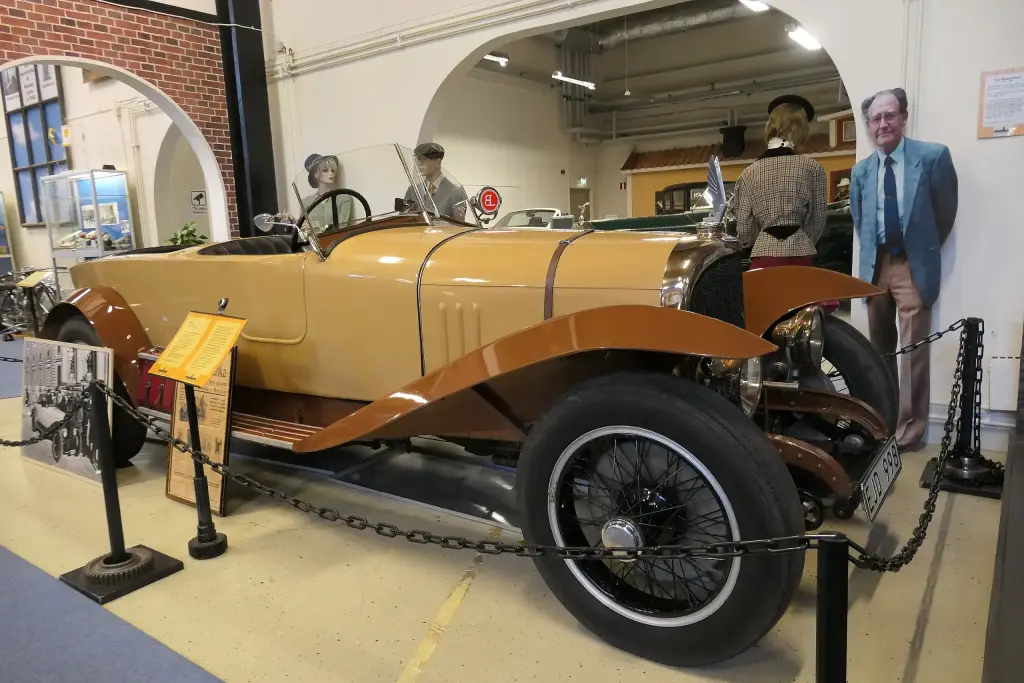
The Voisin C5 was one of the longest-running models of the early Avions Voisin range, built from 1923 to 1928. It carried the Knight sleeve-valve engine and the firm’s light, angular coachwork, and a 1923 example appears in the Hollywood film Three Comrades.
Voisin C5 at a glance
| Maker | Avions Voisin, Issy-les-Moulineaux |
|---|---|
| Production | 1923–1928 |
| Engine | Knight sleeve-valve |
| Coachwork | aluminium, rational style by André Noel |
| Bodies | Torpedo Sport, open tourer |
| Place in range | between the C4 and the C7 |
| Film appearance | Three Comrades (1938), a 1923 C5 |
| Survivor | 1924 C5 in the Swedish Bil- och teknikhistoriska samlingarna |
No Wikipedia article exists for the C5; this page is based on the Avions Voisin company article in English and French, and is based on one source.
History of the Voisin C5
The C5 arrived in 1923, four years after Gabriel Voisin founded his car company at Issy-les-Moulineaux. By then the marque had settled on a formula: Knight-type sleeve-valve engines, aluminium bodies and the rational coachwork developed with André Noel, with light weight, central weight distribution, large luggage boxes and angular lines. Voisin’s cars were luxury goods aimed at the same wealthy buyers as Bugatti, Hispano-Suiza, Isotta Fraschini, Bentley and Rolls-Royce, and the C5 was the model that carried that reputation through the middle of the decade.
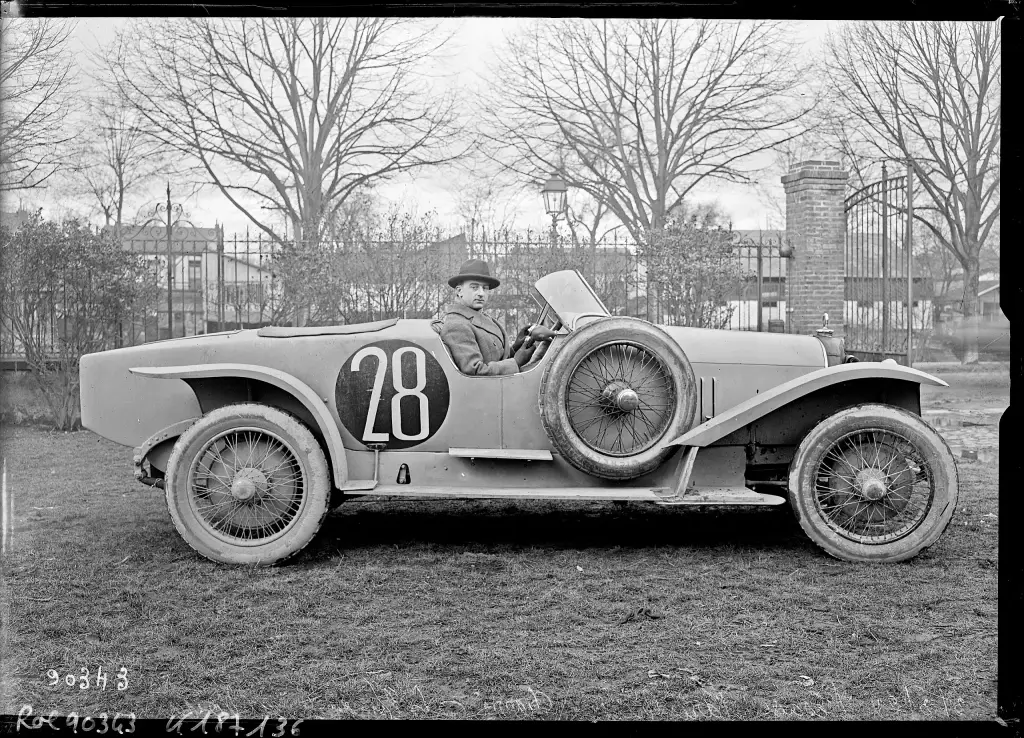
The C5 remained in production from 1923 until 1928, longer than any other early C-series model, while smaller and larger types came and went around it. Its bodies were usually open tourers, and the Torpedo Sport was the best-known sporting version. The aluminium panels kept weight down, and the sleeve-valve engine gave the smooth, quiet running that Voisin advertised as a luxury virtue. Cars were also supplied as chassis for independent coachbuilders, a common practice among French luxury makers of the period.
The model’s most unusual claim to fame came later. In the 1938 film Three Comrades, based on Erich Maria Remarque’s novel, one of the main characters owns a 1923 Voisin C5, and the car is seen frequently throughout the picture. A 1924 C5 survives in the Bil- och teknikhistoriska samlingarna in Sweden, and other examples are preserved in European museums. By the time the C5 gave way to the C7 in 1925–1929, Avions Voisin had established itself as one of the most individual of the French luxury marques.
Design and features
- Knight sleeve-valve engine: the valveless power unit used across the early range.
- Rational coachwork: light aluminium bodies with angular lines and central weight distribution.
- Torpedo Sport: the open sporting body most associated with the model.
- Long production run: built from 1923 to 1928, the longest of the early C-series.
- Film fame: a 1923 C5 features in the 1938 film Three Comrades.
Voisin C5 versions
- C5 (1923–1928): the standard production model.
- C5 Torpedo Sport: the open sporting version, as in the 1924 car shown here.
- Coachbuilt C5: chassis supplied to independent bodybuilders.
The C5 sat between the Voisin C1 and the smaller Voisin C7. More cars are in the Voisin collection.
Video: Voisin C5 Torpedo Sport 1924
Video on YouTube.
Sources
- Avions Voisin, English Wikipedia: company history, engines, models, film appearance
- Avions Voisin, French Wikipedia: coachwork, luxury market