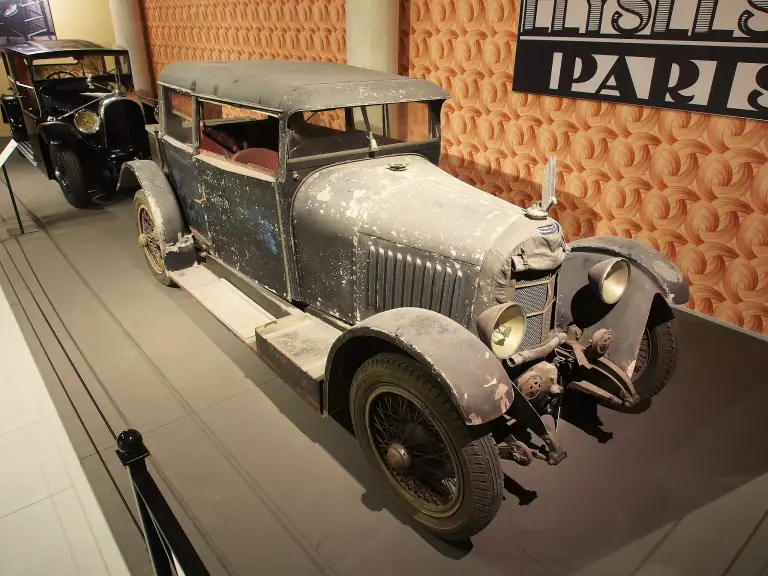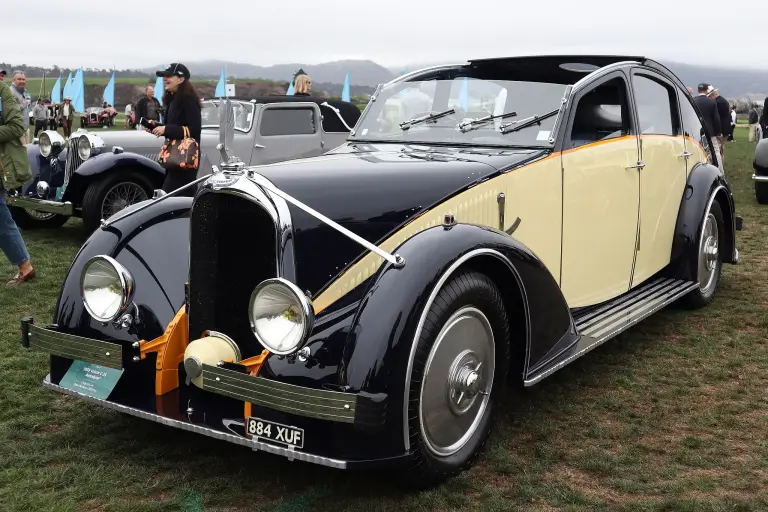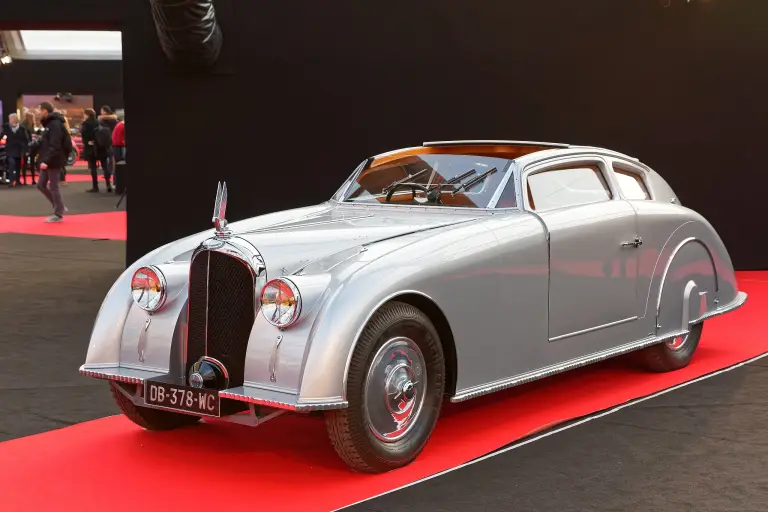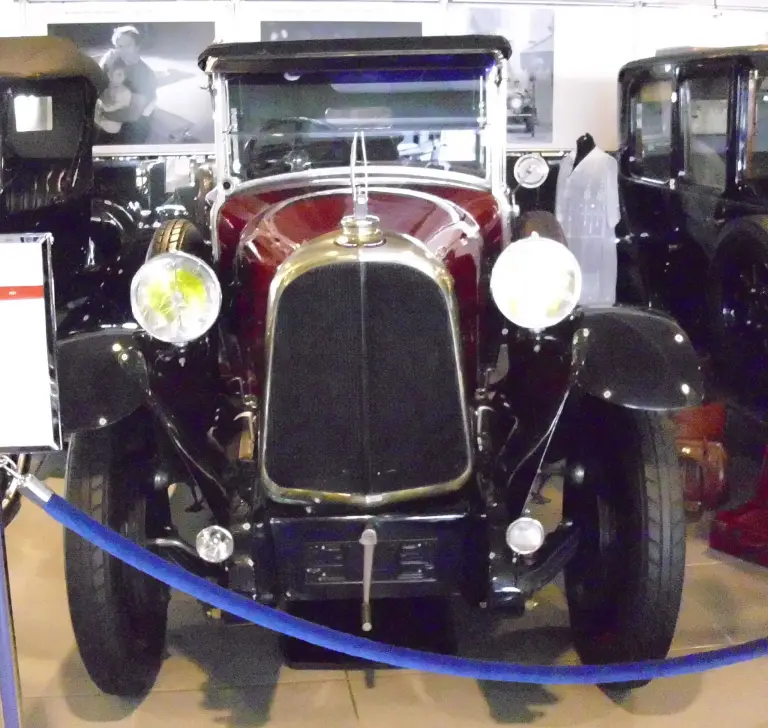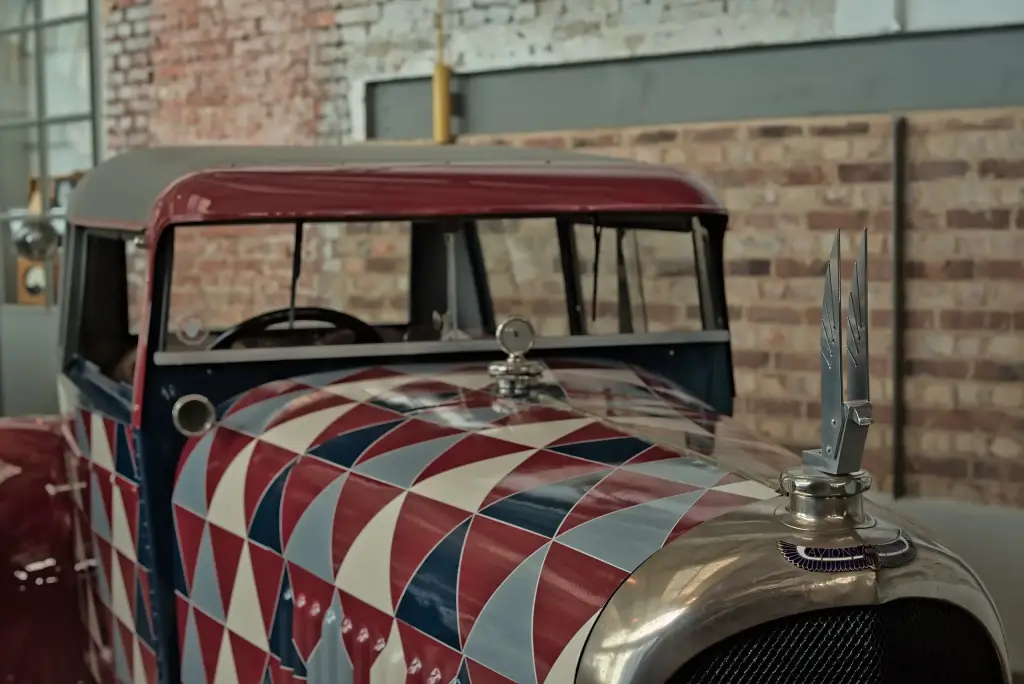
The Voisin C14 was produced from 1928 to 1933 and is remembered above all in Lumineuse form, its angular aluminium body pierced by unusually large windows. It belongs to the last generation of Voisin cars designed before the company turned to the dramatically low underslung chassis of the 1930s.
Voisin C14 at a glance
| Maker | Avions Voisin, Issy-les-Moulineaux |
|---|---|
| Production | 1928–1933 |
| Engine | Knight sleeve-valve |
| Body | Lumineuse, with extensive glazing |
| Coachwork | aluminium, rational style by André Noel |
| Chassis | conventional; the 1930s Voisins went underslung |
| Period | the Depression years in France |
| Survivors | Lumineuse cars in German and other European museums |
No Wikipedia article exists for the C14; this page is based on the Avions Voisin company article in English and French, and is based on one source.
History of the Voisin C14
The C14 arrived in 1928, in the middle of the most productive period of Gabriel Voisin’s company. The firm had been building cars at Issy-les-Moulineaux since 1919, using Knight sleeve-valve engines, aluminium bodies and the rational coachwork devised with André Noel. By the late 1920s the range was broad, stretching from the small C7 to large six- and twelve-cylinder cars, and the C14 slotted into the middle of it with a conventional chassis and a choice of closed and open bodies.
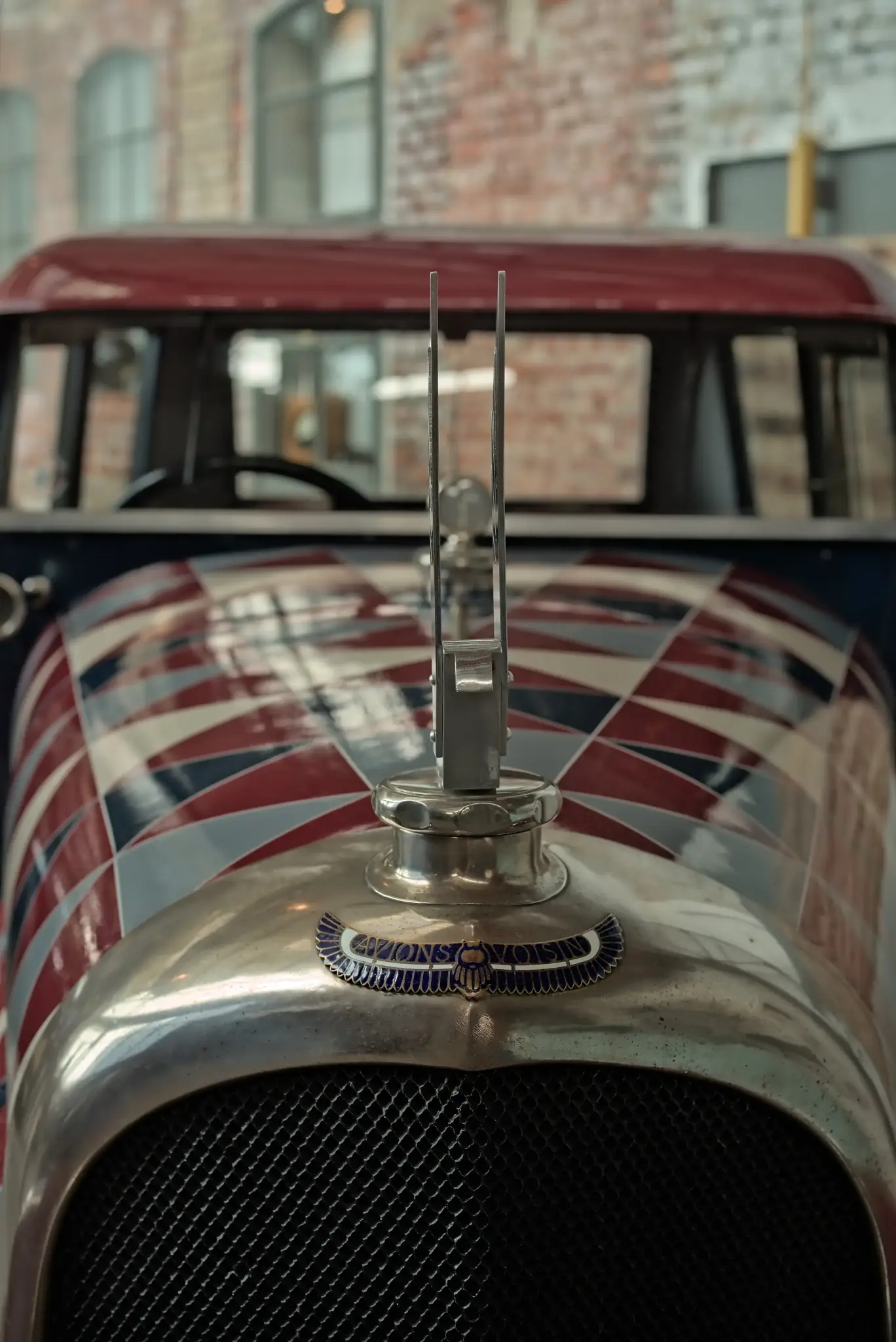
Its defining version was the Lumineuse, whose large windows and thin pillars gave the cabin far more light than most saloons of the day. The body remained angular and aluminium-panelled, in the style that made Voisin cars instantly recognisable, and the interior was trimmed for wealthy buyers who could also have chosen a Bugatti, Hispano-Suiza or Rolls-Royce. The C14 stayed in production until 1933, by which time Voisin had introduced the low underslung chassis that made its 1930s models, in the words of the English Wikipedia article, ‘strikingly low’.
Those final years were difficult ones. The Great Depression hit the French luxury car market hard, and in the early 1930s Gabriel Voisin could no longer pay all of his draughtsmen; the young engineer André Lefèbvre left, recommended by Voisin to Louis Renault, and went on to lead the Citroën Traction Avant, 2CV and DS projects. The C14, with its glazed Lumineuse bodies, stands at the end of the company’s expansive 1920s and just before the pared-back, low-slung cars that closed the story in 1939.
Design and features
- Lumineuse body: extensive glazing and thin pillars, unusual for a late-1920s saloon.
- Knight sleeve-valve engine: the valveless engine used across the Voisin range.
- Aluminium coachwork: light, angular panels in the rational Voisin style.
- Transitional chassis: conventional layout before the underslung cars of the 1930s.
- Long production: built from 1928 to 1933 through the worst of the Depression.
Voisin C14 versions
- C14 (1928–1933): the standard model with a choice of bodies.
- C14 Lumineuse: the glazed saloon that became the model’s signature.
- Coachbuilt C14: chassis finished by independent bodybuilders.
The C14 came after the Voisin C7 and before the V12 Voisin C20. More cars are in the Voisin collection.
Video: 1930 Avions Voisin C14 Berline
Video on YouTube.
Sources
- Avions Voisin, English Wikipedia: company history, underslung chassis, André Lefèbvre
- Avions Voisin, French Wikipedia: coachwork, model range