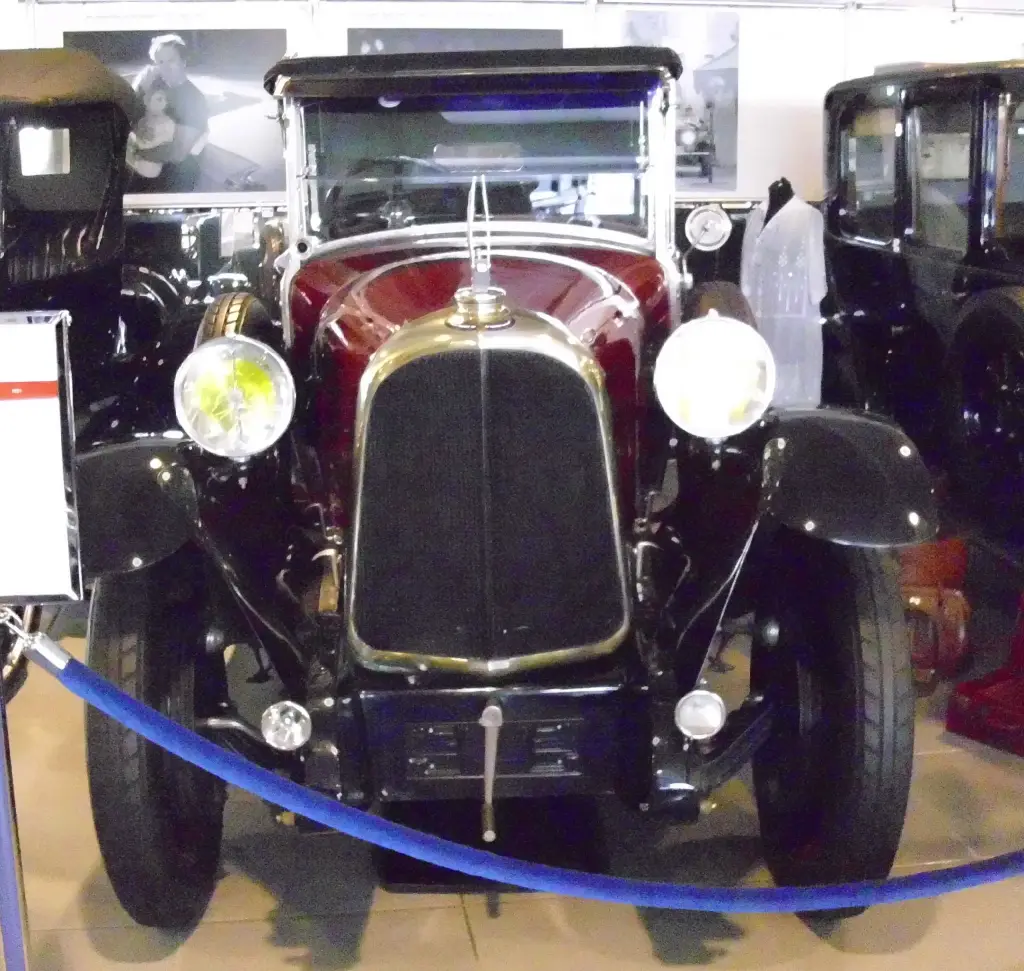
The Voisin C1 was the first model of Avions Voisin, the luxury car maker founded in 1919 by the aviation pioneer Gabriel Voisin. Built at Issy-les-Moulineaux between 1920 and 1924, it introduced the Knight sleeve-valve engine and the rational aluminium coachwork that defined the marque.
Voisin C1 at a glance
| Maker | Avions Voisin, Issy-les-Moulineaux |
|---|---|
| Founded by | Gabriel Voisin, 1919 |
| Production | 1920–1924 |
| Engine | Knight sleeve-valve, company range |
| Coachwork | rational style by André Noel, aluminium |
| Body | open tourer (Tourenwagen) |
| Racing | won the Coupe Georges Boillot, 1920, with Ernest Artault |
| Place in range | first of the numbered C-series |
| Successors | Voisin C2 (1921), Voisin C3 (1922–24) |
No Wikipedia article exists for the C1; this page is based on the Avions Voisin company article in English and French, and is based on one source.
History of the Voisin C1
Avions Voisin was founded in 1919 by Gabriel Voisin, an aviation pioneer who had built aircraft before the First World War. The works stood at Issy-les-Moulineaux, an industrial suburb to the south-west of Paris, and the first cars used Knight-type sleeve-valve engines instead of conventional poppet valves. Voisin’s designs made extensive use of light alloys, especially aluminium, a habit carried over from aircraft construction, while his collaborator André Noel shaped the firm’s ‘rational’ coachwork: light bodies, central weight distribution, capacious luggage boxes and distinctively angular lines. The C1, listed by the company as a 1920–1924 model, was the first of the numbered C-series.
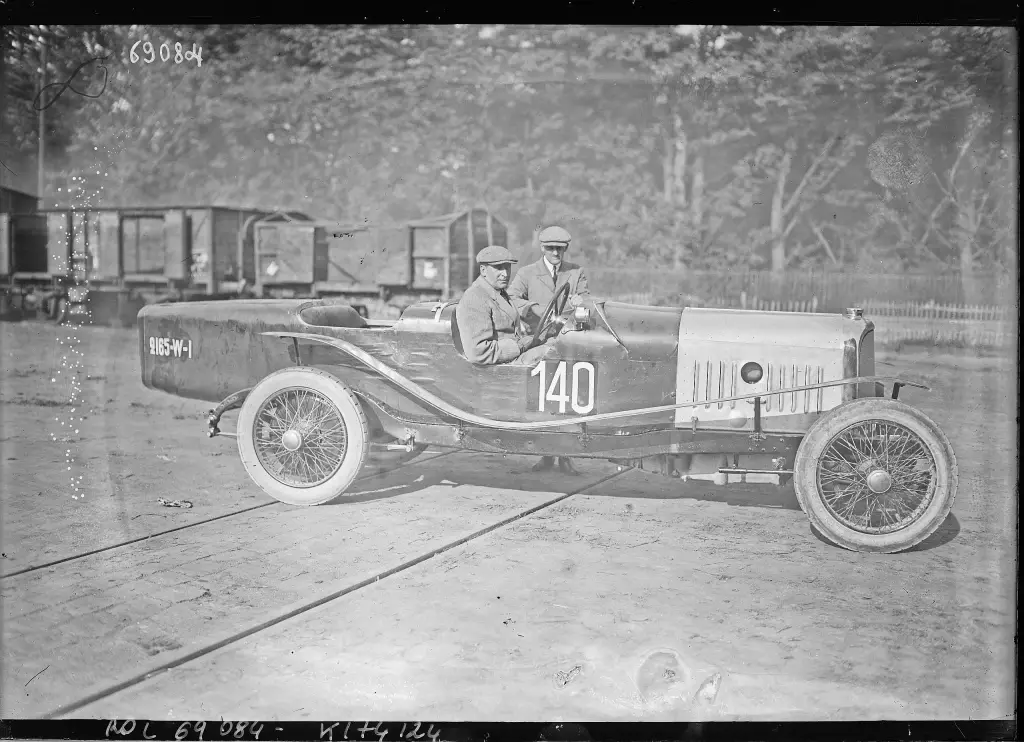
The C1 soon proved itself in competition. In 1920 Ernest Artault won the Coupe Georges Boillot at Boulogne-sur-Mer at the wheel of a Voisin C1, one of the young company’s earliest sporting successes. Works cars were still racing in 1921, when photographs show Artault and Rotival at the Gaillon hill climb in Voisin touring cars; Voisin also took the Mont Ventoux hill climb that year with Paul Bablot, although by then the team had moved on to the C3. Such results helped establish the marque beside the luxury builders of the day, among them Bugatti, Hispano-Suiza, Isotta Fraschini, Bentley and Rolls-Royce, when Voisin was barely two years old.
The C1 was replaced in stages: the C2 appeared in 1921 and the C3 in 1922, while the larger C5 followed in 1923. The early cars were conventional in layout compared with the dramatically low underslung chassis that Voisin adopted in the 1930s, and the surviving examples are open tourers. A 1921 C1 Tourenwagen is preserved in the museum at Vilafranca, and the angular aluminium body of that car shows the rational style in its purest early form. Gabriel Voisin’s company traded until 1939, but the C1 marks the point where an aircraft designer’s ideas were first put on four wheels.
Design and features
- Knight sleeve-valve engine: the valveless engine type used across the early Voisin range.
- Aluminium construction: light alloys borrowed from Gabriel Voisin’s aircraft practice.
- Rational coachwork: André Noel’s angular bodies with central weight distribution and large luggage boxes.
- Racing success: Ernest Artault’s win in the 1920 Coupe Georges Boillot at Boulogne-sur-Mer.
- Open touring body: the form in which surviving C1 cars are known.
Voisin C1 versions
- C1 (1920–1924): the standard production model and the first of the C-series.
- C1 Tourenwagen: open tourer; a 1921 car is preserved at the Vilafranca museum.
- Works racing C1: the cars of Artault and Rotival at Boulogne and Gaillon in 1920–1921.
The C1 began the line that continued with the Voisin C5 and Voisin C7. More cars are in the Voisin collection.
Video: Voisin C1 1919
Video on YouTube.
Sources
- Avions Voisin, English Wikipedia: company history, engines, models, coachwork
- Avions Voisin, French Wikipedia: 1920 Coupe Georges Boillot, competition record