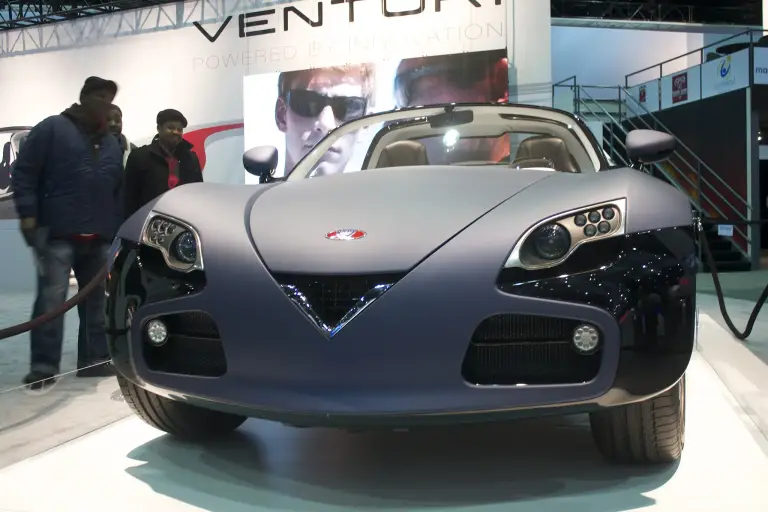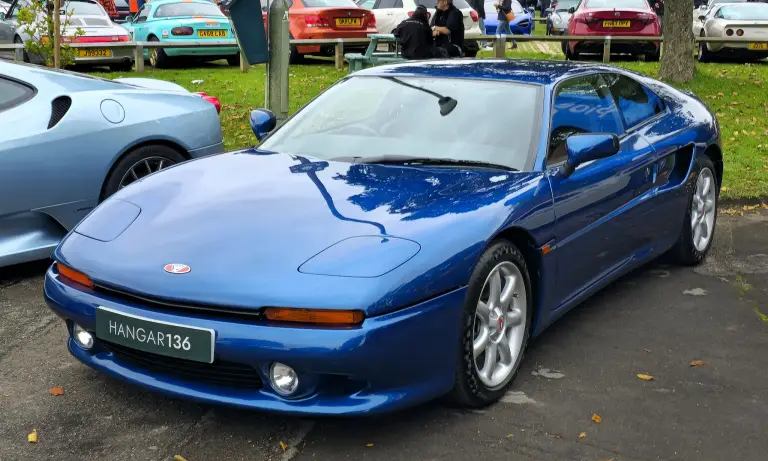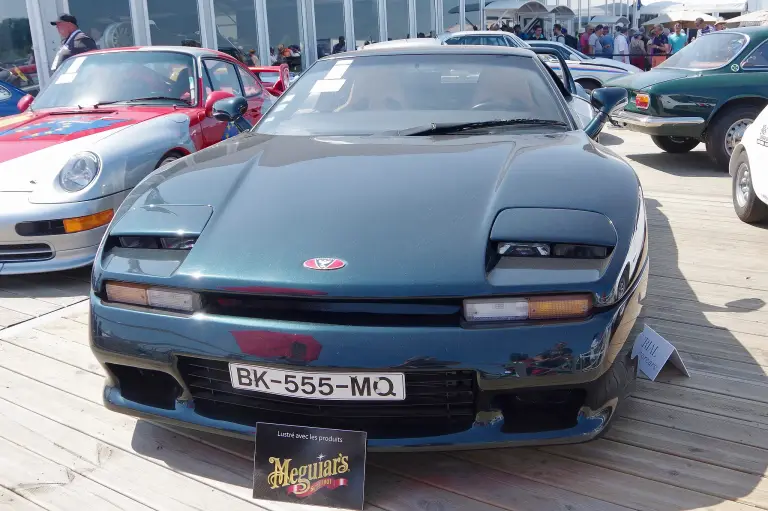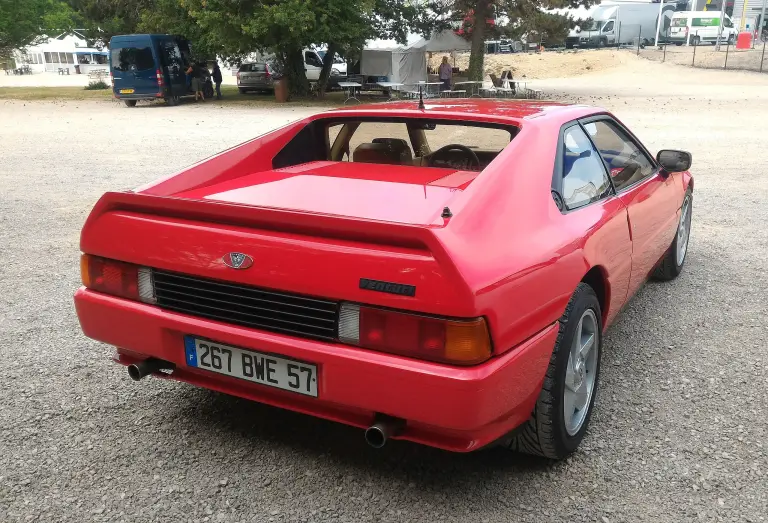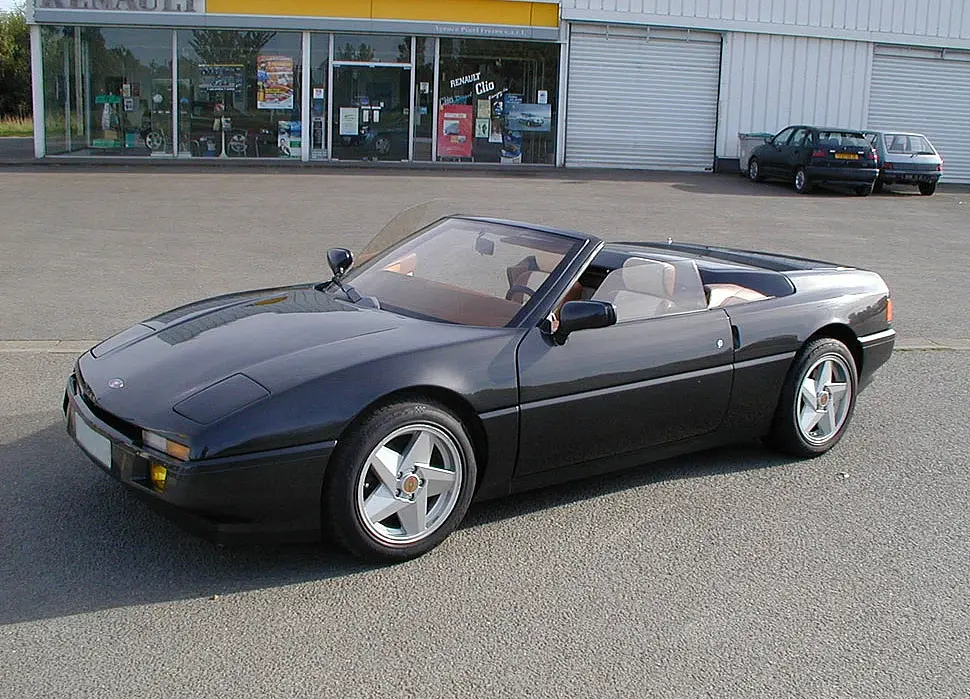
The Venturi Transcup was the cabriolet of the French manufacturer Venturi. Its two-part hard roof could convert the car into a coupé, a targa or an open cabriolet, and the two panels were stowed under the front bonnet.
Venturi Transcup at a glance
| Maker | Venturi, Couëron, France |
|---|---|
| Production | 1990–1995 |
| Body | cabriolet with a two-part hard roof |
| Based on | Venturi Coupé 200 |
| Designer | Gérard Godfroy |
| Debut | Paris Motor Show, 1988, as a show car without an engine |
| Engines | five, from 160 to 260 hp |
| Transcup 200 | 19 built in 1990 |
| Transcup 210 | 11 built, 1991–1995 |
| Transcup 160 BVM | 1 built in 1990 |
| Transcup 160 BVA | 2 built, 1991–1992 |
| Transcup 180 | 15 built |
| Transcup 260 | 17 built, 1990–1995 |
English Wikipedia has no separate article on the Transcup; this page uses the French article on the model together with the English article on the company.
History of the Venturi Transcup
The Transcup was the second model of the marque. It first appeared at the Paris Motor Show in 1988, in a metallic raspberry colour and without an engine, and was renamed Venturi Transcup 200 in October 1989. Real production began in 1990, with 19 examples of the Transcup 200 built that year.
The car was designed by Gérard Godfroy, who succeeded in creating a cabriolet out of a mid-engined car based essentially on the Coupé 200. The solution was a hard roof in two parts: together they made a coupé, one alone left a targa, and with both removed the car was fully open. The panels were stored under the front bonnet.
The range grew through the years. The Transcup 210 was the first derivative of the 200 and was built in eleven examples between 1991 and 1995, with detail changes inside such as storage behind the seats, better-placed electric seat controls, a grab handle for the passenger and a light for the ashtray. A single Transcup 160 BVM with manual gearbox was made in 1990, the 160 BVA with automatic transmission was built in two examples in 1991 and 1992 and was originally intended for export to Japan, and the Transcup 180 with its 180 hp engine was built in fifteen examples.
The Transcup 260 appeared in 1990, demanded by customers after the success of the 200, and was produced in seventeen examples until 1995. With 260 hp it was the most powerful cabriolet in the range, and during its life it was the most expensive French car on the market. Production of the model stopped in 1995 with the disappearance of the Transcup 210 and 260.
Design and features
- Two-part hard roof: the car can be a coupé, a targa or a full cabriolet.
- Roof storage: both panels fit under the front bonnet, an unusual solution for a mid-engined car.
- Mid-engined cabriolet: based on the Coupé 200, with the engine behind the seats.
- Five engines: from the 160 hp versions to the 260 hp Transcup 260.
- Rarity: most versions were built in tens of examples, and the 160 BVM in just one.
Venturi Transcup versions
- MVS Transcup / Transcup 200 (1990): the original model, 19 built.
- Transcup 210 (1991–1995): revised interior details, 11 built.
- Transcup 160 BVM (1990): manual gearbox, a single car.
- Transcup 160 BVA (1991–1992): automatic, intended for Japan, 2 built.
- Transcup 180: 180 hp, 15 built.
- Transcup 260 (1990–1995): the most powerful version, 17 built.
The Transcup was based on the Venturi Coupé, and the closed cars that followed it were the Venturi Atlantique and the Venturi 400 GT. More cars are in the Venturi collection.
Sources
- Venturi Transcup, French Wikipedia: roof, history, versions, production numbers
- Venturi, English Wikipedia: place in the range, engines, gearboxes