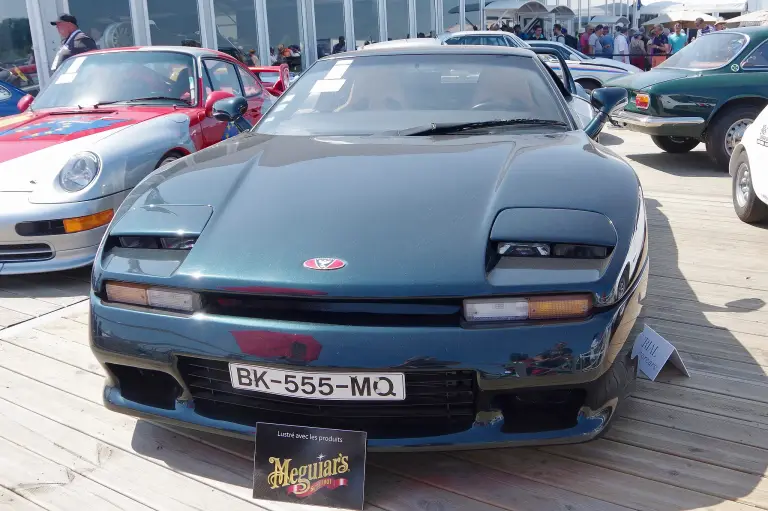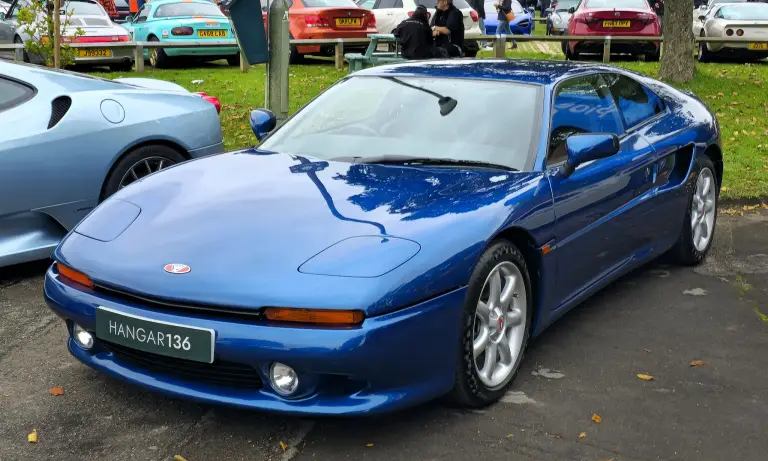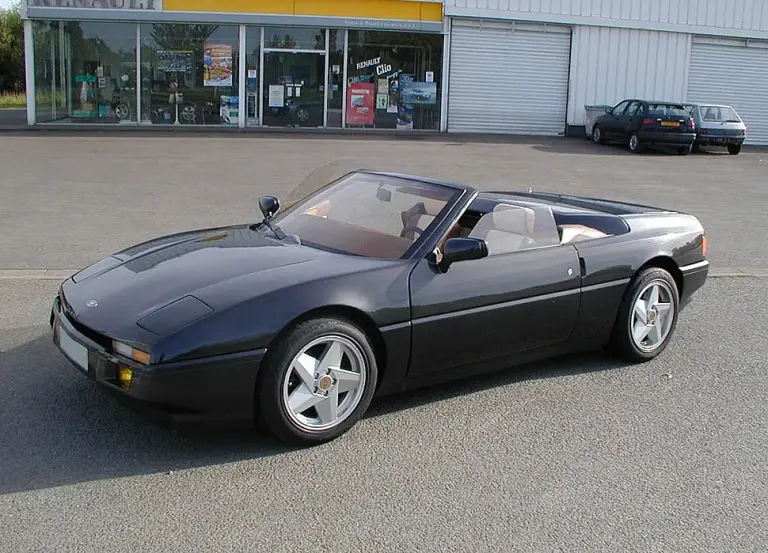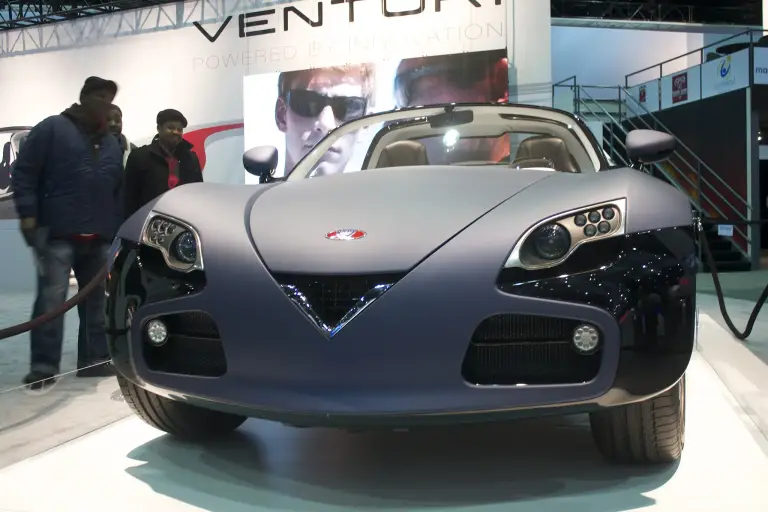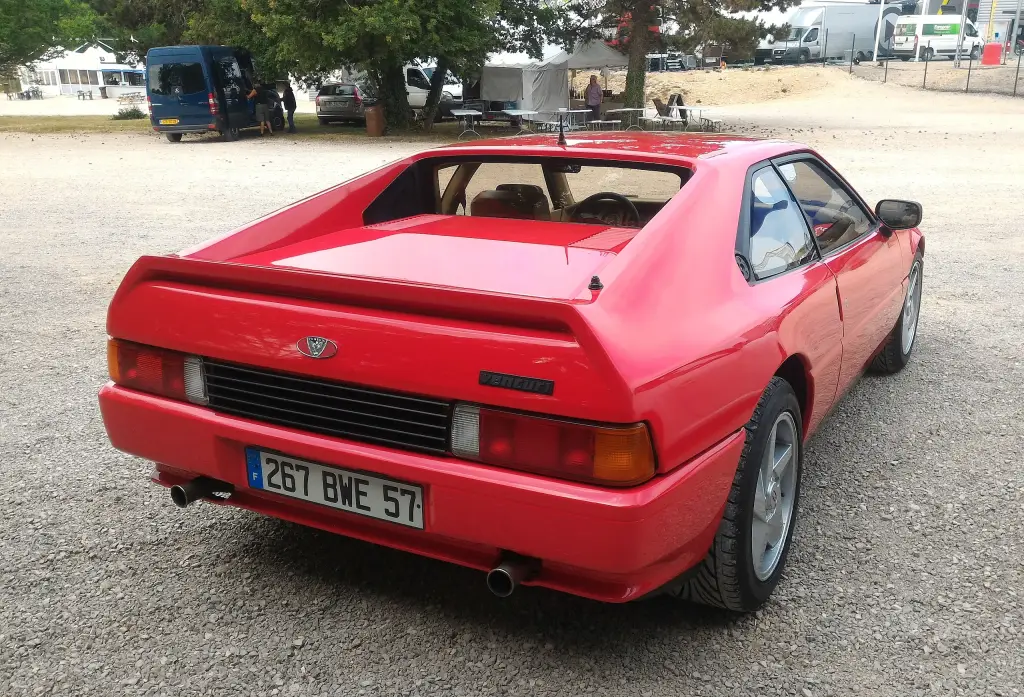
The Venturi Coupé was the first car built by the French manufacturer Venturi, produced from 1987 to 1992 in 225 examples. It was a mid-engined grand tourer with a turbocharged PRV V6 and a notably luxurious cabin, sold first as the MVS Venturi.
Venturi Coupé at a glance
| Maker | MVS, later Venturi, Couëron, France |
|---|---|
| Also known as | MVS Venturi |
| Production | 1987–1992, 225 cars |
| First mock-up | Paris Motor Show, 1984 |
| Public launch | May 1986, Trocadéro, Paris |
| Engine | 2.5-litre turbocharged PRV V6; Peugeot 505 Turbo unit at first |
| Layout | mid-engined, rear-wheel drive |
| Gearbox | Renault manual |
| Coupé 200 | 194 built, 1987–1990, 269,000 francs |
| Coupé 160 BVA | 3 built, 1987, automatic |
| Coupé 210 | 8 built, presented 1991 |
| Coupé 180 | 21 built, 1992, mainly export |
| Cabin | Connolly leather, Alcantara, wood veneer, Jaeger instruments |
English Wikipedia has no separate article on the Coupé; this page uses the French article on the Venturi Coupé together with the English article on the company.
History of the Venturi Coupé
Venturi was founded in 1984 by two former Heuliez engineers, Claude Poiraud and Gérard Godfroy, originally under the name MVS, for Manufacture de Voitures de Sport. The intention was to present the only French grand tourer able to compete with Aston Martin, Ferrari and Porsche.
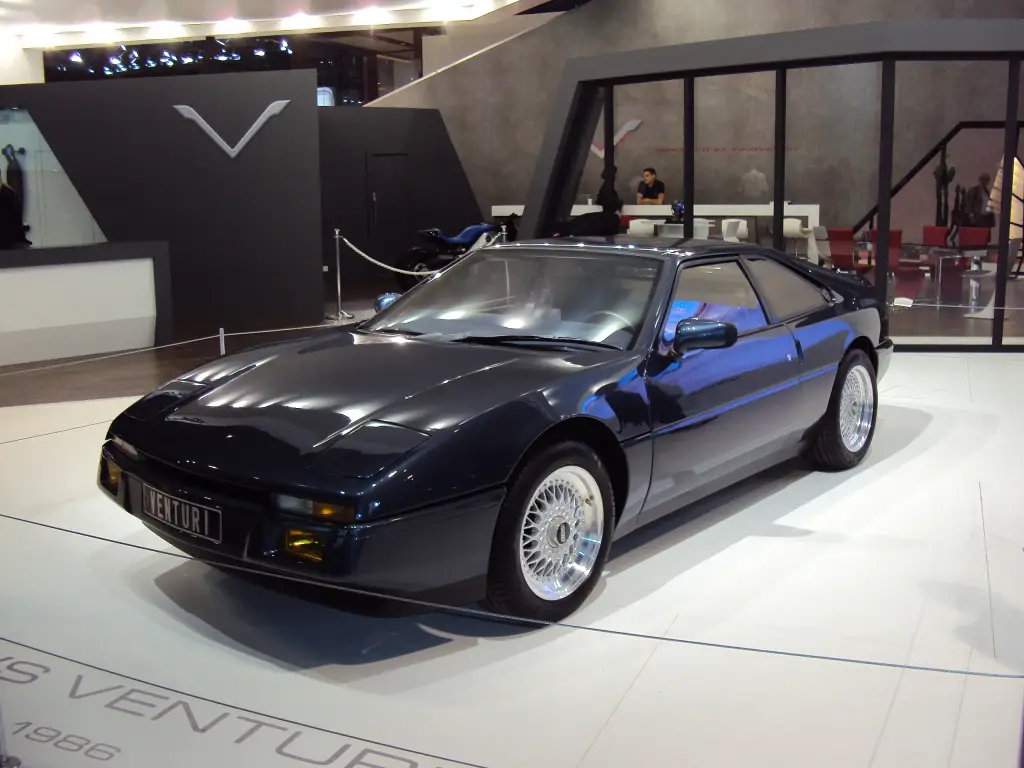
The first car appeared as a mock-up at the Paris Motor Show in 1984. It was first shown with a Volkswagen Golf GTi engine and the name was originally spelled “Ventury”, with a y. In May 1986 the definitive MVS Venturi was presented at the Trocadéro in Paris with the 200 hp Peugeot 505 Turbo engine, which was soon replaced by a turbocharged 2.5-litre PRV V6 of Alpine origin. Production began in 1987 with five cars in the first year and grew afterwards; Venturi built almost 750 cars in Couëron over twenty years.
The Coupé 200 was the most produced version: 194 cars between 1987 and 1990, of which five in 1987, 104 in 1988, 64 in 1989 and 21 in 1990. At 269,000 francs it was a costly car, and its cabin was particularly luxurious, with Connolly leather, Alcantara, precious wood and Jaeger instruments, although many fittings such as the lights and mirrors came from volume models. From 1987 to the mid-1990s Venturi built mid-engined coupés and roadsters with turbocharged PRV engines and Renault gearboxes, with power from 200 to 260 PS.
The range was widened over the years. Three Coupé 160 BVA cars with automatic transmission were built in 1987, the Coupé 210 with 210 hp replaced the original version in 1991 with eight built, and the Coupé 180 of 1992, mainly intended for export and notably for Italy, was made in 21 examples. Production ended in 1992 with the Coupé 180, although the more sporting 260 hp version remained available.
Design and features
- Mid-engined layout: a compact French GT with the engine behind the seats.
- Turbocharged PRV V6: the 2.5-litre unit of Alpine origin, with Renault gearboxes.
- Luxurious cabin: Connolly leather, Alcantara, wood veneer and Jaeger instruments.
- Volume-car fittings: lights and mirrors borrowed from large-series models to keep costs down.
- Range of engines: versions from 160 to 260 hp through the model’s life.
Venturi Coupé versions
- MVS Venturi / Coupé 200 (1987–1990): the original 200 hp car, 194 built.
- Coupé 160 BVA (1987): 160 hp with an automatic gearbox, 3 built.
- Coupé 210 (1991): the replacement for the 200 hp version, 8 built.
- Coupé 180 (1992): 180 hp, mainly for export, 21 built.
- Coupé 260: the most powerful version, still offered at the end of production.
The Coupé was the basis for the open Venturi Transcup, and its cabin layout was later reused in the Venturi 400 GT. The line continued with the Venturi Atlantique. More cars are in the Venturi collection.
Sources
- Venturi Coupé, French Wikipedia: history, engines, production numbers
- Venturi, English Wikipedia: founding, engineering, place in the range