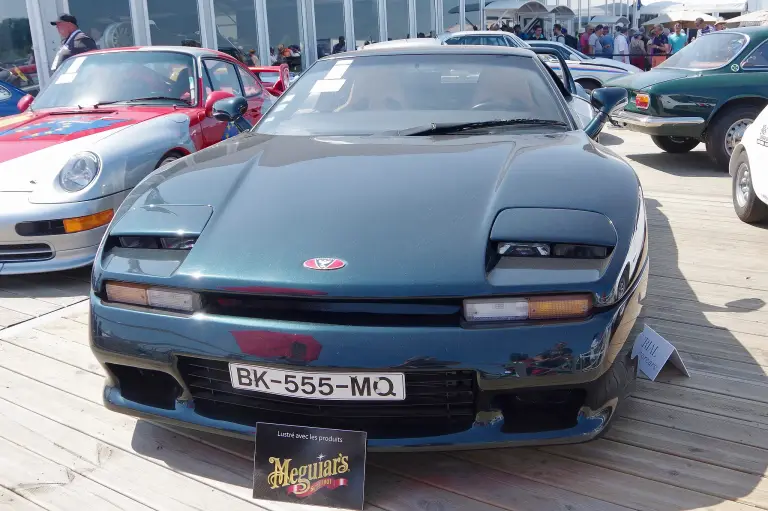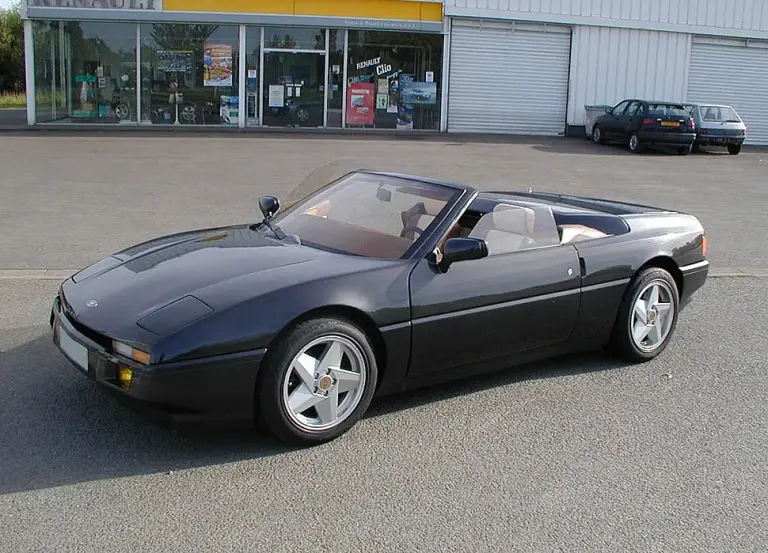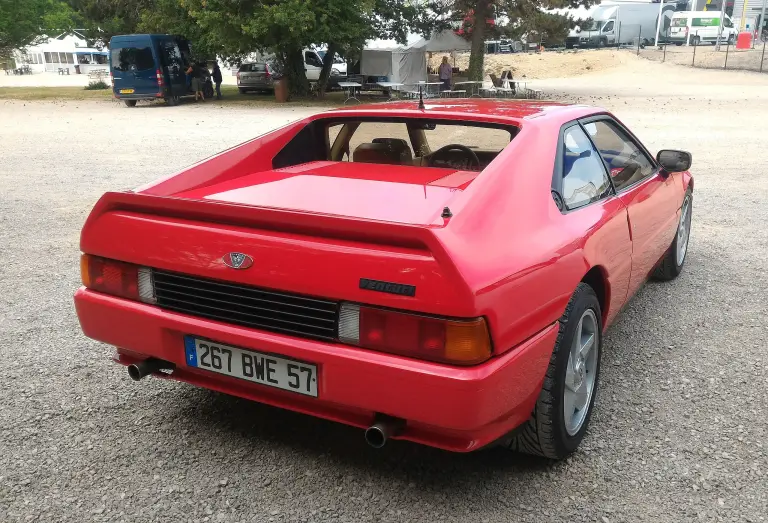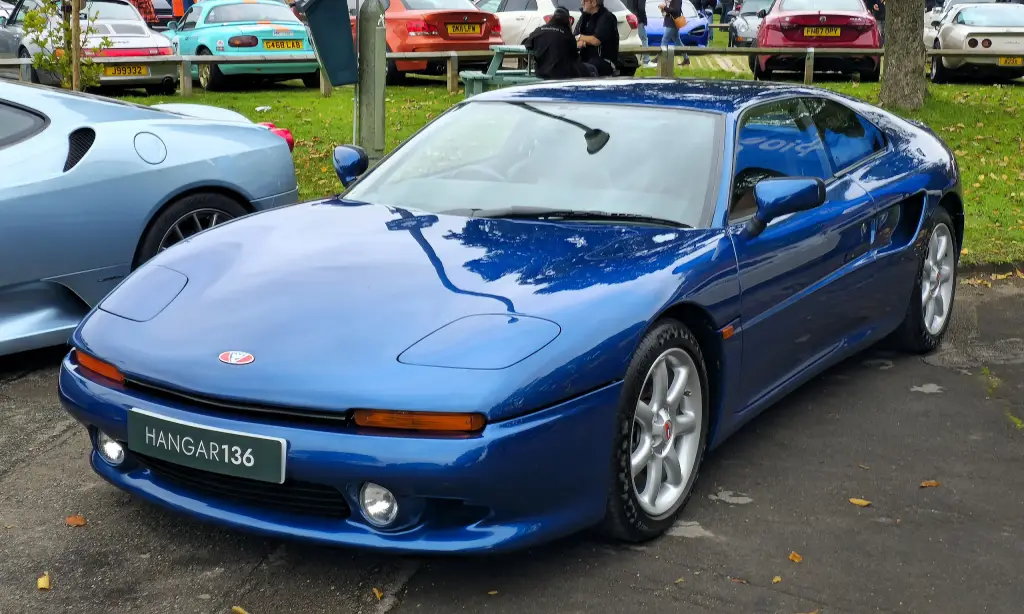
The Venturi Atlantique was a mid-engined, fibreglass-bodied French sports car produced by Venturi from 1991 to 2000. It began as the 260, a revised version of the earlier car, and ended as the 310 hp Atlantique 300 Biturbo.
Venturi Atlantique at a glance
| Maker | Venturi, Couëron, France |
|---|---|
| Production | 1991–2000 |
| Layout | mid-engined, rear-wheel drive |
| Body | fibreglass |
| Atlantique 260 | 2.8-litre turbocharged V6, 260 PS (191 kW) |
| 260 weight | 1,110 kg |
| 260 performance | 269 km/h, 0–97 km/h in 5.2 seconds |
| Atlantique 300 | 3.0-litre V6 PRV, 210 PS or 281 PS turbo |
| 300 built | 44 examples |
| Atlantique 300 Biturbo | 3.0-litre twin-turbo V6, 310 PS, 394 N·m |
| Biturbo performance | 275 km/h, 0–100 km/h in 4.7 seconds |
| 300 GTR | 2 racing cars, 1999 |
History of the Venturi Atlantique
The original 260 was a revised version of the Venturi APC 260. It carried over the 2.8-litre turbocharged V6 with 260 PS but weighed only 1,110 kg, reached 269 km/h and accelerated from 0 to 97 km/h in 5.2 seconds.
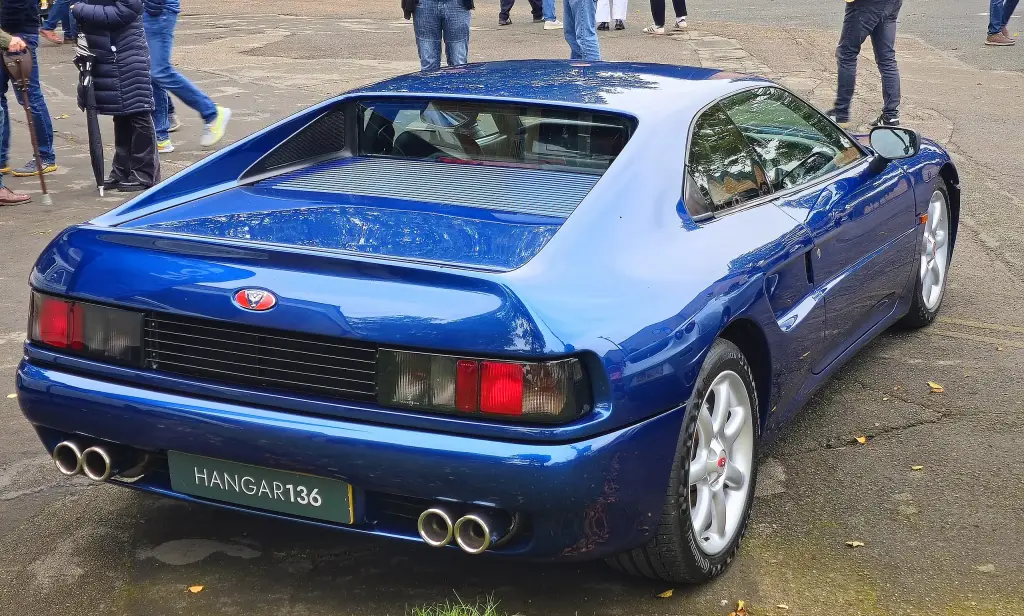
In 1994 the Scot Hubert O’Neill bought Venturi and conceived both the 400 GT and a revised Atlantique. After a rushed design period of six months, the new Atlantique 300 was unveiled at the Paris Motor Show. Its 3.0-litre V6 PRV engine came from other Peugeot and Citroën models and produced 210 PS naturally aspirated or 281 PS with a turbocharger, essentially the same engine as in the Alpine A610. Forty-four examples of the 300 Atlantique were built between 1996 and 1998.
Venturi went into receivership again in 1996 and was bought by the Thai firm Nakarin Benz, under whom the company concentrated on road cars. The twin-turbo Atlantique 300 appeared in 1998 with the later L7X V6, a Renault variant of the V6 ESL engine, rated at 310 PS at 6,200 rpm and 394 N·m at 3,800 rpm, with 275 km/h and 0–100 km/h in 4.7 seconds. Performance Car compared it favourably with the Lotus Esprit.
The Biturbo was the last model considered French before the firm moved to Monaco; thirteen were built in 1999 and 2000. Venturi was placed in liquidation on 22 January 2000 and bought that year by the Monegasque Gildo Pallanca Pastor, who retired the Atlantique badge in favour of electric cars. In 1999 two cars had also been built exclusively for track racing as the Venturi 300 GTR. Sales of the Atlantique were extremely poor, and total Venturi sales over its lifetime came to fewer than 700 cars.
Design and features
- Mid-engined fibreglass body: a light French alternative to the established sports cars.
- 260: 2.8-litre turbo V6, 1,110 kg and 269 km/h.
- 300: 3.0-litre PRV V6 with 210 PS naturally aspirated or 281 PS turbocharged.
- 300 Biturbo: the L7X V6 with two turbochargers, 310 PS and 275 km/h.
- Rarity: 44 of the 300, thirteen Biturbos and two GTR racing cars.
Venturi Atlantique versions
- Atlantique 260 (1991): the original model, 2.8-litre turbo V6.
- Atlantique 300 (1994): new 3.0-litre PRV engine, 44 built.
- Atlantique 300 Biturbo (1998): 310 PS L7X V6, 13 built.
- 300 GTR (1999): two cars for track racing only.
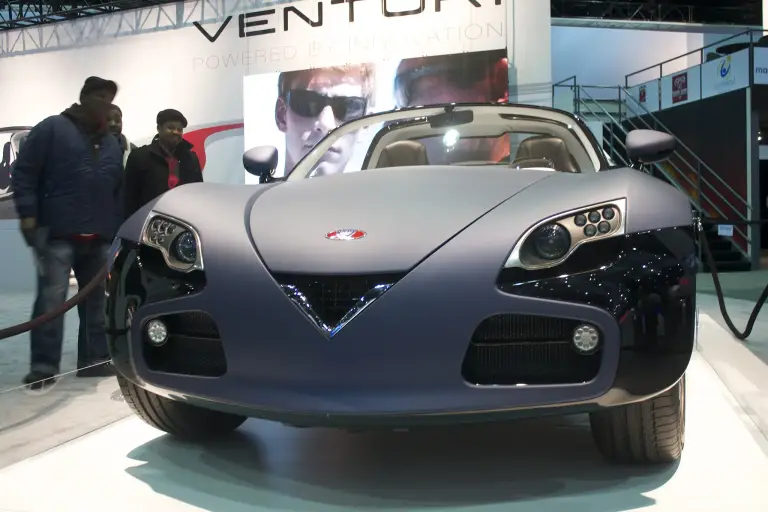
The Atlantique 300 shared its chassis with the Venturi 400 GT, and its bodywork grew out of the earlier Venturi Coupé. The electric Venturi Fétish replaced it at the top of the range. More cars are in the Venturi collection.
Video: Venturi Atlantique Review – French Supercar – With Richard Hammond
Video on YouTube.
Sources
- Venturi Atlantique, English Wikipedia: 260, 300, Biturbo, reception
- Venturi 300, French Wikipedia: production numbers, 1998 Biturbo, liquidation