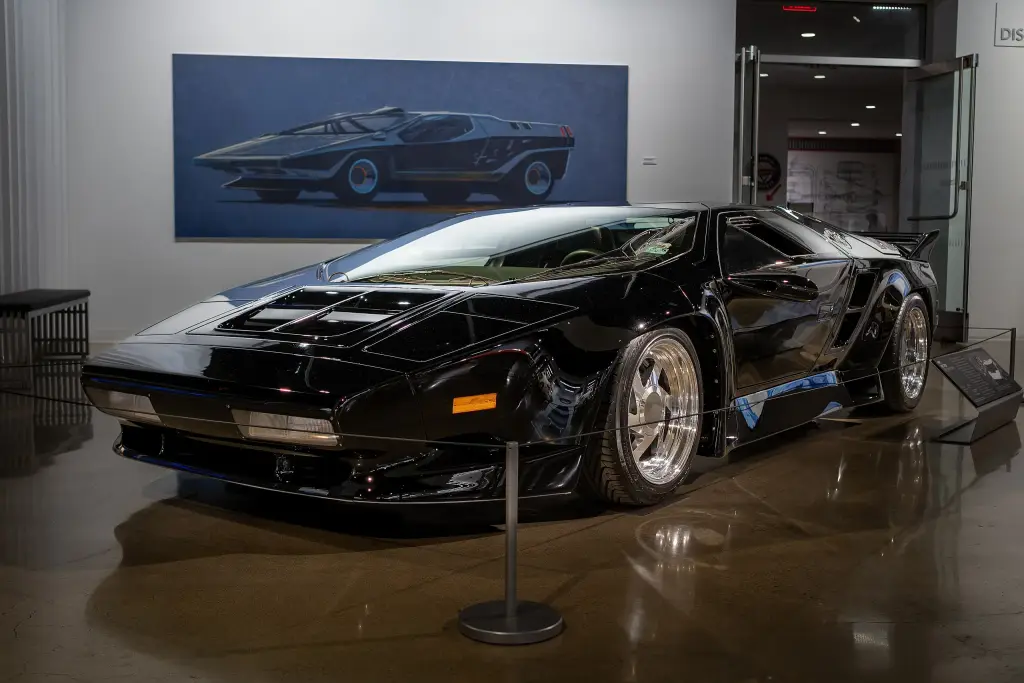
The Vector W8 is a sports car produced by the American manufacturer Vector Aeromotive Corporation from 1989 to 1993. It was designed by company founder and chief designer Jerry Wiegert, with refinements by head of engineering David Kostka, and was the production version of the Vector W2 prototype shown throughout the 1980s.
Vector W8 at a glance
| Maker | Vector Aeromotive Corporation, United States |
|---|---|
| Built | 1989 to 1993 |
| Designer | Jerry Wiegert; engineering by David Kostka |
| Prototype | Vector W2, shown to the public in 1976 |
| Engine | 6.0 L (365 cu in) twin-turbo V8, John Rodeck prepared |
| Power (advertised) | 625 hp at 5,700 rpm |
| Torque | 649 lb·ft at 4,900 rpm |
| Dyno peak | 1,200 bhp at 14 psi boost |
| Gearbox | modified three-speed Turbo-Hydramatic 425 automatic |
| Tyres | Michelin XGT Plus, 255/45ZR-16 front, 315/40ZR-16 rear |
| 0–60 mph (Vector) | 3.9 seconds, projected top speed 242 mph |
| 0–60 mph (Road & Track) | 4.2 seconds, estimated top speed 218 mph |
English Wikipedia is the only source used here. Vector’s claims and the magazine test figures differ and are both shown.
History of the Vector W8
From W2 to W8
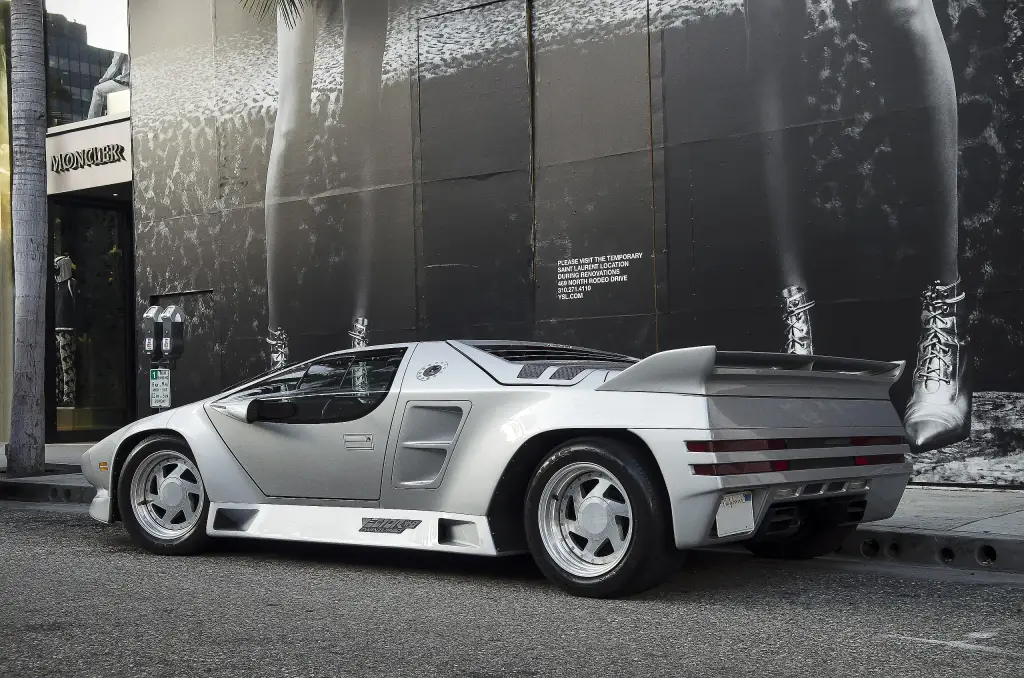
The W8 was an improved version of the earlier prototype, the W2. Production was delayed after the W2 was presented in 1976 because of a downturn in the world economy and insufficient financial backing. By the late 1980s Wiegert had enough money, and the company grew from one building and four employees to four buildings and 80. The design was inspired by the Alfa Romeo Carabo, with its wedge-shaped aerodynamic look, combined with references to the fighter jets of the era. Before production the W8 passed DOT crash tests and emissions tests.
Aerospace construction
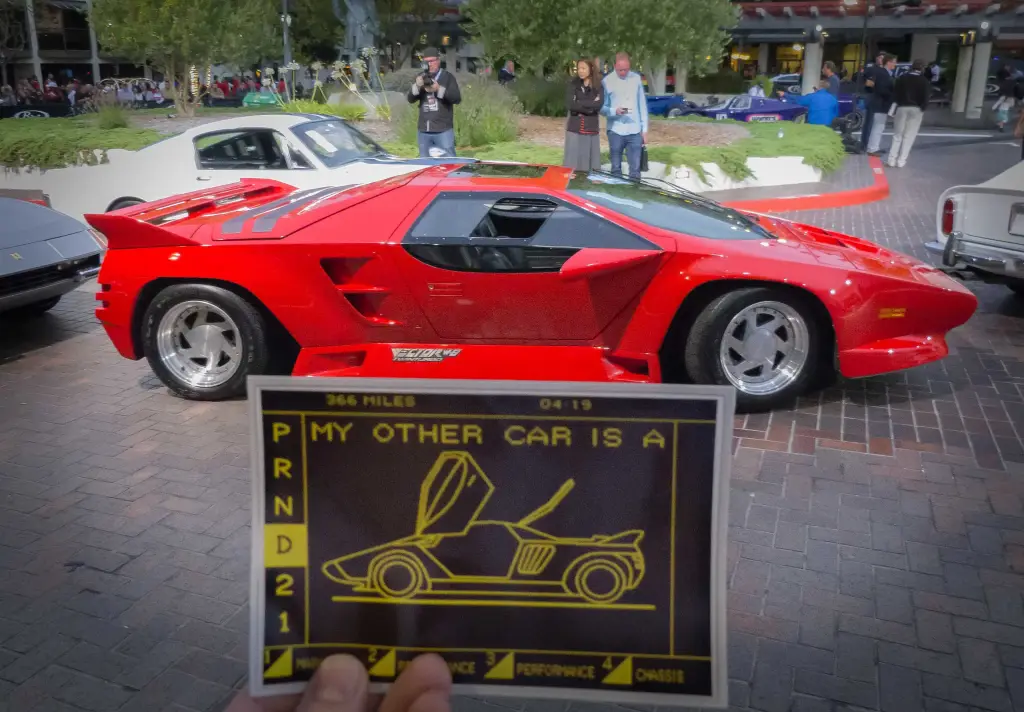
The company used the newest aerospace materials and called its process “Aeromotive Engineering”. The semi-aluminium monocoque was epoxy bonded and riveted with an aluminium honeycomb floor pan, using 5,000 aircraft-specification rivets, and the body was largely carbon fibre and Kevlar. The suspension had double wishbones at the front and a De Dion tube at the rear, located by four trailing arms, with Koni adjustable shocks, 13-inch vented discs and Alcon four-piston calipers. The interior was leather and suede with Recaro seats and air conditioning, and the dashboard resembled a fighter-jet display with four modes; power steering and anti-lock brakes were left out to save weight.
Engine and performance
The engine was a John Rodeck-prepared aluminium racing V8 with TRW forged pistons, Carrillo rods, a dry sump and two intercooled Garrett turbochargers, driver-adjustable between 8 and 14 psi of boost; it was paired with a modified Turbo-Hydramatic 425 three-speed automatic from the Oldsmobile Toronado. Vector claimed a projected top speed of 242 mph and 0 to 60 mph in 3.9 seconds, but Road & Track measured 4.2 seconds and Car and Driver 4.1 seconds in 1991; Road & Track estimated about 218 mph from the redline in top gear.
Design and features
- Body: carbon fibre and Kevlar over an aluminium honeycomb monocoque.
- Inspiration: the Alfa Romeo Carabo and fighter jets.
- Boost: adjustable between 8 and 14 psi.
Vector W8 versions
- W2 (1976): the prototype.
- W8 (1989–1993): the production car.
More American cars are in our Exotic Cars and Concept Cars.
Sources
- Vector W8, English Wikipedia: history, specifications, performance