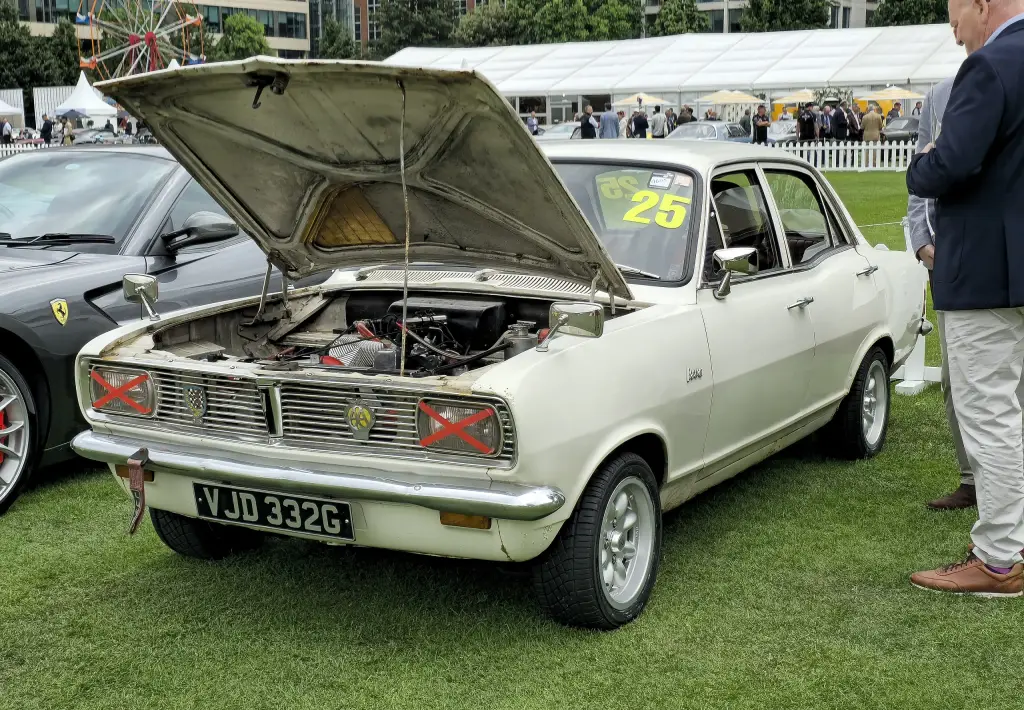
The Vauxhall Viva was Vauxhall’s small family car from 1963 to 1979, built in three generations known as HA, HB and HC. It was developed alongside the Opel Kadett A as part of the same General Motors project, and the HC was the last passenger car designed solely by Vauxhall.
Vauxhall Viva at a glance
| Maker | Vauxhall Motors, Luton |
|---|---|
| Production | 1963–1979 |
| Generations | HA, HB and HC |
| Related | Opel Kadett A, same GM project and floorpan |
| Van version | Bedford HA |
| Launch rivals | Ford Anglia and Morris Minor |
| Final generation | HC, the last solely Vauxhall-designed passenger car |
| End of the range | 1979, after which GM Europe unified Opel and Vauxhall |
| Revived | 2015–2019 on a rebadged Opel Karl |
Written from the English Wikipedia article on the Viva, with the German article for background.
History of the Vauxhall Viva
The Viva was introduced in 1963, a year after Vauxhall’s fellow General Motors company Opel launched the Kadett A. Both cars came from the same GM project and shared the same floorpan and engine construction; the main difference was that the Opel used metric measurements and the Vauxhall imperial ones. The cars looked similar but few components were interchangeable. A van version was produced as the Bedford HA, and in Britain the Viva’s principal rivals at launch included the well-established Ford Anglia and Morris Minor.
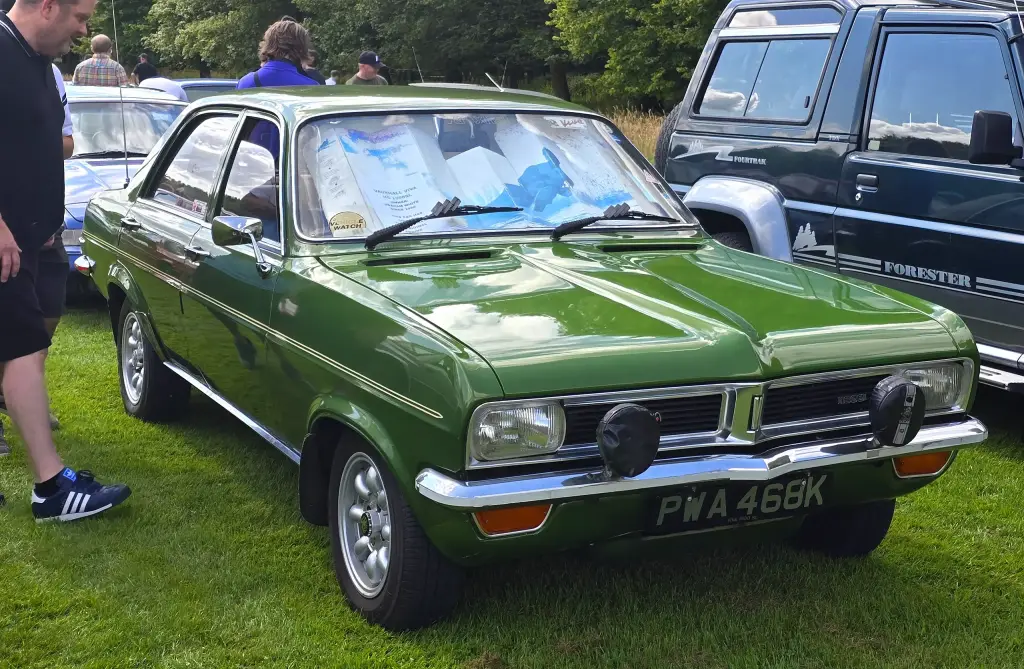
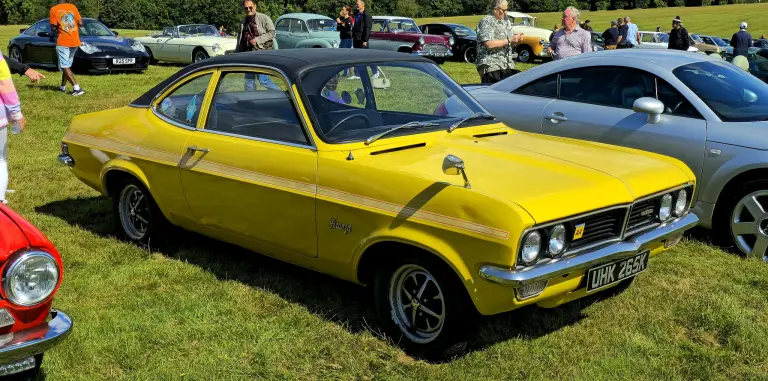
The Viva was built in a succession of three versions, designated the HA, HB and HC series, each larger and more powerful than the last. The HA of 1963 was the original small car, the HB of 1966 brought a more modern body and a wider engine range, and the HC of 1970 grew again to become a small family car rather than a pure economy model. The HC was sold with increasingly large engines, from 1,159 cc to 2,279 cc, and it underpinned the sporting Firenza coupé and the luxury Magnum.
The third generation HC was the last solely Vauxhall-designed passenger car, ending production in 1979. It was not the last Vauxhall-designed vehicle overall — that distinction belongs to the Bedford CF van — but after the Viva, General Motors Europe unified the Opel and Vauxhall brands around a single range of Opel-developed models, which is why later Vauxhalls were badge-engineered Opels.
The Viva name was revived from 2015 to 2019 on a rebadged version of the fourth-generation Opel Karl, which was also sold as the Chevrolet Spark in some markets. That car was Vauxhall’s city car after the Agila, and it was dropped when the brand moved towards crossovers.
Design and features
- Shared with Opel: the Viva and Kadett A were one GM project.
- Three generations: HA, HB and HC, each larger than before.
- Last of its kind: the HC was the final solely Vauxhall-designed passenger car.
- Bedford HA: the van version of the same small car.
Vauxhall Viva versions
- Viva HA (1963): the original small car.
- Viva HB (1966): the second generation with a wider engine range.
- Viva HC (1970): the final, largest generation.
- Bedford HA: the van built on the same small-car platform.
- Viva (2015–2019): the rebadged Opel Karl city car.
The Viva was replaced by the Chevette and the Astra, and its larger-engined versions included the Firenza and Magnum. More cars are in the Vauxhall collection.
Sources
- Vauxhall Viva, English Wikipedia: generations, Kadett link, Bedford HA, end, revival
- Vauxhall Viva, German Wikipedia: model history