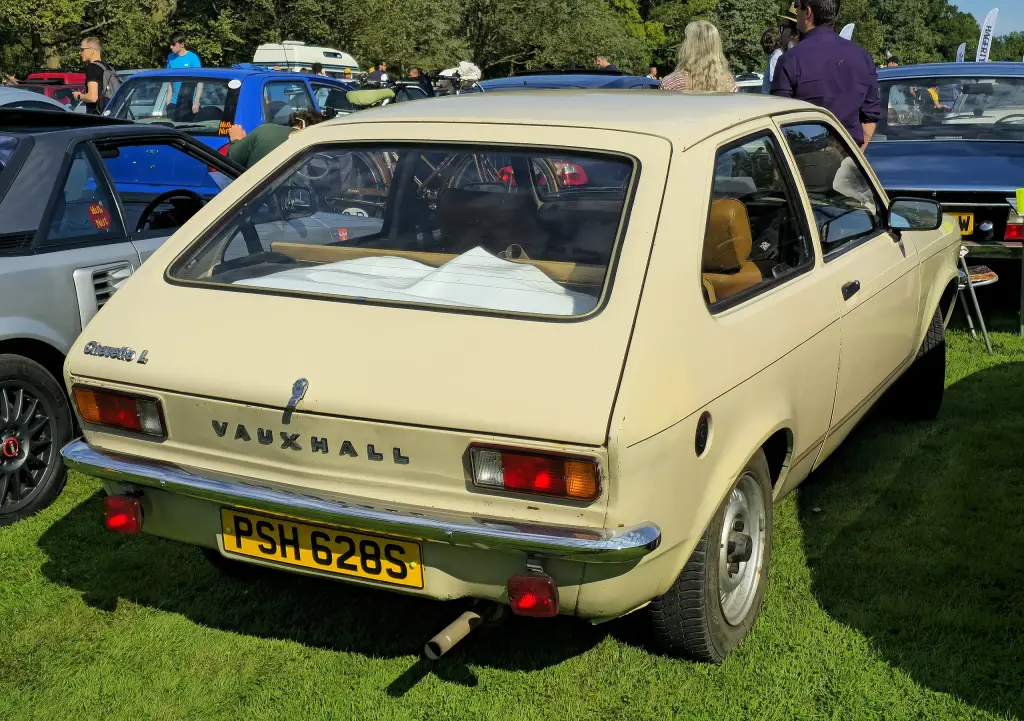
The Vauxhall Chevette was a small rear-wheel-drive car built in Britain from 1975 to 1984 as Vauxhall’s version of General Motors’ T-car family and, in practice, of the Opel Kadett C. It was one of the first British-built hatchbacks of its size and became the country’s best-selling hatchback for its first three years.
Vauxhall Chevette at a glance
| Maker | Vauxhall Motors |
|---|---|
| Production | 1975–1984 |
| Based on | Opel Kadett C (GM T-car) |
| Launch | 1 May 1975, from £1,593 |
| Bodies | three-door hatchback, two- and four-door saloons, estate, Chevanne van |
| Engine | 1.3-litre four-cylinder |
| Built at | Luton, then Ellesmere Port, Cheshire |
| Drive | rear-wheel drive |
| Saloons and estates | from June 1976 |
| German sales | 12,332 Chevettes sold through Opel dealers from October 1980 |
Written from the English Wikipedia article on the Chevette, with the German article on the Kadett C for background.
History of the Vauxhall Chevette
The Chevette began as a small Chevrolet for America, hence the name, but to save costs General Motors shelved Vauxhall’s separate S-car project and merged its styling studies with the existing T-car programme, so the Chevette was derived from the Opel Kadett C. The car had already appeared in Brazil in 1973 as a restyled Kadett with a hatchback added; this hatchback was launched in the United States and Britain in 1975 with restyled front ends. Initial production was at Luton, and assembly later moved to Ellesmere Port in Cheshire so that the larger Cavalier and Carlton could take over Luton.
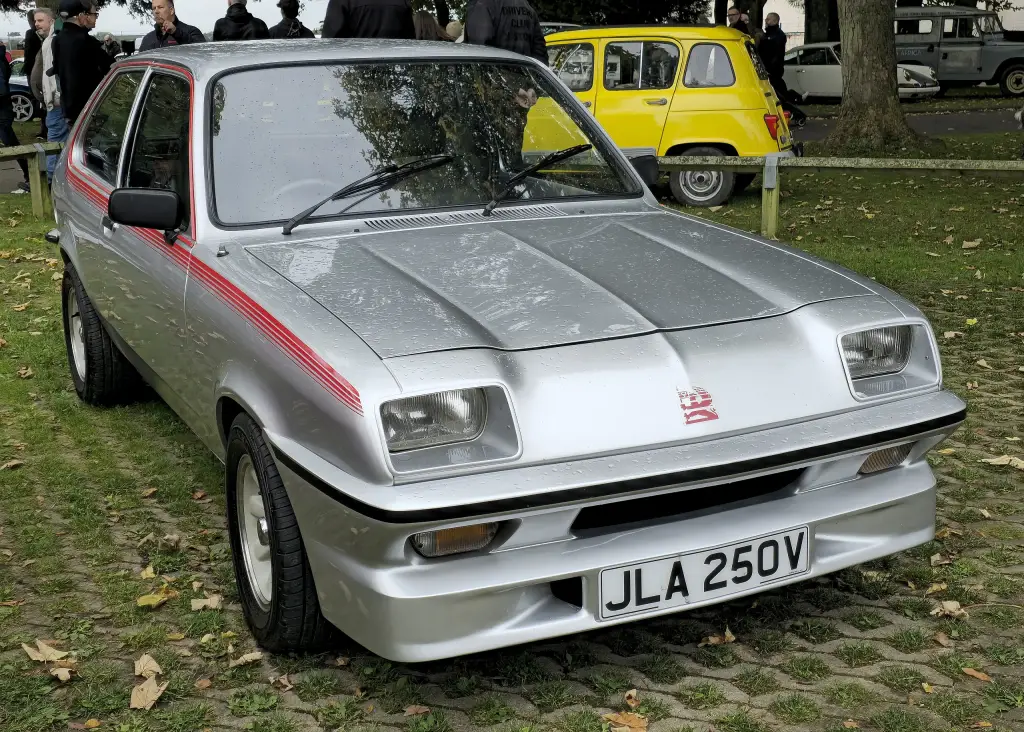
Sales began on 1 May 1975 from £1,593. The UK car was meant to fit below the Vauxhall Viva, and it was first shown only as a hatchback, a style that became very popular in the 1970s. With its Pontiac-inspired “shovel nose” and inset headlamps it looked radically different from the Kadett, and buyers accepted it as a completely new car; only when the saloon, estate and van appeared, and the Kadett gained a hatchback, did the common lineage become obvious. Vauxhall advertised it with the jingle “It’s whatever you want it to be — a sporty coupé, a family saloon, a handy estate”. The hatchback was joined by two- and four-door saloons and three-door estates from June 1976; the Kadett C’s two-door coupé was the only version without a Chevette equivalent.
From 1975 to 1978 the Chevette was the UK’s best-selling hatchback, while home-grown rivals failed to respond to the Peugeot 104, Fiat 127 and Renault 5 until the Ford Fiesta arrived at the end of 1976. It also outsold larger hatchbacks such as the Austin Maxi and Chrysler Alpine. Its 1.3-litre engine and small body gave good performance, with light steering, clutch and gearchange, good visibility and a spacious interior, and its versatility compared well with larger cars such as the Ford Escort.
The Viva was dropped in 1979 as the front-wheel-drive Kadett D arrived, but industrial circumstances at Ellesmere Port meant the old model stayed in production alongside the new one. Vauxhall’s version of the Kadett D therefore needed a new name, and in March 1980 the Astra was born. The Chevette remained on sale until 1984, by then one of the last rear-wheel-drive cars in its class, and was even exported to Germany after 1979: a further 12,332 were sold through Opel dealers there from October 1980, badged simply as “Chevette”.
Design and features
- Hatchback pioneer: one of the first British-built hatchbacks of its size.
- Shovel nose: its own Pontiac-inspired front, quite unlike the Kadett’s.
- Four body styles: hatchback, saloon, estate and the Chevanne van.
- Long life: sold until 1984, four years after the front-wheel-drive Astra arrived.
Vauxhall Chevette versions
- Chevette hatchback (1975): the original three-door.
- Chevette saloon and estate (1976): two- and four-door saloons and a three-door estate.
- Chevanne: the van version for utility work.
- Chevette HS and HS 2300: the sporting versions with the 2.3-litre engine.
The Chevette replaced the Viva at the bottom of the range and was later joined by the Astra, which eventually replaced it. More cars are in the Vauxhall collection.
Sources
- Vauxhall Chevette, English Wikipedia: development, launch, bodies, sales, end of production
- Opel Kadett C, German Wikipedia: T-car background