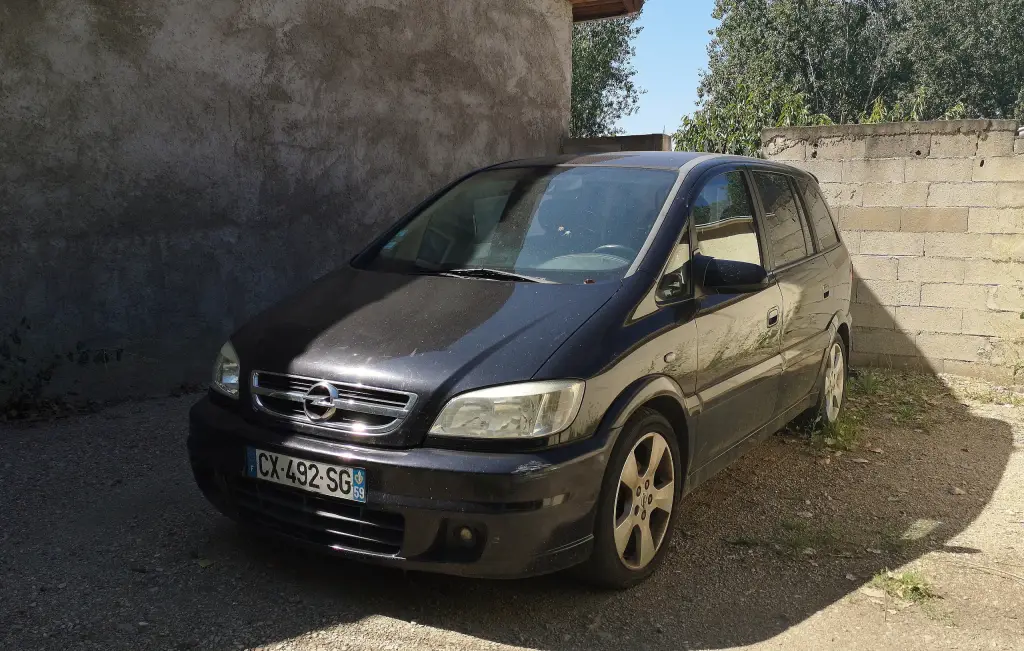
The Vauxhall Zafira was a seven-seat MPV based on the Astra, sold from 1999 to 2018 in Britain over three generations. Its party trick was the Flex 7 seating system, which let the third row fold flat into the floor, and for a while its OPC version was the fastest minivan on sale in Europe.
Vauxhall Zafira at a glance
| Maker | Vauxhall (Opel Zafira on the continent) |
|---|---|
| Production | 1999–2019; Vauxhall sales to June 2018 |
| Generations | Zafira A (1999–2005), Zafira B (2005–2011), Zafira Tourer (2011–2019) |
| Platform | Opel Astra T platform, then later Astra platforms |
| Seats | seven in three rows |
| Seating system | Flex 7, with a split back seat folding into the floor |
| Developed with | Porsche, for the first generation |
| Zafira OPC | 2001, 192 PS, 0–100 km/h in 8.2 s, 220 km/h |
| European Car of the Year | third in 2000 |
| Related models | Subaru Traviq and Chevrolet Zafira |
Written from the English and German Wikipedia articles on the Opel Zafira; the Vauxhall car is the same model with a different badge.
History of the Vauxhall Zafira
The first Zafira, internally the Zafira A, was co-developed with Porsche. It debuted in concept form at the 1997 Frankfurt Motor Show and entered series production in January 1999, with sales beginning in April. It shared the T platform of the 1998 Astra G and seated seven passengers in three rows; the split back seat could fold into the floor to increase cargo space without being removed, a system marketed as Flex 7.
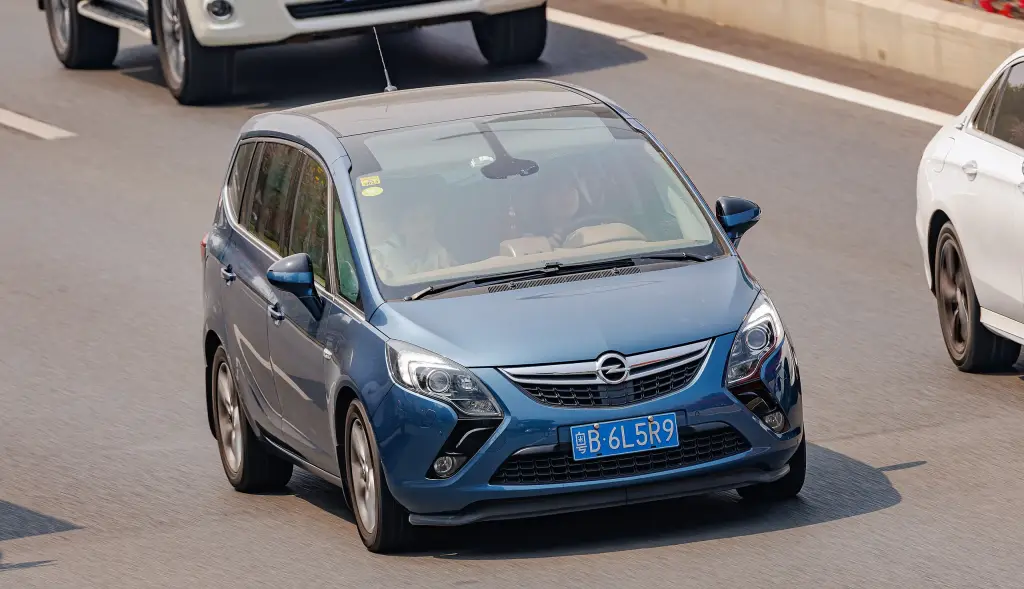
The car was offered with a series of petrol engines and initially a single diesel, with the “X” engines replaced by the newer “Z” generation in 2000; these had variable intake manifolds and met Euro 3 emissions standards. The 2.0-litre turbodiesels were joined by a 125 PS 2.2-litre option in January 2002. The Zafira A body was also used for GM and Opel’s HydroGen3 fuel-cell concept. A facelift was launched in February 2003 at the Geneva Motor Show. The Zafira ranked third in the European Car of the Year for 2000, behind the Fiat Multipla and Toyota Yaris, and in TÜV’s ranking of three-year-old cars it was by far the best Opel, only slightly behind the winning Ford Focus. Production of the Zafira A ended on 25 May 2005 in Bochum.
The Zafira OPC was introduced at Geneva in February 2001 and went on sale in October that year. With 192 PS from a turbocharged engine and a five-speed manual gearbox, it was the fastest minivan on sale in Europe, reaching 100 km/h in 8.2 seconds and 220 km/h. The Zafira was also sold widely under other badges: as the Chevrolet Zafira in the Philippines, Thailand and Indonesia, the Chevrolet Nabira in Malaysia, and as the Subaru Traviq in Japan from August 2001 to November 2004, imported from Thailand with 2.2 and later 1.8-litre engines.
The second generation, the Zafira B, replaced the A in Europe in 2005, and from 2011 the larger Zafira Tourer added a further moniker to the name. Vauxhall sold the Zafira until June 2018, and Opel production continued to 2019, after which the model was dropped as the brand moved towards SUVs.
Design and features
- Flex 7: seven seats with a third row that folded flat into the floor.
- Zafira OPC: 192 PS and 220 km/h, the fastest minivan in Europe in 2001.
- Astra base: the same platform as the Astra family hatchback.
- Porsche involvement: the first generation was co-developed with Porsche.
- Many badges: sold as Chevrolet Zafira, Chevrolet Nabira and Subaru Traviq.
Vauxhall Zafira versions
- Zafira A (1999–2005): the original seven-seater.
- Zafira OPC (2001): the 192 PS turbocharged version.
- Zafira B (2005–2011): the second generation.
- Zafira Tourer (2011–2019): the larger third generation.
The Zafira was based on the Astra and sat above the smaller Meriva; it replaced the large Sintra in Vauxhall’s MPV range. More cars are in the Vauxhall collection.
Sources
- Opel Zafira, English Wikipedia: generations, Flex 7, OPC, awards, other markets
- Opel Zafira, German Wikipedia: model history