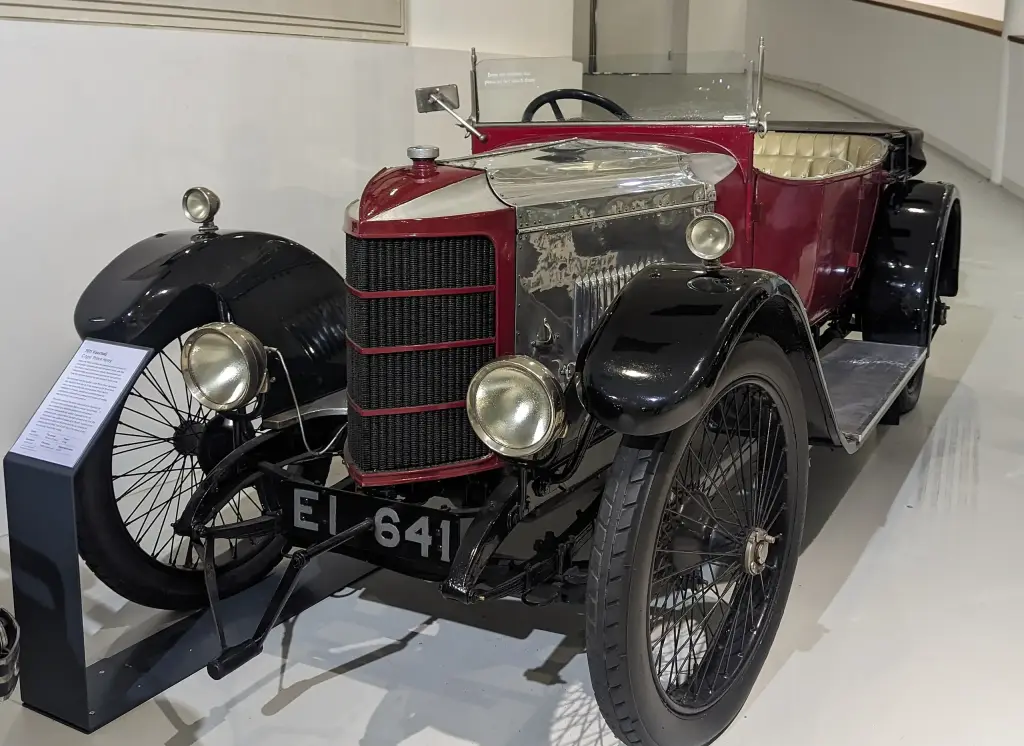
The Vauxhall Prince Henry was built from 1911 to 1914 as a road version of the three cars Vauxhall entered in the 1910 Prince Henry Trial in Germany. It is often thought of as the first sports car, because its performance came less from brute strength than from good design and sturdy construction.
Vauxhall Prince Henry at a glance
| Maker | Vauxhall Motors, Luton |
|---|---|
| Production | 1911–1914, with the C model to 1915 |
| Chassis code | C-10, later C |
| Engine | four-cylinder monobloc, side valves |
| Capacity | 3,054 cc, enlarged to 3,969 cc in 1913 |
| Power | 60 bhp at 2,800 rpm |
| Price | £580 for the replica |
| Length | about 159 inches (4.04 m) |
| Weight | about 2,750 lb (1,250 kg) |
| Top speed | about 65 mph in the trial speed test |
Written from the English Wikipedia article on the Prince Henry, with the German article for background.
History of the Vauxhall Prince Henry
Vauxhall knew the car as its C-10. Three specially prepared cars were entered in the 1,200-mile 1910 Motor Trials named after Prince Henry of Prussia, and replicas of the trial cars sold quickly and became known as Prince Henry Vauxhalls. The cars also competed in other international trials, including the 1911 St Petersburg to Sebastopol Trial, and two were sold to Tsar Nicholas II; Vauxhall opened a sales and support branch in Moscow, which did well until the First World War and was finally closed after the 1918 revolution.
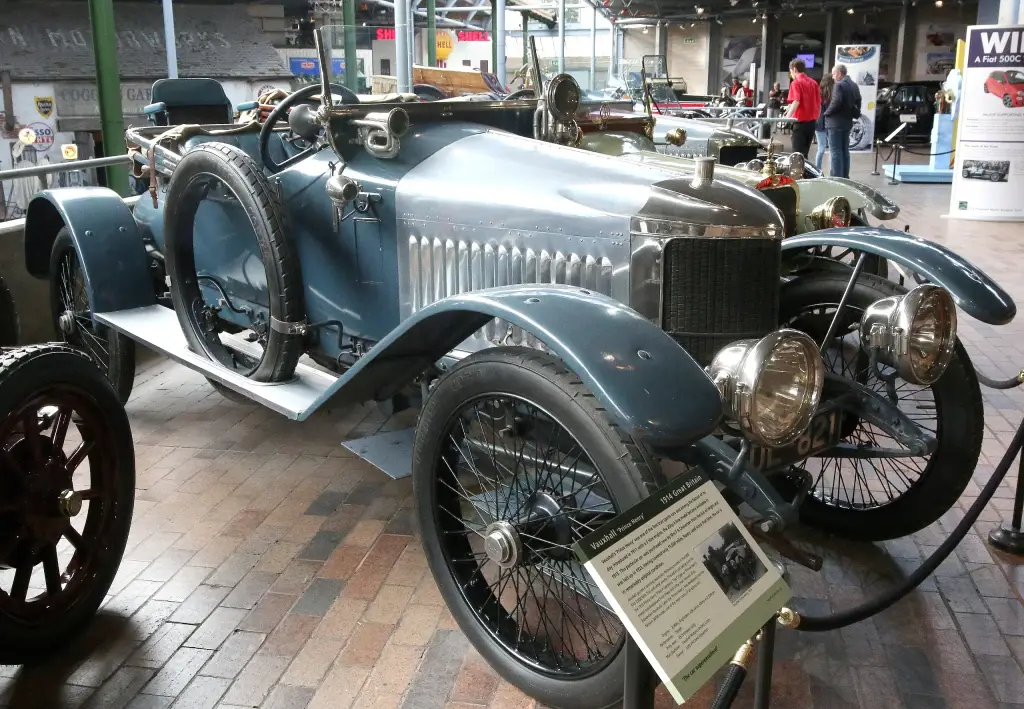
The Prince Henry was a higher-tuned version of the Vauxhall 20 hp designed in the winter of 1907–08 by the draughtsman Laurence Pomeroy while the chief engineer, F. W. Hodges, was on holiday. The engine was a four-cylinder monobloc with side valves and a capacity of 3,054 cc giving 40 bhp. Three of these cars were entered in the RAC 2,000-mile trial; one won the Brooklands speed trials that formed part of the event and the fuel economy award for its class, a result that helped Pomeroy become works manager.
For the Prince Henry Trial the engine was tuned to 60 bhp at 2,800 rpm, and the replicas went on sale at £580 with the chassis code C10. Both Austro-Daimler and Vauxhall offered replicas of their Prince Henry models at the 1911 Olympia Motor Show. In 1913 the engine grew to 3,969 cc and the internal designation changed to C, with production continuing until 1915; cars built in 1914 have bonnet flutes that fade out a short way behind the radiator.
A road test of a 1914 car, written by Kent Karslake in 1956, described the heaviness of the flywheel and the beautifully smooth Hele-Shaw multi-plate clutch, the engine’s eagerness to rev and the delightful gear change, and the exhaust note that made the car seem to gather life with each higher gear. He noted that the transmission brake was powerful but got very hot, the rear drums were too small for dramatic stopping power, and front brakes, still the exception in 1914, would have made a big difference. His verdict was that the Prince Henry stood on the threshold of a new era: “the first of the vintage and the last of the veteran cars”.
Design and features
- Light and strong: a lighter chassis was designed for the trial, with the weight included in the scoring formula.
- 60 bhp: the tuned four-cylinder gave about 65 mph with four passengers.
- Streamlined body: a bulbous tail and the Prince Henry radiator and bonnet, with the bonnet merging into the scuttle.
- Royal customers: two cars were sold to Tsar Nicholas II.
Vauxhall Prince Henry versions
- Prince Henry C-10 (1911): the £580 replica with the 3,054 cc engine.
- Prince Henry C (1913): 3,969 cc engine, built until 1915.
- Trial cars: three works entries in the 1910 Prince Henry Trial.
The Prince Henry’s engine was developed into the Vauxhall 25, and the sporting line later continued with the Cadet. More cars are in the Vauxhall collection.
Sources
- Vauxhall Prince Henry, English Wikipedia: history, engine, price, road test
- Vauxhall Prince Henry, German Wikipedia: model background