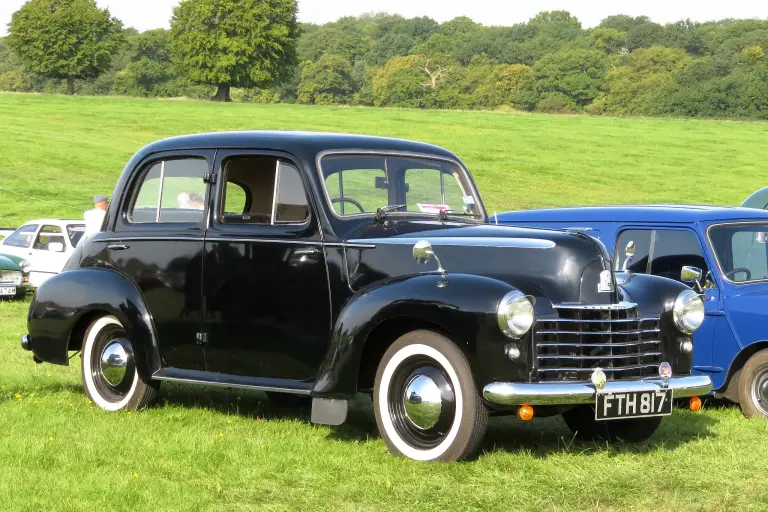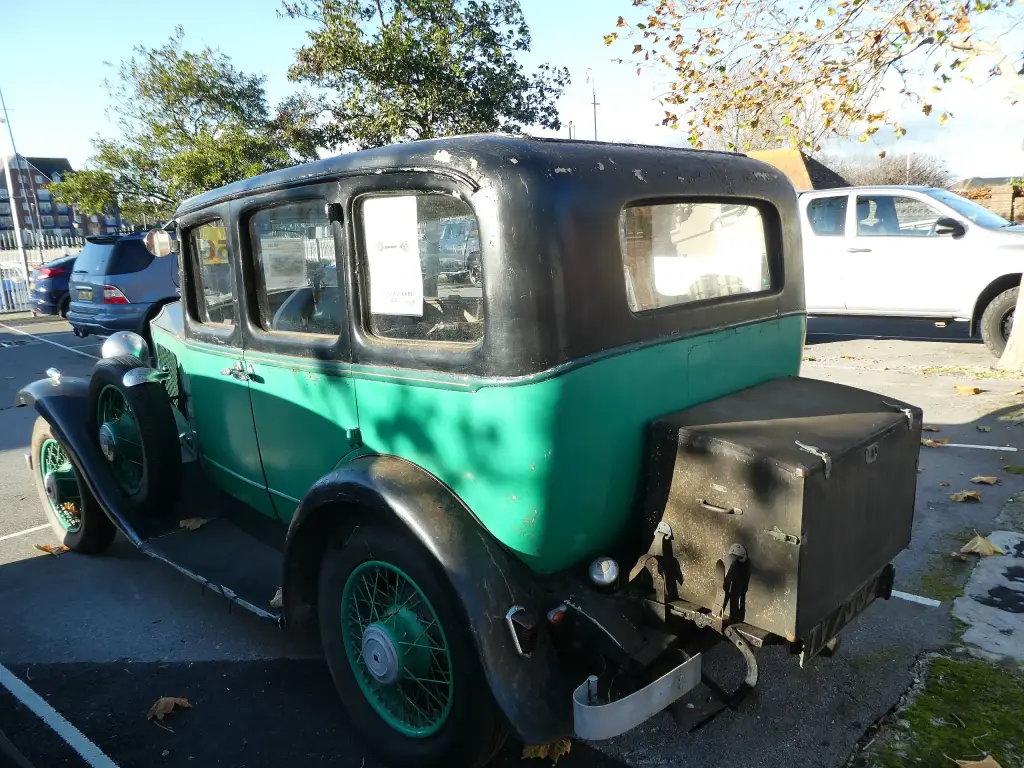
The Vauxhall Cadet VY was announced on 6 October 1930 as an entirely new model, and was the first Vauxhall to cost less than £300. It was also the first British car to be fitted with a synchromesh gearbox, and the styling was American-influenced with British amendments after General Motors had taken over the company.
Vauxhall Cadet at a glance
| Maker | Vauxhall Motors, Luton |
|---|---|
| Production | 1930–1933 |
| Model | Cadet VY; export version VX |
| Engine | 17 hp six-cylinder, pushrod overhead valves |
| Export engine | 26.3 hp, in the model named VX |
| Gearbox | synchromesh from late 1931, a British first |
| Price at launch | £280 standard saloon; £295–£335 in 1933 |
| Bodies | saloon, two-seater, sports coupé, four-light coupé, Tickford, Romney and Denton |
| Top speed | about 65 mph |
| Fuel consumption | about 23 mpg |
Written from the English Wikipedia article on the Cadet, with the German article for background.
History of the Vauxhall Cadet
The Cadet was the first truly new Vauxhall since General Motors bought the business in 1925. It was an American-style car with local amendments, intended to supplement the existing 24 hp 20-60, which was thereafter called the Vauxhall Eighty. When exported it usually carried the larger 27 hp engine and the name VX. The mascot on the Cadet’s radiator cap later became the two-dimensional BOAC Speedbird logo.
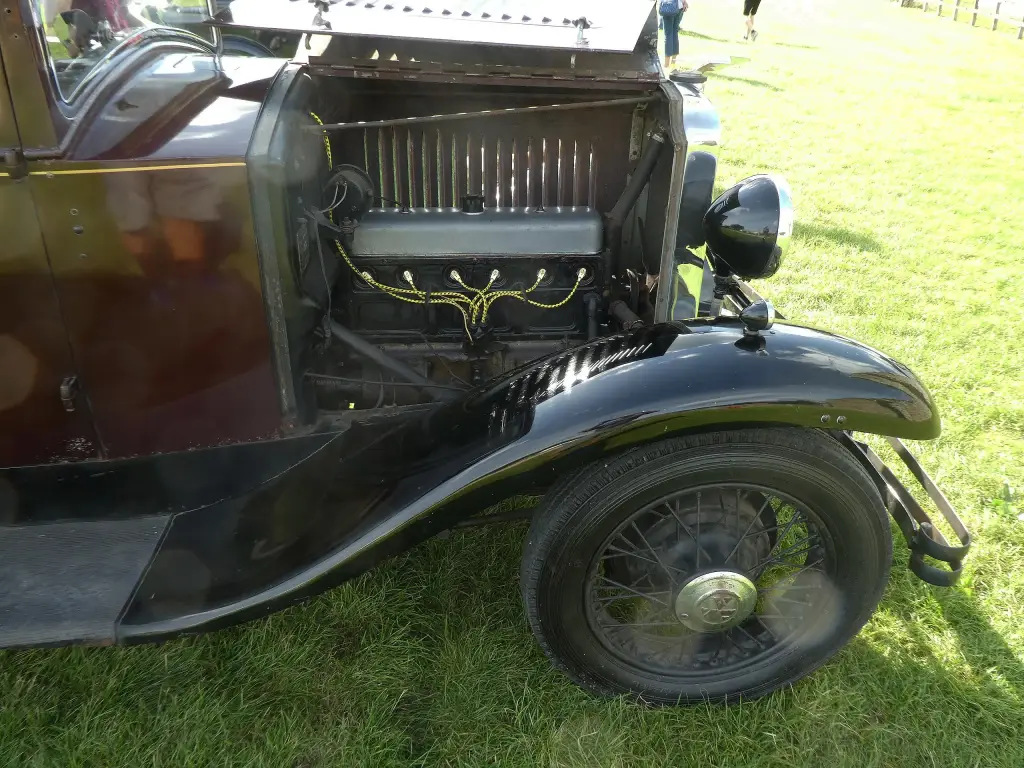
Its place in history rests on the gearbox: the Cadet was the first British car fitted with a gearbox “embodying the now famous Synchro-Mesh principle”, a system that made every driver an expert, and it was fitted to all Cadets from late 1931. The 17 hp six had pushrod-operated overhead valves and was suspended on rubber at four points to damp out vibration in top gear; the carburettor had interconnected choke and throttle controls for easy cold starts. Timing was by duplex roller chain and the crankshaft ran in four bearings. Steering was by cam and lever, with half-elliptical rear springs mounted beneath the axle and splayed front springs, hydraulic shock absorbers all round and half-servo brakes on all four wheels.
The body was practical for its price. Front seats moved easily, there was a ventilator in the scuttle, the one-piece windscreen opened out fully, and the spare wheel lived in a well in the nearside front wing with the tools in a locked cupboard under the bonnet. Prices started at £280 for the standard saloon, or £298 with sliding roof and Protectoglass; the two-seater cost £295 and the sports and four-light coupés £298. For 1933 the range was refined with a deeper rear seat, better leather, an eddy-free roof front, anti-glare sloping windscreen and dual electric wipers; the four-door saloon with sliding roof cost £295, the Grosvenor saloon de luxe £325, the Tickford all-weather saloon £335, the Romney two-seater drop-head £325 and the Denton four-seater drop-head £335.
The Times found the engine almost turbine-like in its silence and smoothness, with responsive acceleration, and recorded 65 mph into a strong wind at about 23 mpg. Its verdict was that “at its price this car provides luxury motoring in the very best sense and within the reach of people of moderate means”.
Design and features
- Synchromesh: the first British car with a synchromesh gearbox, from late 1931.
- Under £300: the cheapest Vauxhall yet, at £280 for the saloon.
- Six-cylinder refinement: a 17 hp pushrod six on rubber mountings.
- Coachbuilt options: Tickford, Romney and Denton bodies alongside the factory saloon.
Vauxhall Cadet versions
- Cadet saloon: the standard £280 four-door with metal panels.
- Two-seater and coupés: sports and four-light coupé bodies at £298.
- Tickford all-weather saloon: a Salmons body with a winding head.
- Romney and Denton drop-heads: two- and four-seater cabriolets.
- VX export model: 26.3 hp engine for overseas markets.
The Cadet’s chassis was lengthened to create the Big Six, and its six-cylinder engine family continued in the Wyvern. More cars are in the Vauxhall collection.
Sources
- Vauxhall Cadet, English Wikipedia: history, gearbox, bodies, prices, road test
- Vauxhall Cadet, German Wikipedia: model background