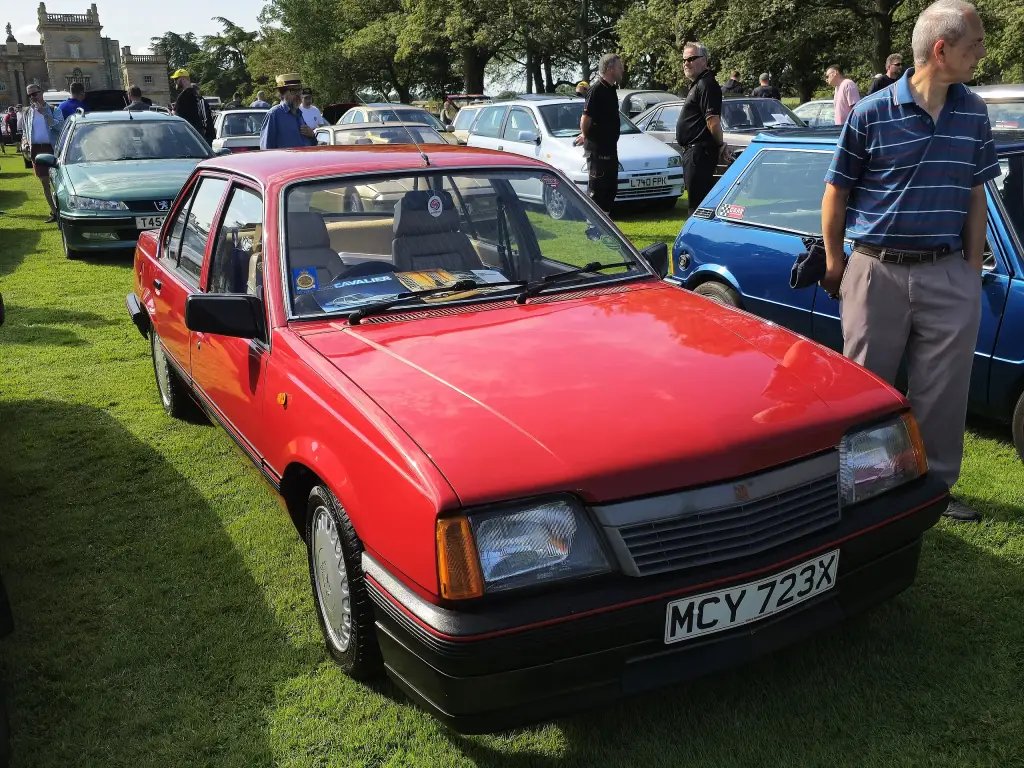
The Vauxhall Cavalier was Vauxhall’s large family car for twenty years, sold in Britain from 1975 to 1995 in three generations. Each was based on a contemporary Opel design, and the Cavalier became the company’s weapon against the Ford Cortina in the company-car market.
Vauxhall Cavalier at a glance
| Maker | Vauxhall Motors |
|---|---|
| Production | 1975–1995 |
| Generations | three: Mk1 (1975–1981), Mk2 (1981–1988), Mk3 (1988–1995) |
| Based on | Opel Ascona B, J-car Ascona, then Opel Vectra A |
| Mk1 launch | November 1975, as a 1976 model |
| Mk1 engine | 1,896 cc Opel CIH |
| UK assembly | Luton from 26 August 1977 |
| Mk1 bodies | two- and four-door saloons and a two-door coupé |
| Mk3 | a rebadged Vectra A with the same production span |
| Replaced by | Vauxhall Vectra, 1995 |
Written from the English Wikipedia article on the Cavalier, with the German article on the Ascona B for the first generation.
History of the Vauxhall Cavalier
The first Cavalier was launched in November 1975 as a 1976 model, a restyled version of the Opel Ascona B that had appeared in West Germany three months earlier. It was built on General Motors’ U-car platform, essentially a stretched version of the T-body used by the Kadett C and Chevette. Vauxhall had intended to give the car its own bodywork and interior, but GM management stopped development six months before release and decreed that it use the Ascona body almost unaltered, with the longer bonnet and “droopsnoot” nose from the Manta B, minus the air slots between the headlamps. The rear had the number plate below the bumper and a panel between the lamps spelling out VAUXHALL. In the end the nose, designed by Wayne Cherry, was the only obvious difference; the interior differed only in badges and trim.
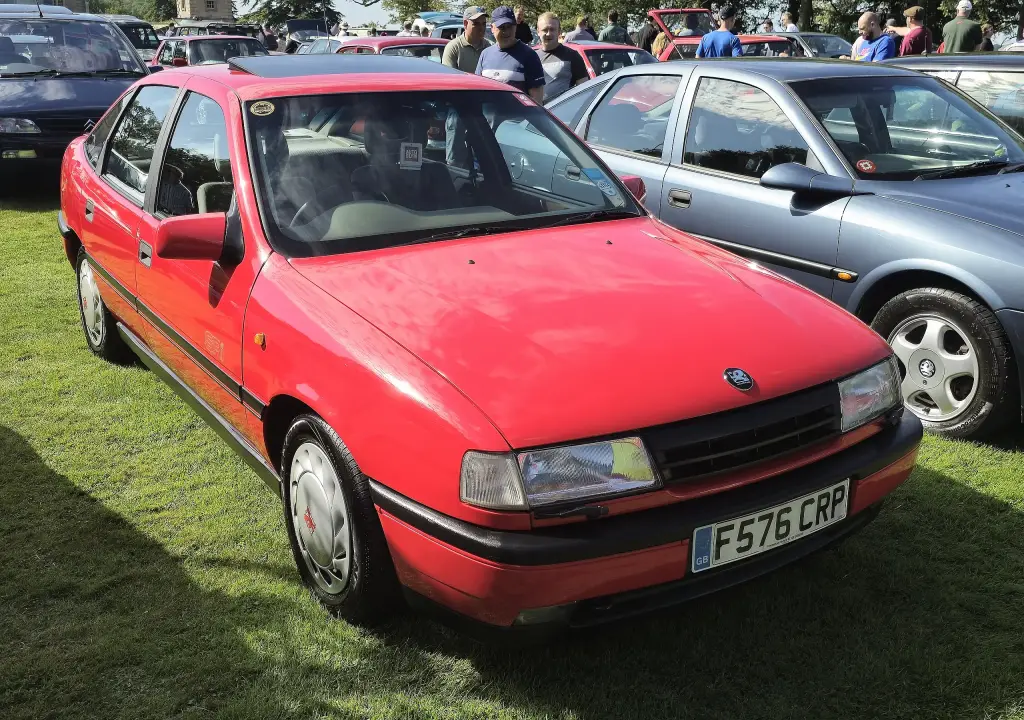
Early cars came from Opel’s Antwerp plant in Belgium, and demand in Britain outstripped supply. In August 1977 GM added British production, and on 26 August 1977 Eric Fountain, Vauxhall’s manufacturing director, drove the first Luton-built Cavalier off the line. A 1,256 cc version assembled at Luton broadened the range, with the 1,584 cc and 1,979 cc cars still arriving from Belgium at first before Luton took them over too. The timing was good: the British tax system made company-car fleets a large part of the market, the Cortina Mk III had never matched its predecessor for reliability in fleet managers’ eyes, and British Leyland was under fire for the Marina and Allegro. What Car? rated the new Cavalier well above the Cortina Mk III and Morris Marina it was tested against. The original range offered two- and four-door saloons and a two-door coupé using the Manta’s body, with 1.6 and 1.9-litre Opel CIH engines; only the 1.9 was available in the coupé.
The second Cavalier arrived in 1981 alongside an identical new Opel Ascona on the GM J-body platform, and the third in 1988 was a rebadged Opel Vectra A with the same production span. UK-market Cavaliers were built mainly at Luton, but also alongside their Ascona and Vectra sisters in Opel plants in continental Europe. By the end of the third generation the Cavalier was one of the most familiar cars on British roads, and in 1995 the name gave way to Vectra.
Design and features
- Three generations: Ascona B, J-car Ascona and Vectra A underpinnings.
- Droopsnoot nose: the Wayne Cherry front that distinguished the Mk1 from its Opel sister.
- Fleet favourite: aimed squarely at the Ford Cortina and the company-car market.
- Luton-built: British assembly from August 1977 onwards.
Vauxhall Cavalier versions
- Cavalier Mk1 saloon: two- and four-door bodies with 1.6 and 1.9 engines.
- Cavalier Mk1 coupé: the two-door using Manta bodywork, 1.9 only.
- Cavalier Mk2 (1981): the J-car generation.
- Cavalier Mk3 (1988): the Vectra A-based car.
The Cavalier shared its showroom with the larger Carlton and the smaller Astra, and it was replaced by the Vectra. More cars are in the Vauxhall collection.
Sources
- Vauxhall Cavalier, English Wikipedia: three generations, Mk1 history, Luton production
- Opel Ascona B, German Wikipedia: Mk1 background