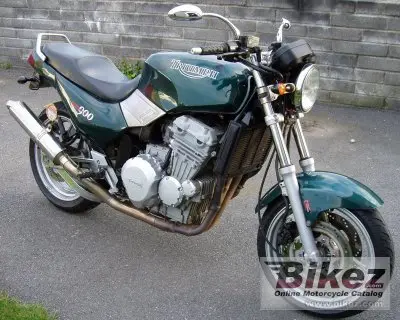
The Triumph Trident of the 1990s was a three-cylinder motorcycle of 750 or 900 cc built at Hinckley from 1991 to 1998. It used Triumph’s modular engine in a steel spine frame, and its Sprint versions led directly to the Sprint ST.
Triumph Trident at a glance
| Maker | Triumph Motorcycles Ltd, Hinckley |
|---|---|
| Production | 1991–1998 |
| Engines | 750 cc and 900 cc triples |
| Shown | Cologne Motorcycle Show, September 1990 |
| On sale | March to September 1991 |
| Engine type | modular liquid-cooled DOHC |
| Frame | high-tensile steel spine, based on the T140 Bonneville spine |
| Brakes | Nissin hydraulic discs |
| Forks | Showa or Kayaba telescopic |
| Derivatives | Sprint, Daytona, Trident Sprint |
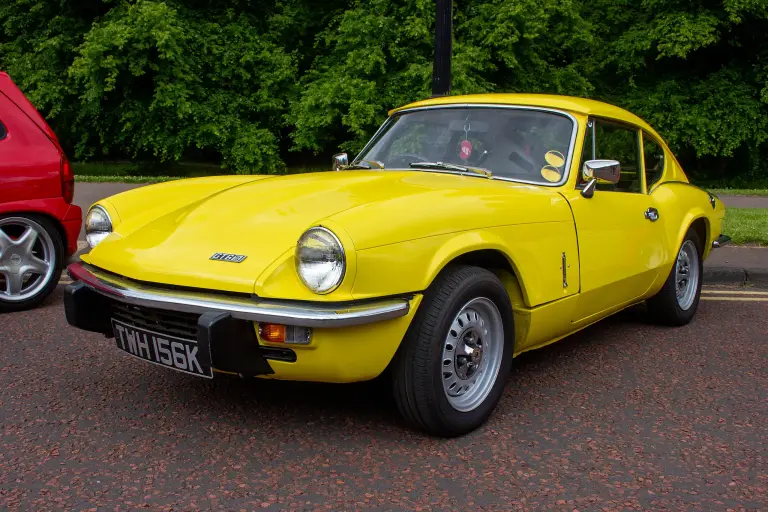
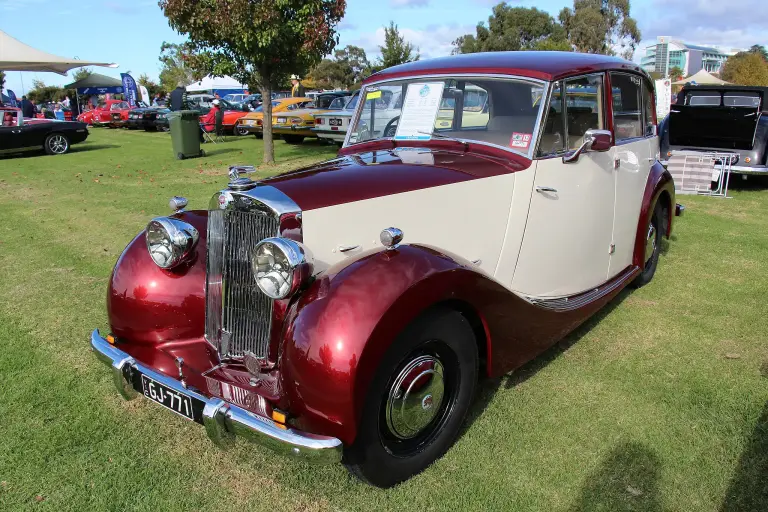
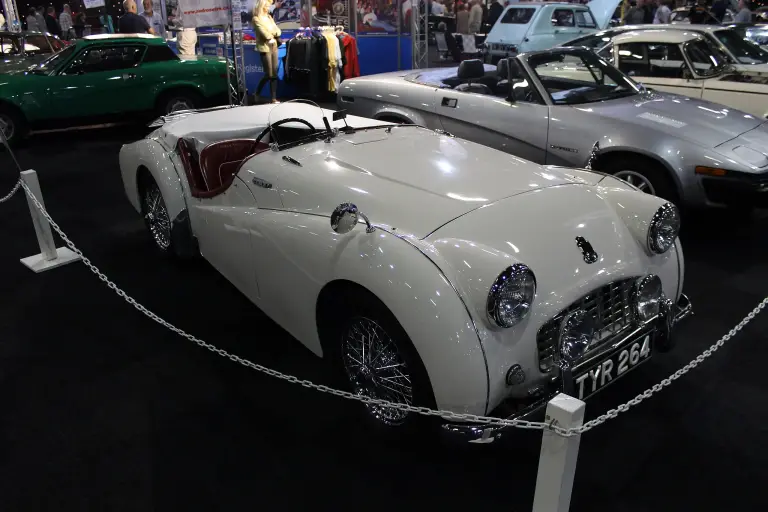
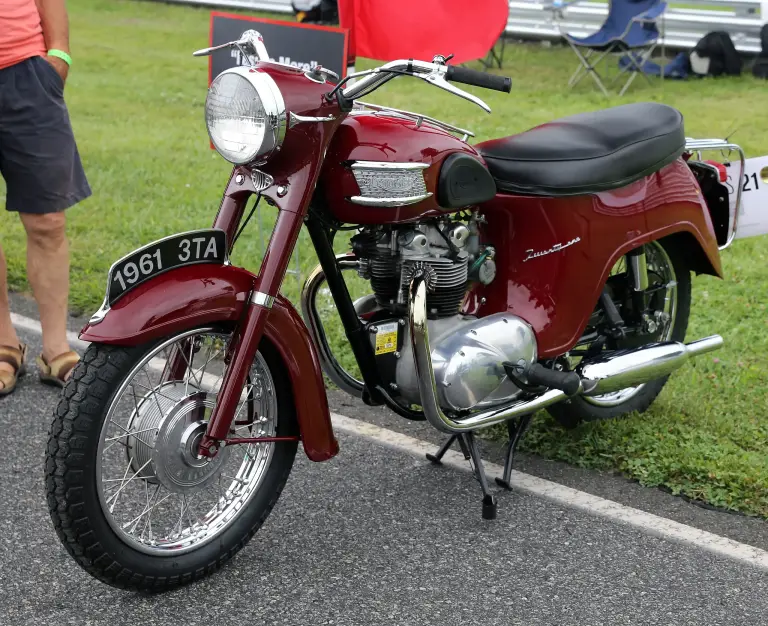
Based on the English Wikipedia article on the 1990s Trident. Free photographs of this model were not available, so the page keeps the record’s existing picture.
History of the Triumph Trident
1990: a new range at Cologne
Triumph launched a range of new 750 and 900 cc triple-cylinder bikes, together with 1000 and 1200 cc fours, at the Cologne Motorcycle Show in September 1990. They reused famous model names from the Meriden years and reached the public between March 1991, when the Trophy 1200 came first, and September 1991. The engine was a modular liquid-cooled double-overhead-camshaft design, and the idea of a modular range had first been proposed in air-cooled form in the early 1970s by Bert Hopwood, though BSA-Triumph never built it.
Frame and cycle parts
The Trident used a high-tensile steel tubular frame with a large-diameter spine based on the Triumph Bonneville T140, although engine oil was not carried in the frame. Japanese suppliers provided much of the running gear, including Nissin hydraulic disc brakes and Showa or Kayaba telescopic forks. The modular engine made it easy to create further models, and the range soon included the Sprint sports tourer, the fully faired Daytona sport bike and the Daytona Sprint café racer.
Trident Sprint and the end of the name
In 1993 a twin-headlight cockpit fairing was added to create the Trident Sprint. By 1994 the Trident name had been replaced by Sprint S, and at the end of 1996 that model became the Sprint Sports. The last development of the range was the Sprint Executive of 1998, which came with a hard luggage system. The Sprint was in due course succeeded by the Sprint ST.
Design and features
- Modular triple — 750 and 900 cc liquid-cooled DOHC engines in the same family as the fours.
- Steel spine frame — a large-diameter backbone derived from the Bonneville T140.
- Japanese cycle parts — Nissin brakes and Showa or Kayaba forks.
- Sprint line — the Sprint, Sprint S, Sprint Sports and Sprint Executive grew out of the Trident.
Triumph Trident versions
- Trident 750 and 900 (1991–1998): the standard unfaired triples.
- Trident Sprint (1993): twin-headlight cockpit fairing.
- Sprint S (1994) and Sprint Sports (1996): the renamed sports versions.
- Sprint Executive (1998): with a hard luggage system.
The Trident’s Sprint descendants led to the Sprint ST, and the name was revived on the Daytona side of the range. More in the Triumph collection.
Sources
- Triumph Trident, English Wikipedia: 1990 launch, modular engine, frame, Sprint derivatives