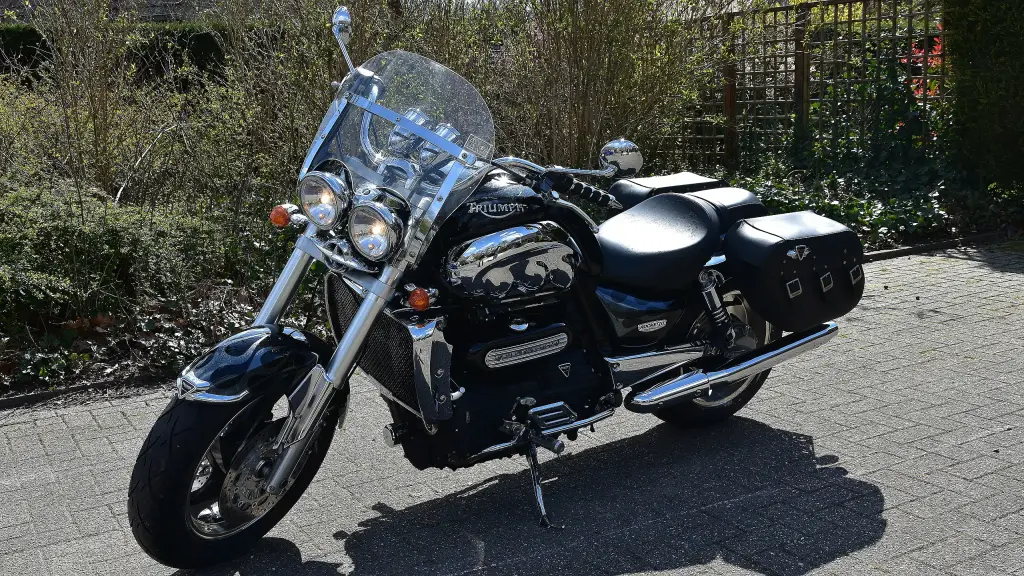
The Triumph Rocket III is a three-cylinder motorcycle with a 2,294 cc engine, the largest in any production motorcycle until Triumph released the Rocket 3 in 2019. It was launched in 2003 and went on sale in Britain in 2004.
Triumph Rocket III at a glance
| Maker | Triumph Motorcycles, Hinckley |
|---|---|
| Project start | 1998, led by Ross Clifford |
| Engine | 2,294 cc longitudinal in-line three |
| Designer | John Mockett |
| Unveiled | San Antonio, Texas, 20 August 2003 |
| European launch | Milan show, 16 September 2003 |
| UK sales | spring 2004 |
| Frame | large tubular steel twin-spine |
| Rear tyre | 240/50ZR16 |
| Front brakes | Daytona 955i four-piston callipers, 320 mm discs |
| Roadster output | 146 bhp, 221 Nm |
| Touring torque | 150 lb-ft at 2500 rpm |
Based on the English Wikipedia article on the Rocket III.
History of the Triumph Rocket III
1998: a big cruiser project
The Rocket III project started in 1998 under product range manager Ross Clifford, with research focused on the United States, where big cruisers sold well. The intended rivals were the Harley-Davidson Ultra Glide and the Honda Gold Wing, and the first idea was a 1,600 cc performance cruiser. Designer John Mockett, who had drawn the Hesketh V1000, the Tiger and the retro Bonneville, worked with David Stride, Gareth Davies and Rod Scivyer around an in-line three-cylinder engine. An in-line four and a V6 were considered before the longitudinally mounted triple was chosen, under the code C15XB Series S1.
From styling experiments to 2,294 cc
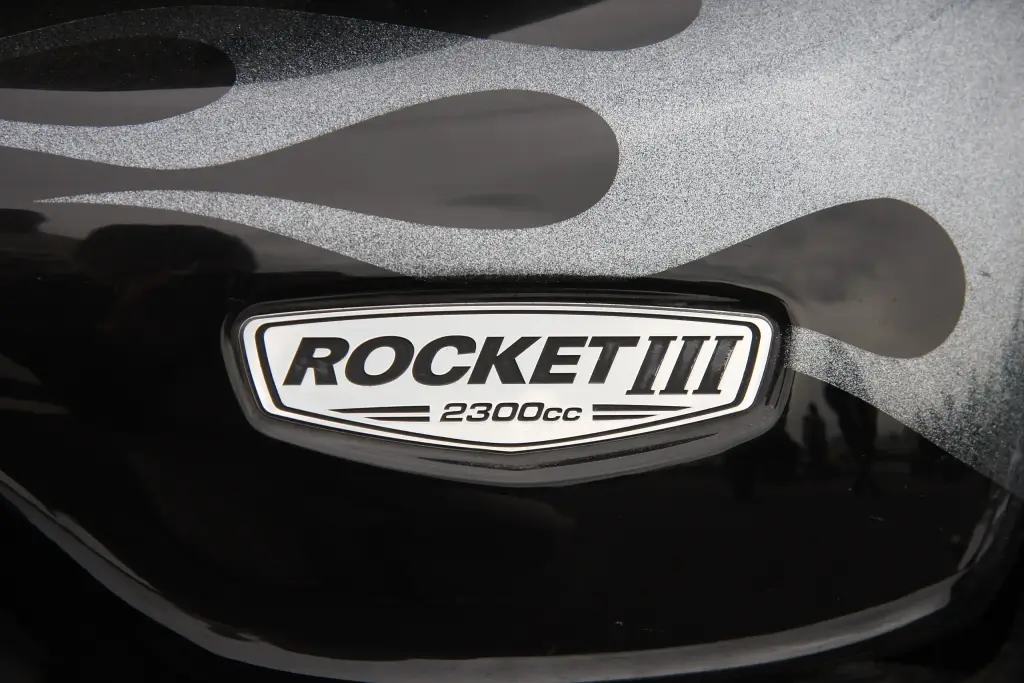
Mockett’s first “futuristic” styling, with raygun silencers and a large chrome rear mudguard, was rejected by focus groups. The S2 was simpler and more traditional, and the S3 smoothed the lines further. When Yamaha launched the 1,670 cc Road Star Warrior in 2002 and Honda the VTX1800, Triumph raised the stakes to 2,294 cc. The first engine ran in summer 2002, with twin butterfly valves per throttle body, twin spark plugs per cylinder and multi-hole injectors that let the bike meet Euro IV emissions at launch. The torque curve was mapped per gear, so more than 90 per cent of torque was available at 2,000 rpm. James Colbrook designed the tubular steel twin-spine frame, and Andy Earnshaw the gearbox and shaft drive to a 240/50ZR16 rear tyre. Front brakes came from the Daytona 955i, and the Rocket III was the first Triumph with 43 mm inverted forks.
2003–2004: launch
The prototype was renamed Rocket in 2003, continuing the heritage of the BSA Rocket 3 and Triumph Trident. It was unveiled in San Antonio, Texas, on 20 August 2003 and at the Milan show on 16 September; British sales began in spring 2004. Motor Cycle News made it Machine of the Year at the 2004 NEC show, and it won similar titles from Motorcycle Cruiser, Motorcyclist and Cruising Rider. Australian buyers placed 230 deposits before any bikes had shipped.
The range
The original Rocket III of 2004 was later replaced by the Roadster as the only version on sale. The Classic of 2006 added rider floorboards, reshaped silencers and pullback handlebars, and was promoted in 2007 with a spoof video that drew more than 1.2 million views. The 2010 Roadster is the most powerful of the line, with 146 bhp and 221 Nm, and a dual exhaust with one silencer per side. There was also a short-lived 2007 Tourer Limited Edition and, from 2004 development, a Touring model with a redesigned frame and swingarm, 150 lb-ft at 2500 rpm and 106 hp at 6,000 rpm. Despite the research, the Rocket III struggled to win over traditional Harley-Davidson riders, and Triumph repositioned it as a musclebike and streetfighter.
Design and features
- 2,294 cc triple — the largest production motorcycle engine until 2019.
- Longitudinal mounting — a shaft-drive layout in a tubular steel twin-spine frame.
- Torque everywhere — over 90 per cent available at 2,000 rpm, mapped per gear.
- Serious brakes and forks — Daytona 955i callipers and Triumph’s first 43 mm inverted forks.
Triumph Rocket III versions
- Rocket III (2004): the original model.
- Rocket III Classic (2006): floorboards, reshaped silencers and pullback bars.
- Rocket III Tourer (2007): short-lived limited edition with screen and panniers.
- Rocket III Touring: new frame, 150 lb-ft at 2500 rpm.
- Rocket III Roadster (2010): 146 bhp and 221 Nm, one silencer per side.
The Rocket name came from the BSA Rocket 3, a badge-engineered Trident. Other Hinckley triples are in the Thunderbird and the Triumph collection.
Sources
- Triumph Rocket III, English Wikipedia: project history, engineering, launch, models