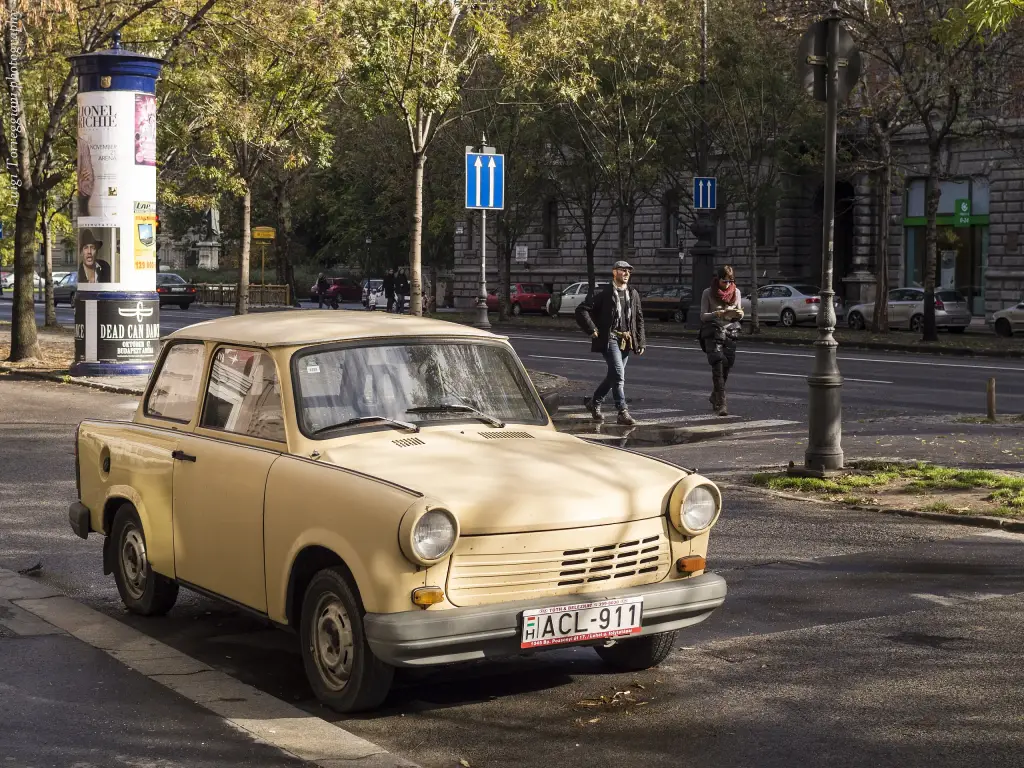
The Trabant 1.1 was the fourth and last series-production Trabant. Unlike all its predecessors it had a four-stroke engine, a 1.05-litre unit derived from the Volkswagen EA 111. It was made from May 1990 to 30 April 1991, and only 39,474 were built, which makes it the rarest Trabant model.
Trabant 1.1 at a glance
| Maker | VEB Sachsenring, from 1990 Sachsenring Automobilwerke GmbH |
|---|---|
| Production | May 1990 – 30 April 1991 |
| Built | 39,474 |
| Bodies | two-door saloon, three-door Universal estate, Tramp |
| Engine | 1.05 L four-cylinder OHC four-stroke, 30 kW (41 PS) |
| Torque | 72.6 Nm |
| Gearbox | four-speed manual, floor shift |
| Top speed | 125 km/h |
| 0–100 km/h | 22 seconds |
| Fuel consumption | 8 L/100 km |
| Suspension | MacPherson struts front, coil springs rear |
| Brakes | discs front, drums rear |
History of the Trabant 1.1
A new engine in an old body
In 1984 IFA bought from Volkswagen a licence to build the 1.1- and 1.3-litre four-stroke engines. The 1.1-litre EA 111 unit, as used in the VW Polo, was built at the Barkas works, while the Wartburg 1.3 and Barkas B 1000-1 received the larger engine. The cost was high: installing the new engine cost 33.2 million Mark and the new gearbox another 4.7 million. A prototype body was rejected, so the new mechanicals were hidden under a lightly revised 601 shell: the 1.1 received a steel bonnet, a new grille, plastic bumpers, new tail lights and a fuel filler on the rear right. Technically, however, it was a largely new car, with a strengthened front end, MacPherson struts and disc brakes at the front and coil springs instead of a transverse leaf spring at the rear.
Production and the market
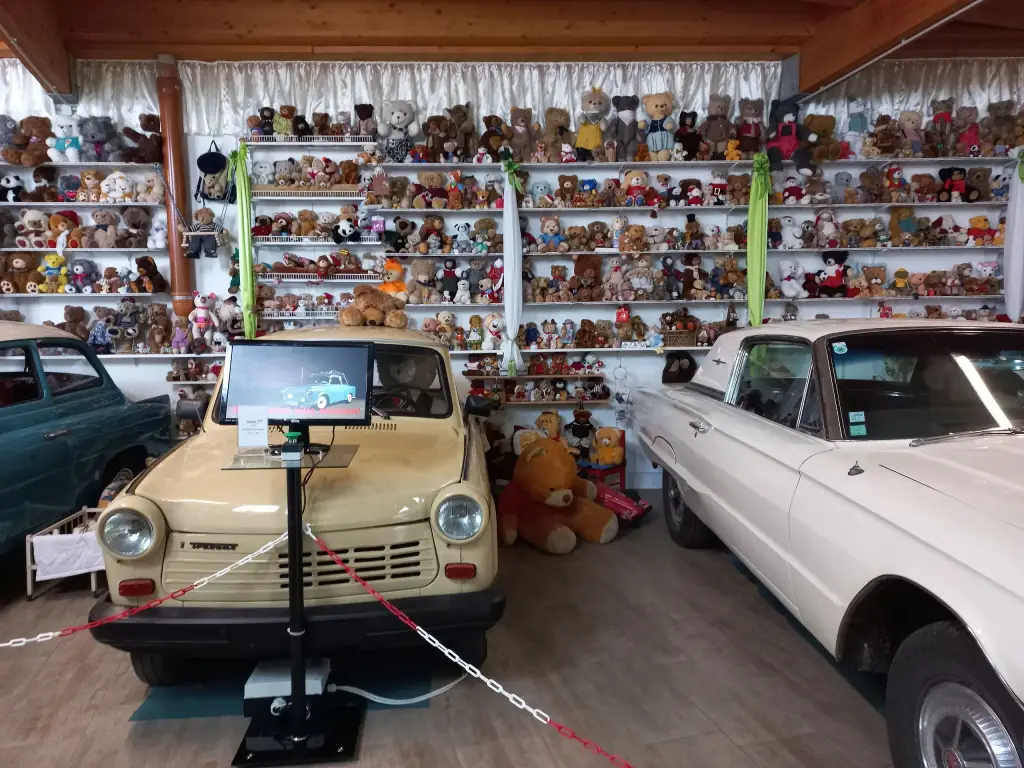
A few hundred pre-series cars were built in 1988 and 1989, and in early 1989 the plan was to build the 1.1 alongside the 601 and replace it completely in 1994. The political changes overtook that schedule. The new model was presented in autumn 1989 at 18,900 Mark, but buyers were unwilling to pay 6,000 Mark more than before for a car that still lagged Western standards. When series production began in May 1990 the currency union was already signed, and from 1 July 1990 West German cars were freely available. In 1990 the saloon was offered in Germany at DM 10,887 and was considered overpriced. Larger batches went only to Poland and Hungary under existing Comecon contracts. An attempt to sell the car through IVM as the Caro Tramp 110 in bright colours for under 6,000 DM also failed. The last of 39,474 cars left the works on 30 April 1991, ending 33 years of Trabant production.
The Last Edition
Production took place at a new final assembly plant in Mosel, where from May 1990 the Trabant 1.1 was built on the same line as the VW Polo II. After the 601 ended in July 1990, 1.1 production moved back to the old Sachsenring works while Mosel was converted entirely to Volkswagen. In 1995, 444 Trabant 1.1 Universal cars that had been shipped to Turkey and stranded in the customs port of Mersin were bought back by Sachsenring Automobiltechnik, cleaned and overhauled, and offered as the „Last Edition“ from 11 October 1995 at 19,444 DM. Only 93 were sold at that price.
Design and features
- Four-stroke engine: the licensed 1.05-litre Volkswagen EA 111 unit gave 41 PS and 72.6 Nm, and finally did away with the two-stroke’s smoke.
- New front end: MacPherson struts and disc brakes replaced the old front suspension and drums.
- Floor gearchange: the four-speed gearbox was operated by a floor lever on the driver’s right instead of the 601’s column shift.
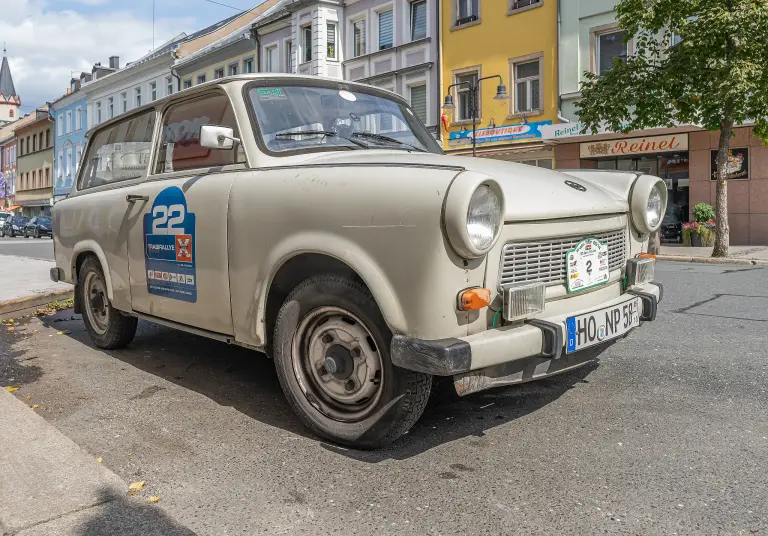
- Familiar body: the duroplast panels and steel skeleton were carried over, with a new bonnet, grille, bumpers and tail lights.
- Tramp version: a doorless off-road-style vehicle with a canvas roof joined the saloon and Universal.
Trabant 1.1 versions
- Limousine: the two-door saloon, the main version.
- Universal: the three-door estate.
- Tramp: a doorless ATV-like off-road vehicle with a canvas roof.
- Caro Tramp 110: the brightly coloured IVM sales version offered for under 6,000 DM.
- Last Edition (1995): 444 refurbished Universals from the stranded Turkish shipment, offered at 19,444 DM.
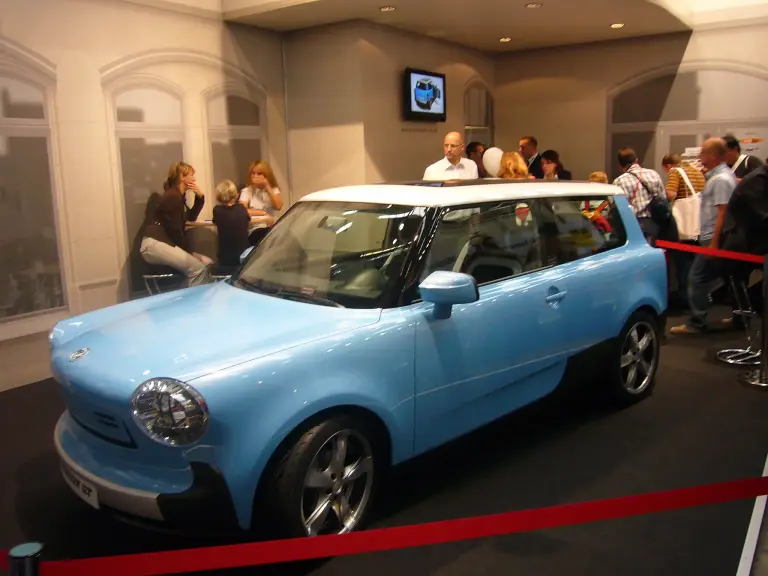
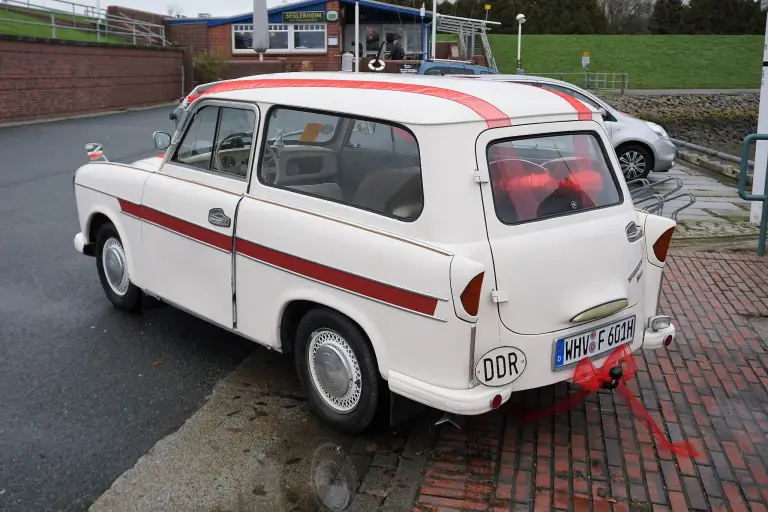
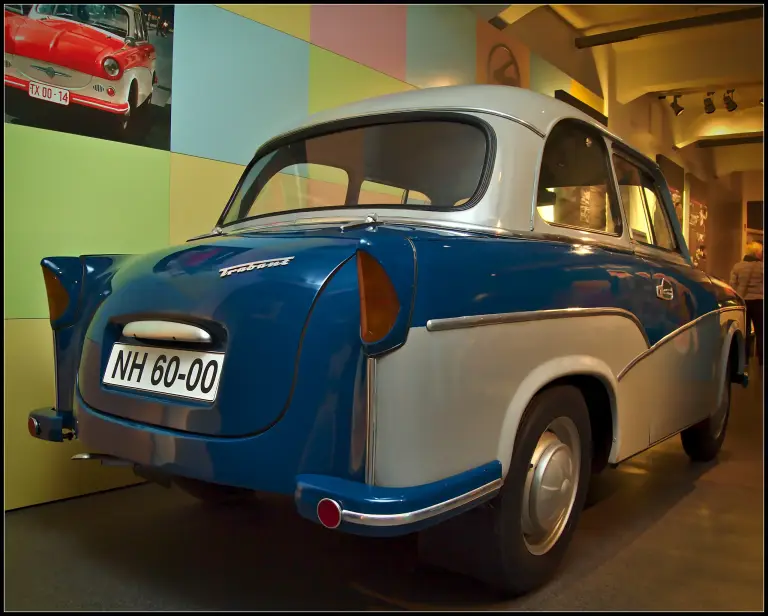
The 1.1 replaced the Trabant 601 and ended the line that began with the Trabant P 50. The planned electric revival was the Trabant nT. More cars are in the Trabant collection.
Sources
- Trabant 1.1, English Wikipedia: production total, technical description, body styles
- Trabant 1.1, German Wikipedia: development costs, Mosel plant, prices, Last Edition