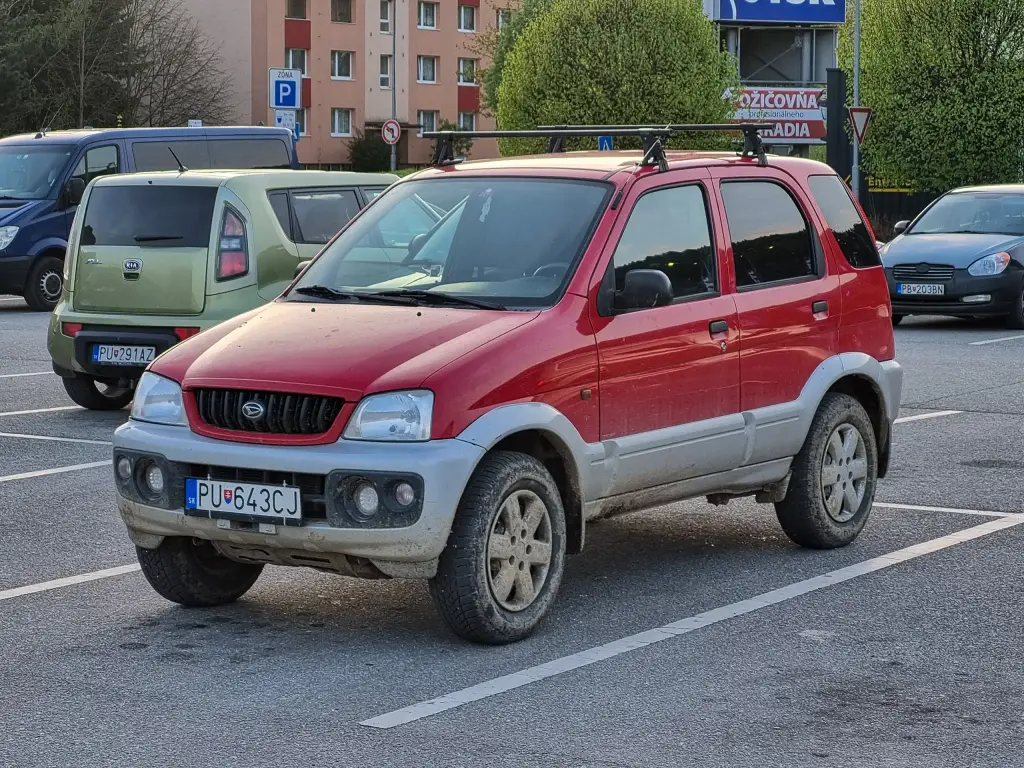
The Toyota Cami was a small SUV sold in Japan from May 1999, based on the first-generation Daihatsu Terios. The name is a contraction of “casual mini”, and the same car was also marketed by Toyota as the Terios in some export markets.
Toyota Cami at a glance
| Maker | Toyota, built by Daihatsu |
|---|---|
| Production | From May 1999 |
| Based on | Daihatsu Terios (J100) |
| Class | Mini SUV |
| Chassis | Unibody monocoque |
| Engine | 1.3-litre K3-VE four-cylinder, 92 PS |
| Turbo version | K3-VET, 140 PS |
| Drive | Rear- or four-wheel drive |
| Suspension | MacPherson struts front, multi-link coil rear |
| Name | From “casual mini” |
The Cami is a rebadged Daihatsu Terios and is described in the English Wikipedia article on the Terios; this page uses the Cami and first-generation sections only.
History of the Toyota Cami
A Daihatsu underneath
The Terios replaced the Daihatsu Rocky F300 and went on sale in 1997 as a mini SUV with a unibody chassis, independent MacPherson strut front suspension and a multi-link coil-sprung rear axle. Toyota began selling it in Japan as the Cami in May 1999. The first-generation car had a 1.3-litre four-cylinder engine: the SOHC HC-EJ of 89 PS at first, replaced in 2000 by the DOHC K3-VE of 92 PS, with a turbocharged K3-VET of 140 PS also offered. Buyers could choose rear- or four-wheel drive.
Equipment and updates
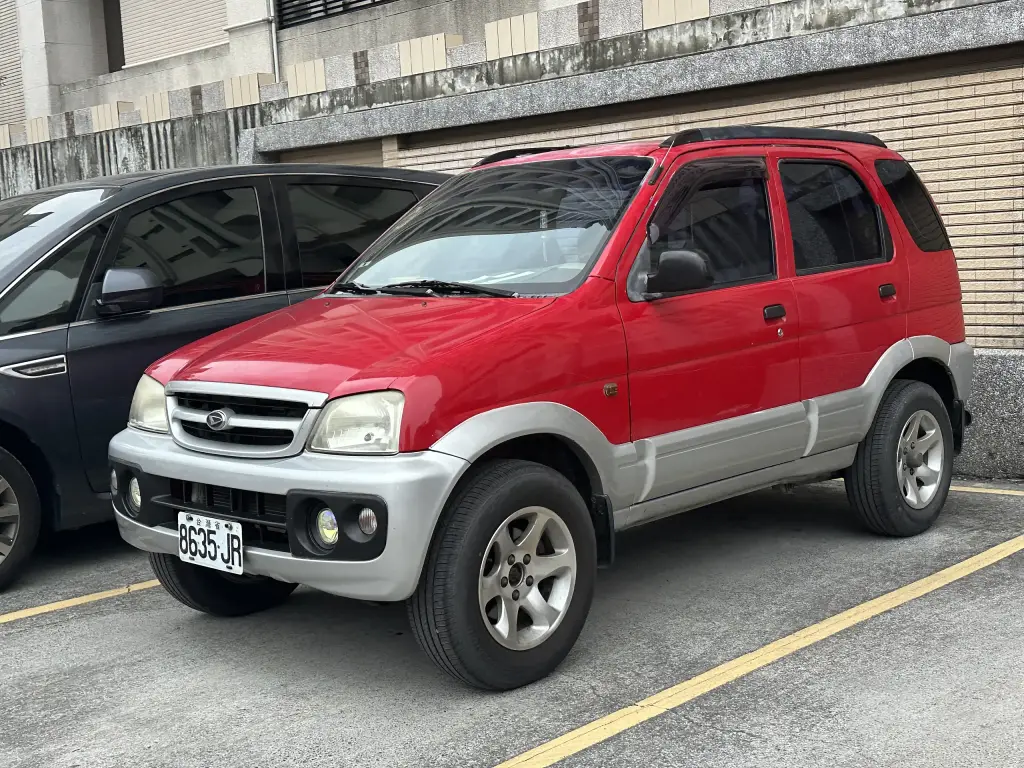
A 2000 facelift brought a chrome grille in place of black plastic, electric front windows, central locking, rear head restraints, alloy wheels, roof rails and a roof spoiler on the higher grade. The Terios was also assembled in Venezuela from November 2001, the first Daihatsu built there, and in Malaysia it was sold by Perodua as the Kembara. In Indonesia a long-wheelbase version with third-row seats was built as the Daihatsu Taruna.
Why it mattered
The Cami gave Toyota a cheap, compact four-wheel-drive model below the RAV4 at a time when small SUVs were taking off. Because it was a Daihatsu design sold through Toyota dealers, it stayed a niche product, but the formula — a tall, short, inexpensive off-roader — anticipated the boom in small crossovers that followed. Toyota continued to sell Daihatsu-based small SUVs in later years under names such as the Terios and Rush.
Design and features
- Rebadged Terios: a Daihatsu design sold by Toyota in Japan.
- Unibody chassis: car-like construction rather than a ladder frame.
- Four-wheel drive: available alongside rear-wheel drive.
- Turbo option: the K3-VET engine produced 140 PS.
Toyota Cami versions
- J100G (1997–1999): SOHC HC-EJ engine of 89 PS, four-wheel drive.
- J102G (2000–2004): DOHC K3-VE of 92 PS, four-wheel drive.
- J122G (2000–2004): rear-wheel-drive version.
- K3-VET turbo: 140 PS version of the 1.3-litre engine.
- Terios Kid: a kei-class version sold in Japan until 2012.
The Cami sat below the RAV4 in Toyota’s range and shared its Daihatsu origins with the Blizzard. More cars are in the Toyota collection.
Sources
- Daihatsu Terios, English Wikipedia: Cami, engines, versions