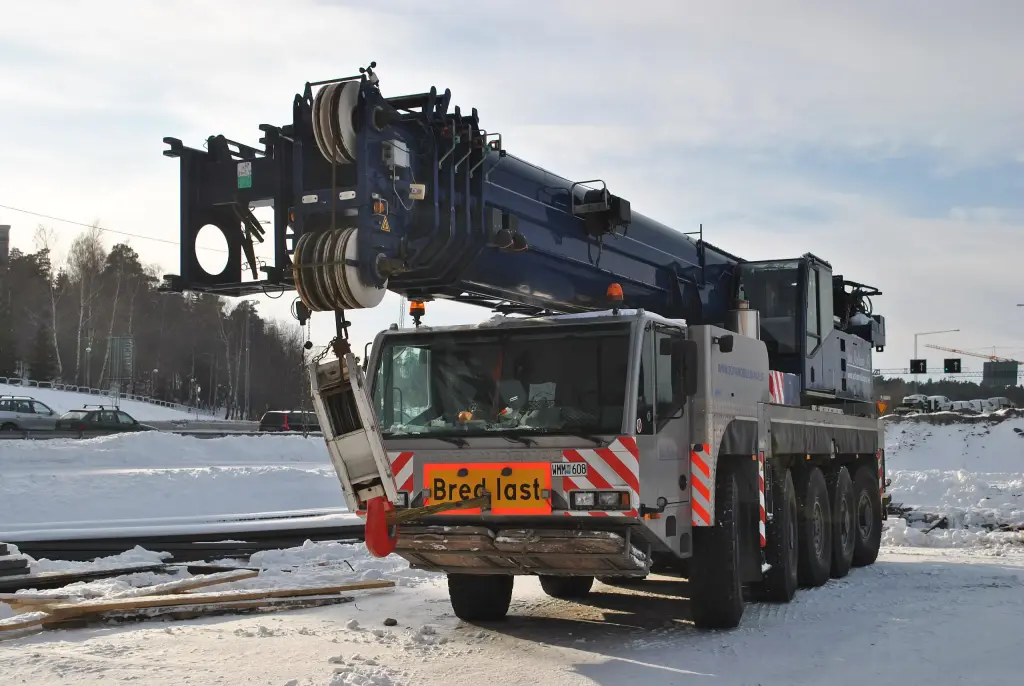
Terex Demag was the name Terex gave the former Demag mobile crane business after buying it from Siemens in 2002. The cranes were built at Zweibrücken in Germany, on a site whose engineering history goes back to 1827, and the range ran from telescopic all-terrain cranes to giant lattice-boom crawler cranes.
Terex Demag at a glance
| Business | Demag mobile cranes, bought by Terex in 2002 |
|---|---|
| Plant | Zweibrücken, Germany |
| Site origin | Dingler works, founded 1827 |
| Demag stake | 1954 |
| First telescopic crane | 1950, 2.5 tonnes |
| First 12-tonne telescopic crane | 1963 |
| First lattice-boom mobile crane | 1965, 45 tonnes |
| 1979 | TC 4000 and CC 4000, 800 tonnes |
| 1987 | CC 12000, 1,000 tonnes |
| 1998 | CC 12600, 1,750 tonnes |
| 2010 | AC 1000-9 telescopic crane |
| Flagship crawler | CC 8800-Twin |
There is no Wikipedia article on the Terex Demag range as such; this page uses the English article on Demag, the German article on Tadano Demag (the successor company) and the Terex articles. The AC 350-6 and CC 8800-1 are identified from the videos.
History of the Terex Demag
Demag itself was formed in Duisburg in 1910 by the merger of the Märkische Maschinenbau-Anstalt L. Stuckenholz, the Duisburg Mechanical Engineering AG and the Benrath Machine Works. Its crane roots went further back: the Harkort works in Wetter an der Ruhr, founded in 1819, had been building cranes since 1840, and in 1908 the company designed the world’s largest floating crane for Harland & Wolff in Belfast, the yard that built the Olympic and the Titanic. Demag began making excavators in 1925 and developed its first hydraulic excavators in 1954.
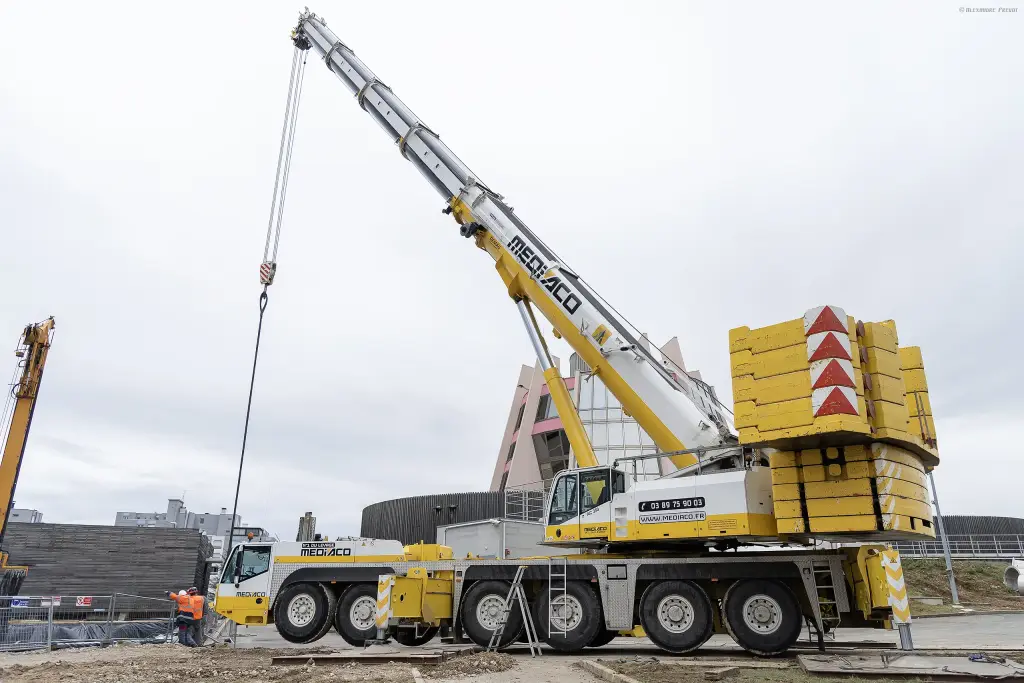
In 1973 the Mannesmann group took over Demag. When Vodafone bought Mannesmann in 2000, the industrial businesses were passed to Siemens and Bosch, and in 2002 Siemens sold the Demag mobile crane division to the American company Terex. Terex later increased its involvement in the Demag name: in 2011 it bought 82 per cent of Demag Cranes AG and made it the Terex Material Handling & Port Solutions division.
The crane plant at Zweibrücken began as the Dingler works, opened by Christian Dingler in 1827. Demag took a stake in 1954 and the site became a mobile crane specialist: the first telescopic mobile crane of 1950 lifted 2.5 tonnes, a 12-tonne telescopic crane followed in 1963, and the first lattice-boom mobile crane, rated at 45 tonnes, arrived in 1965. From 1969 the company traded as Demag Baumaschinen GmbH.
The giants came later. In 1979 Demag presented the TC 4000 lattice-boom mobile crane and the CC 4000 crawler crane, each rated at 800 tonnes; the CC 12000 followed in 1987 with 1,000 tonnes and the CC 12600 in 1998 with 1,750 tonnes. After the Terex takeover the cranes were sold briefly as Terex-Demag and then as Terex. The AC 1000-9 of 2010 was presented as the most powerful telescopic crane that could still travel within the 12-tonne axle load limit, and the CC 8800-Twin as the most powerful crawler crane in the world.
Design and features
- Lattice-boom crawler cranes: the CC line, from the CC 4000 of 1979 to the CC 8800-Twin.
- All-terrain telescopic cranes: the AC range, including the AC 1000-9 of 2010.
- Heavy-lift engineering: Superlift and Ringlift counterweight systems raised the capacity of the CC 4000 from 500 to 1,600 tonnes.
- Long boom: the CC 4000 had a 102-metre main boom.
- Zweibrücken heritage: crane building on the Dingler site since the 1950s.
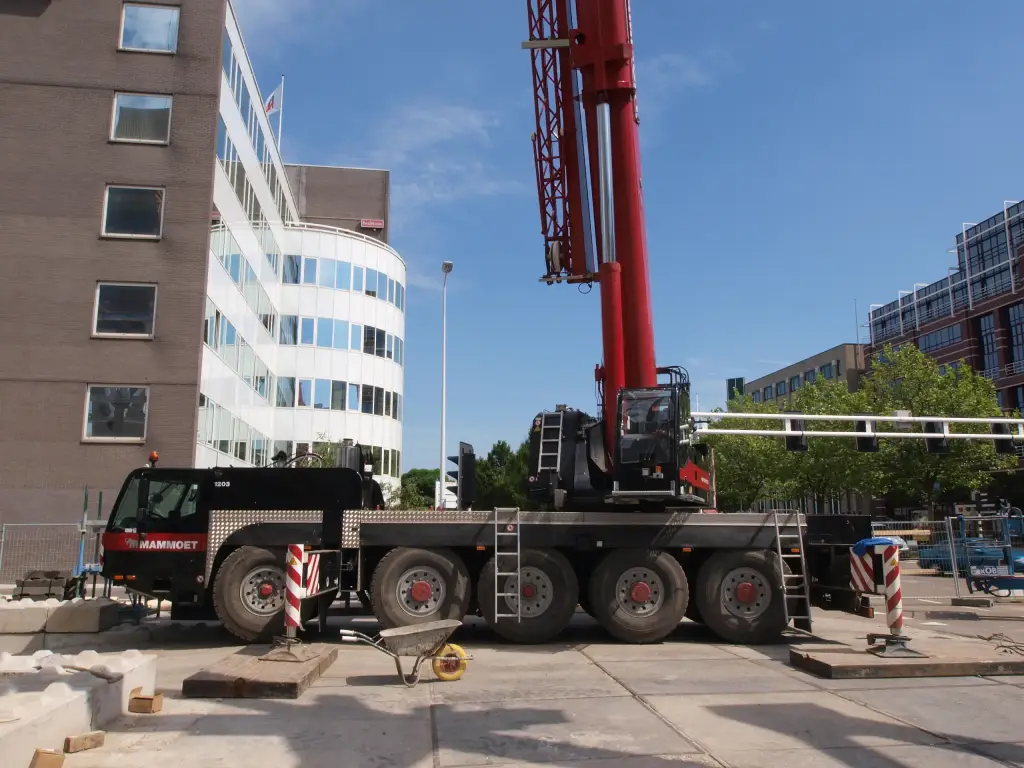
Terex Demag versions
- AC 350-6: an all-terrain crane of the AC range, recorded in the video of the merged Terex 350 entry.
- CC 8800-1: the crawler crane assembled in Australia in the main video.
- CC 8800-Twin: described by Demag as the most powerful crawler crane in the world.
- AC 1000-9: the 2010 telescopic crane built to stay within the 12-tonne axle load limit.
- CC 12000 and CC 12600: the 1,000- and 1,750-tonne crawler cranes of 1987 and 1998.
The Terex O&K mining shovels were the other heavy branch of the Terex group in Germany, and the Terex RT page covers the rough-terrain cranes. More machines are in the Terex collection.
Video: Tutt Bryant’s new Terex Demag CC8800-1 Crawler Crane Assembly the largest in Australia
Video on YouTube.
Sources
- Demag, English Wikipedia: Demag history and the 2002 sale to Terex
- Tadano Demag, German Wikipedia: Zweibrücken plant, Dingler works, crane models and dates
- Terex, English Wikipedia: Terex company background
- Terex, German Wikipedia: Terex Cranes, Demag and the German operations