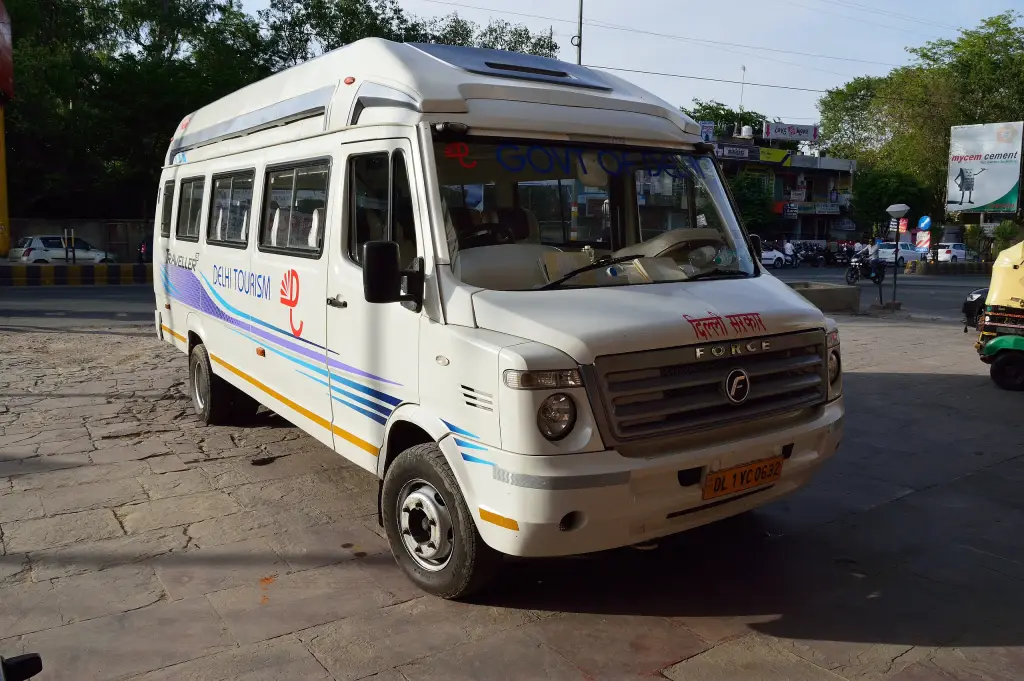
The Tempo Traveller is a light commercial vehicle built in India by Force Motors. It was launched in 1987 as the Tempo Traveller, and the branding was changed to Force Traveller in 2005.
Tempo Traveller at a glance
| Maker | Force Motors Limited, India |
|---|---|
| Launched | 1987, as the Tempo Traveller |
| Renamed | Force Traveller in 2005 |
| Wider version | introduced in 2012 |
| Construction | monocoque platform |
| Passenger seats | 9 to 25 |
| Air conditioning | non-air-conditioned and air-conditioned versions |
| Uses | passenger transport, minibus, school bus, staff bus, ambulance, delivery van |
| Engine | 2,596 cm³ Mercedes-Benz-derived diesel or CNG |
| Diesel output | 85 kW (114 PS) at 2,950 rpm |
The English Wikipedia article covers the vehicle under its current name, Force Traveller (based on one source).
History of the Tempo Traveller
From Tempo Traveller to Force Traveller
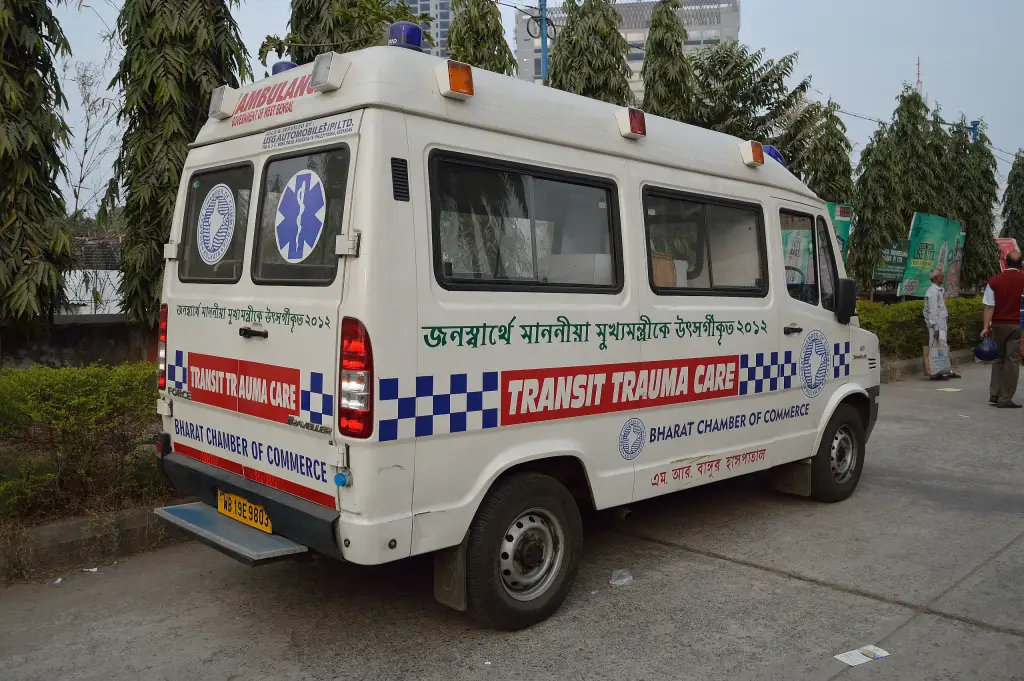
The vehicle was originally launched in 1987 as the Tempo Traveller. The overall branding was updated to Force Traveller in 2005. A wider version of the Force Traveller was introduced in 2012.
One platform, many bodies
The Traveller is built on a monocoque platform and is available for both passenger and cargo transport. The passenger version has a seating range of 9 to 25 seats, with air-conditioned and non-air-conditioned configurations. Derivatives include a luxury van, minibus, school bus, staff bus, ambulance, quick response vehicle and delivery van. Buyers can choose between passenger and cargo use, regular and wider width, and different lengths depending on the number of seats.
The Traveller is widely used by transport operators across India because of the flexibility of its seating layouts. The current version is powered by a Mercedes-Benz-derived 2.6-litre engine, the FM 2.6 CR BS VI Phase 2, in diesel and CNG forms. The diesel unit produces 85 kW (114 PS) at 2,950 rpm and 350 Nm between 1,400 and 2,200 rpm. Earlier Force models used the Mercedes-Benz OM616 engine.
Design and features
- Flexible seating: 9 to 25 seats in the passenger version.
- Monocoque platform: a light commercial vehicle base for passenger and cargo bodies.
- Wide body option: a wider version was added in 2012.
- Many derivatives: ambulance, school bus, staff bus, luxury van and delivery van.
- Mercedes-derived engine: a 2.6-litre diesel or CNG unit.
Tempo Traveller versions
- Tempo Traveller (1987): the original name and launch version.
- Force Traveller (from 2005): the renamed range.
- Wider version (2012): a broader body for more interior space.
- Ambulance: a medical conversion of the standard van.
- Delivery van: a cargo version without passenger seating.
- Air-conditioned and non-air-conditioned: passenger versions in both forms.
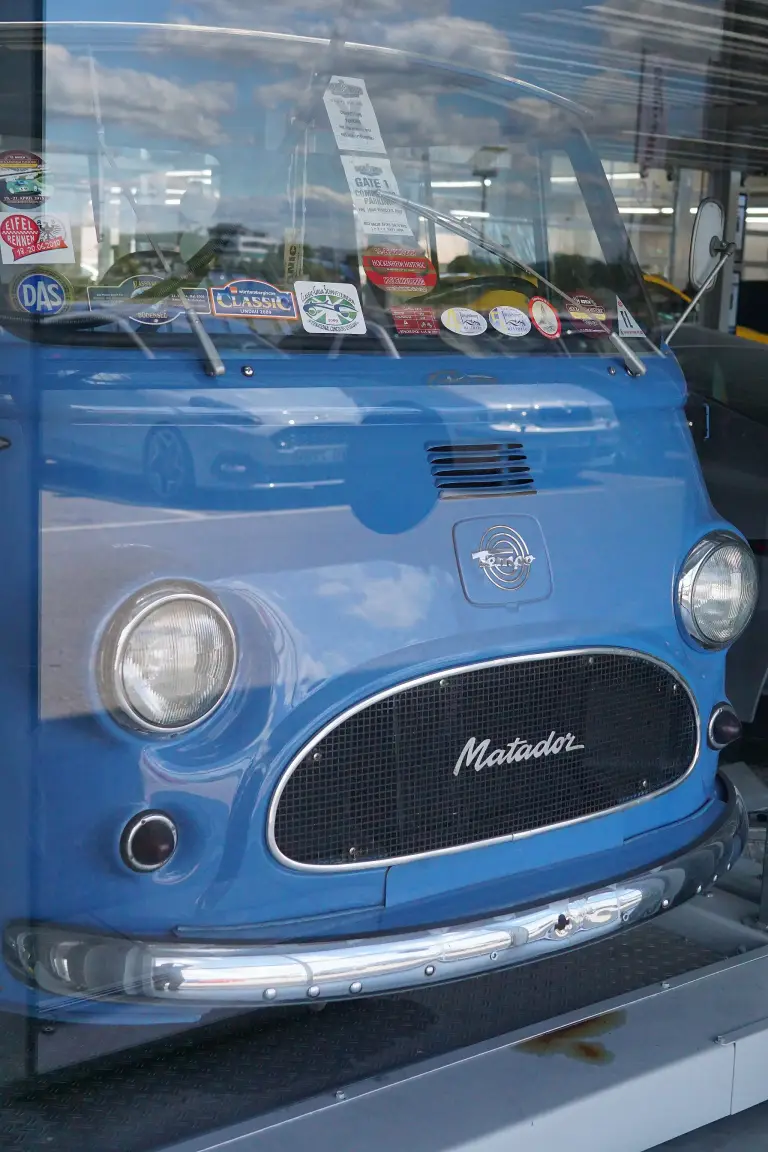
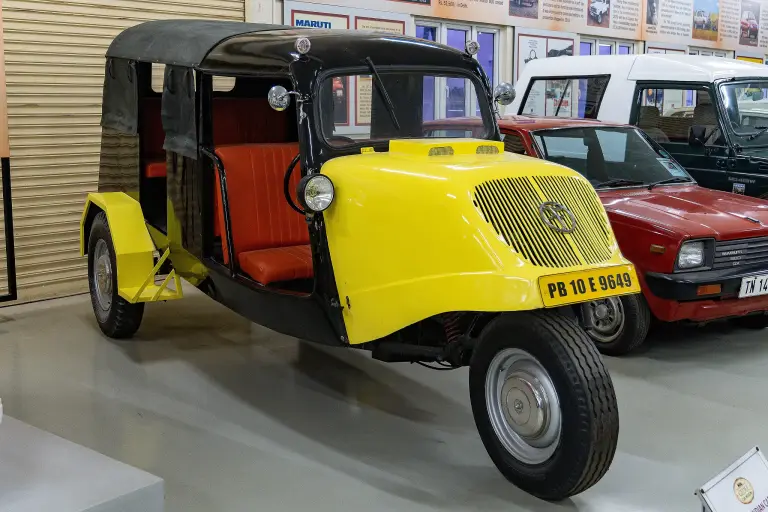
The Traveller continues the name of the German Tempo Matador, and the three-wheeled Tempo Hanseat was also built in India. More vehicles are in the Tempo collection.
Video: Tempo Traveller – Tourist Transport for Rajasthan and all over India
Video on YouTube.
Sources
- Force Traveller, English Wikipedia: launch, renaming, seating, versions, engine