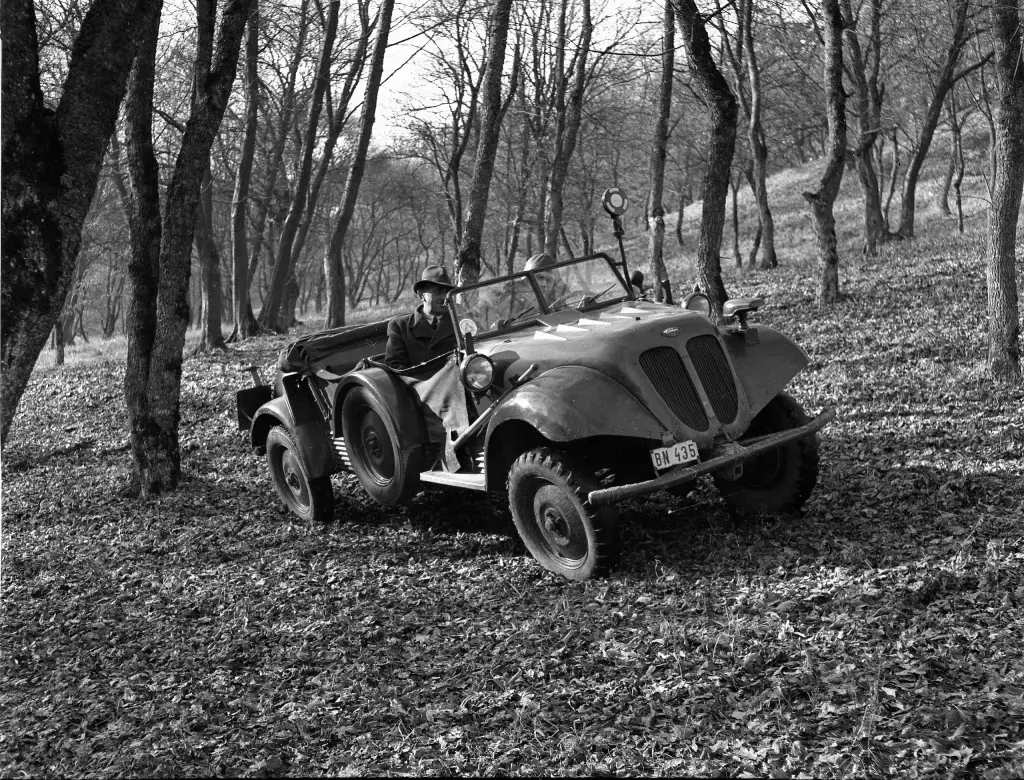
The Tempo G1200 was an off-road car built by Vidal & Sohn Tempo-Werk in Hamburg-Harburg between 1936 and 1944. Its unusual layout used two identical two-stroke engines, one in front and one behind, each driving its own axle.
Tempo G1200 at a glance
| Maker | Vidal & Sohn Tempo-Werk, Hamburg-Harburg |
|---|---|
| Production | 1936–1944 |
| Designer | Otto Daus |
| Layout | kübelwagen with two engines, one front and one rear |
| Engines | two water-cooled ILO two-cylinder two-strokes, 594 cm³ each |
| Power | 19 PS (14 kW) at 3,500 rpm from each engine |
| Drive | permanent all-wheel drive, one gearbox per axle |
| Steering | all-wheel steering |
| Suspension | screw-sprung swing axles on a central tube frame |
| Brakes | drum brakes, mechanically operated by Bowden cables |
| Size | 4.0 m long, 1.6 m wide, 1.5 m high |
| Weight | 1,150 kg |
| Top speed | 70–80 km/h |
The G1200 is described in a section of the German Wikipedia article on the Tempo works; this page is based on that section (based on one source).
History of the Tempo G1200
Two engines, two axles
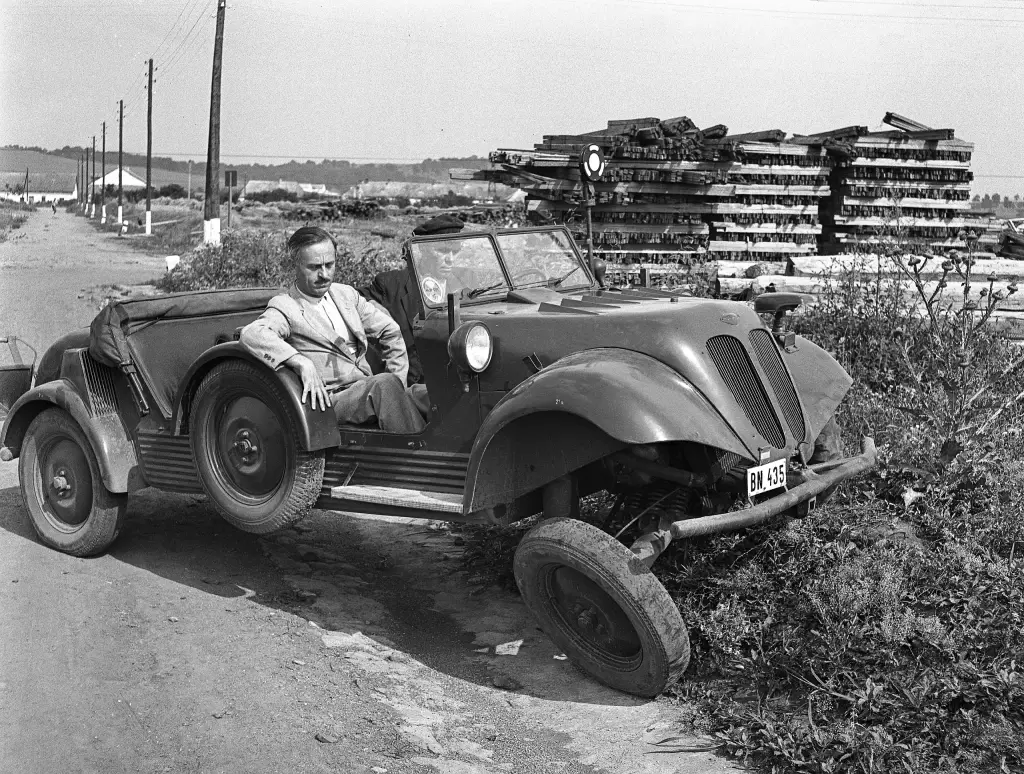
The G1200 was developed in 1936 by Tempo’s chief designer Otto Daus. Instead of one engine and a transfer case, the car carried two identical water-cooled ILO two-cylinder two-stroke engines of 594 cm³, one at the front and one at the rear. Each produced 19 PS (14 kW) at 3,500 rpm and drove its own axle through a separate gearbox bolted to the engine. The two units could be switched on and off independently, even while the car was moving, so the driver could run on the front engine alone, the rear engine alone, or both together.
The principle of two engines giving permanent all-wheel drive was rare in a production vehicle. The German article notes that the same idea returned later in the Citroën 2CV 4×4 Sahara, shown in 1958 and built from 1960 to 1968.
Chassis and body
The front and rear wheels were independently suspended on screw-sprung swing axles mounted on a central tube frame. The front axle was combined with the front engine and gearbox in one unit that could also swing about the car’s longitudinal axis, which gave exceptional axle articulation for off-road use. The drum brakes were operated mechanically by Bowden cables. The body was 4.0 m long, 1.6 m wide and 1.5 m high, the car weighed 1,150 kg and its top speed was 70 to 80 km/h.
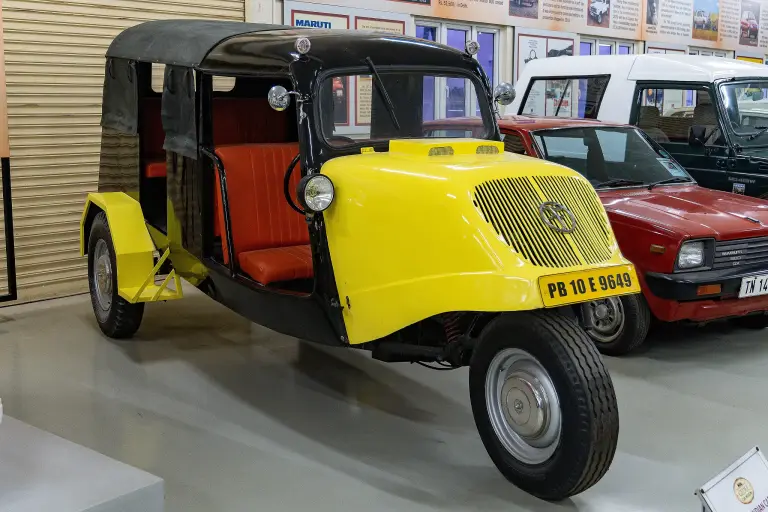
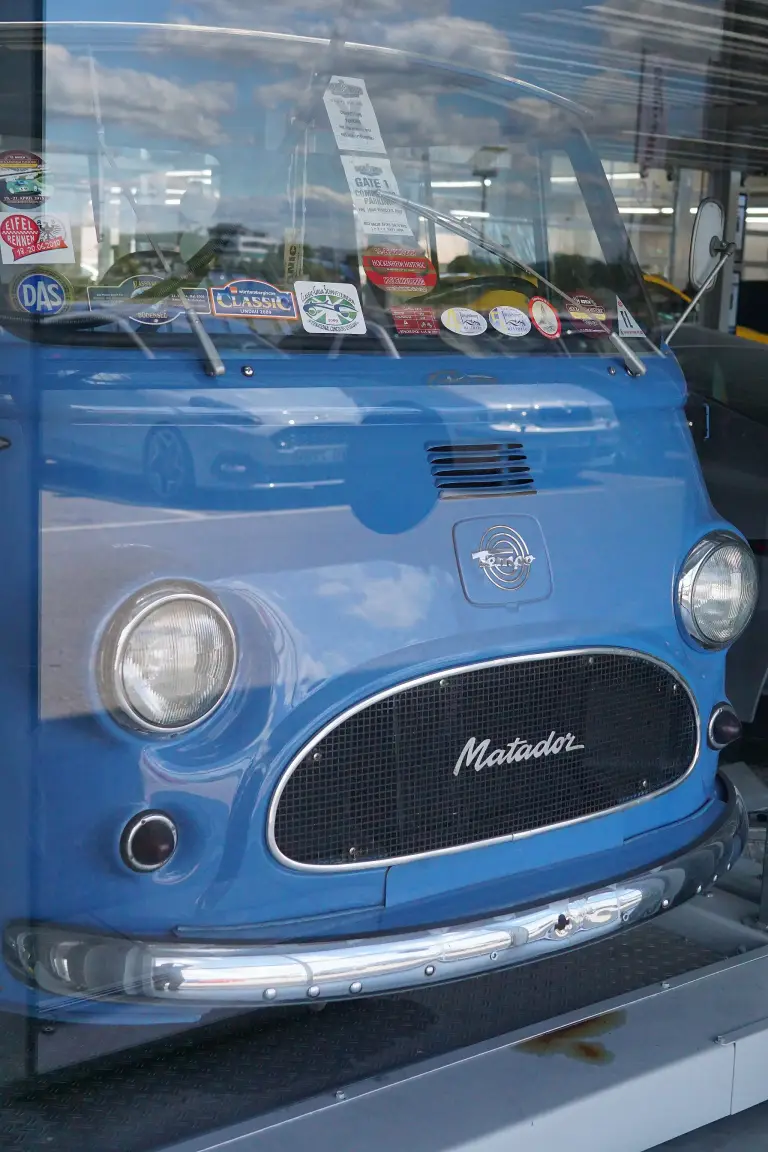
The G1200 was one of several vehicles made by Tempo, a company founded in 1928 to build delivery vans. Its three-wheeled vans and the later Matador are better known today; the G1200 remains the most technically unusual product of the Harburg works.
Design and features
- Two engines: a 594 cm³ two-stroke at each end, each with its own gearbox.
- Selectable drive: either engine could be switched off while driving, leaving front-, rear- or all-wheel drive.
- All-wheel steering: all four wheels steered, which made the car highly manoeuvrable off-road.
- Articulation: the front axle swung with the engine and gearbox around the longitudinal axis.
- Mechanical brakes: drum brakes operated by cables rather than hydraulics.
Tempo G1200 versions
- G1200 (1936–1944): the standard production off-road car.
- Kübelwagen body: the open military body described in the German source.
The G1200 was made by the same company as the three-wheeled Tempo Hanseat and the Tempo Matador van. More vehicles are in the Tempo collection.
Video: Tempo 1200
Video on YouTube.
Sources
- Vidal & Sohn Tempo-Werk, German Wikipedia: G1200 development, engines, chassis, dimensions, production years