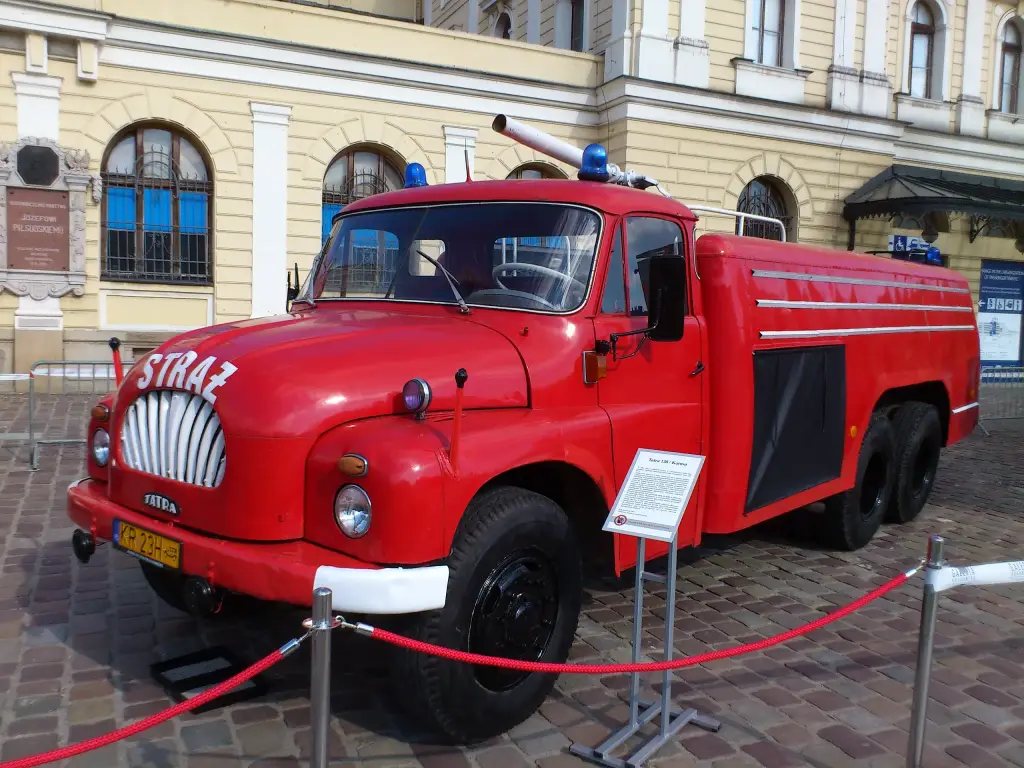
The Tatra 138 was a truck produced in Czechoslovakia by Tatra from 1959 to 1971. The immediate successor to the Tatra 111, it kept the Tatra backbone-tube concept while introducing a more comfortable driver’s environment, hydraulic power steering and electro-pneumatic gear selection, and it was exported across the eastern bloc and beyond.
Tatra 138 at a glance
| Maker | Tatra, Kopřivnice, Czechoslovakia |
|---|---|
| Production | 1959–1971 |
| Predecessor | Tatra 111 |
| Successor | Tatra 148 |
| Layout | 4×4, 4×2, 6×6, 6×4, 6×2 |
| Engine | air-cooled 75-degree V8, dry sump |
| Payload | 12,000 kg |
| Towing | trailers up to 15,000 kg |
| Top speed | 72 km/h |
| Ground clearance | 290 mm |
| Wading depth | 800 mm |
| Built | over 45,900 |
History of the Tatra 138
A planned replacement
The decision to replace the Tatra 111 was taken in 1952 under the central state planning economy, with Tatra Kopřivnice to build 7- to 10-tonne utility trucks. At the 1956 Czechoslovak Machinery Expo in Brno the company showed two new models, the T137 and T138, which shared up to 70 per cent of their parts. The new design improved the driver’s environment and usability with hydraulic power steering, a compressed-air assisted clutch and electro-pneumatic selection of the auxiliary gearbox.
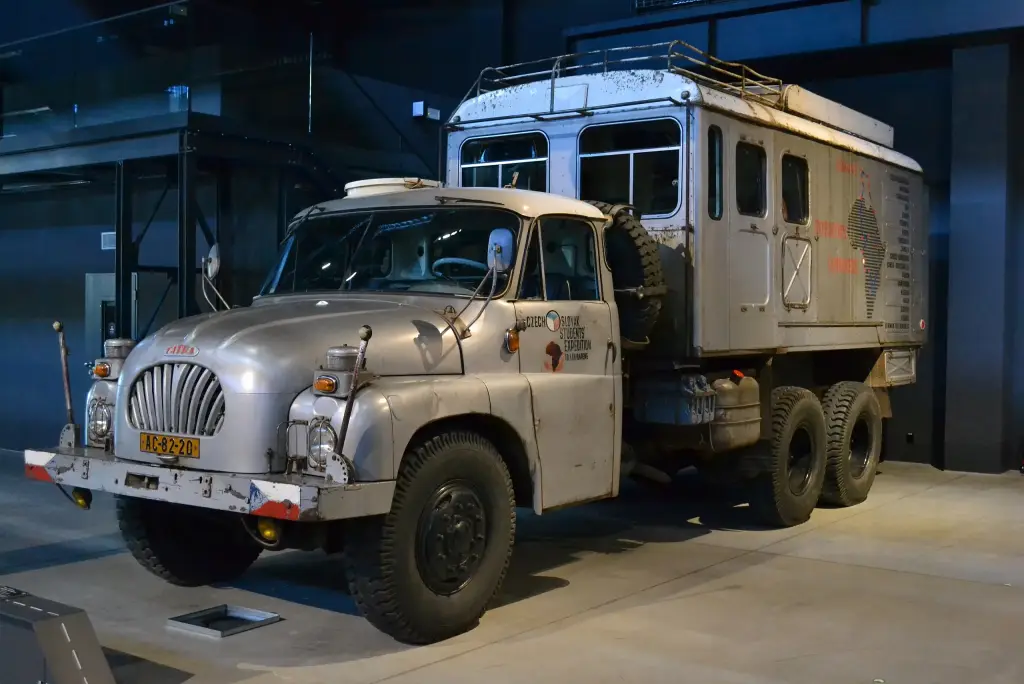
Design and technology
The 138 used the central backbone tube in 4×4, 4×2, 6×6, 6×4 and 6×2 configurations, although the two-wheel-drive versions were built in very small numbers. The tube carried the load and housed the drivetrain, and it allowed modular construction with different wheelbases and drive layouts. The air-cooled V8 was mounted ahead of the front axle with a dry sump and a cooling fan driven through a hydraulic clutch and controlled by engine oil temperature, which reduced noise and fuel consumption. The same engine was also used in the OT-64 armoured personnel carrier.
The front axle had torsion-bar suspension and hydraulic shock absorbers, the rear axles longitudinal half-elliptic leaf springs. Front-wheel drive could be selected on demand, and differential locks were controlled electro-pneumatically from the dashboard. The all-steel cab could be combined with tipper, flatbed, concrete mixer, tanker, crane, excavator and firefighting bodies. The truck reached 72 km/h, could wade 800 mm of water and tow trailers up to 15,000 kg.
Production and export
Total production exceeded 45,900 units. The T138 was exported to the USSR, Bulgaria, Romania, Poland, France, Austria, Yugoslavia and the Netherlands, and it was replaced by the more powerful Tatra 148.
Design and features
- Air-cooled V8: dry-sump engine with a temperature-controlled cooling fan.
- Driver comfort: hydraulic power steering and air-assisted clutch.
- Modular chassis: 4×4, 6×6 and other layouts with different wheelbases.
- All-steel cab: with a wide range of bodybuilder equipment.
Tatra 138 versions
- T138 S1: one-way tipper.
- T138 S3: three-way tipper.
- T138 V, VN: civilian and military flatbed.
- T138 CAS: firefighting unit.
- T138 PP6V: excavator.
- T138 tanker and crane versions: P-series chassis for special bodies.
The 138 replaced the Tatra 111 and was itself replaced by the Tatra 148, whose cab and chassis followed the same Tatra concept. More trucks are in the Tatra collection.
Sources
- Tatra 138, English Wikipedia: history, design, production, variants