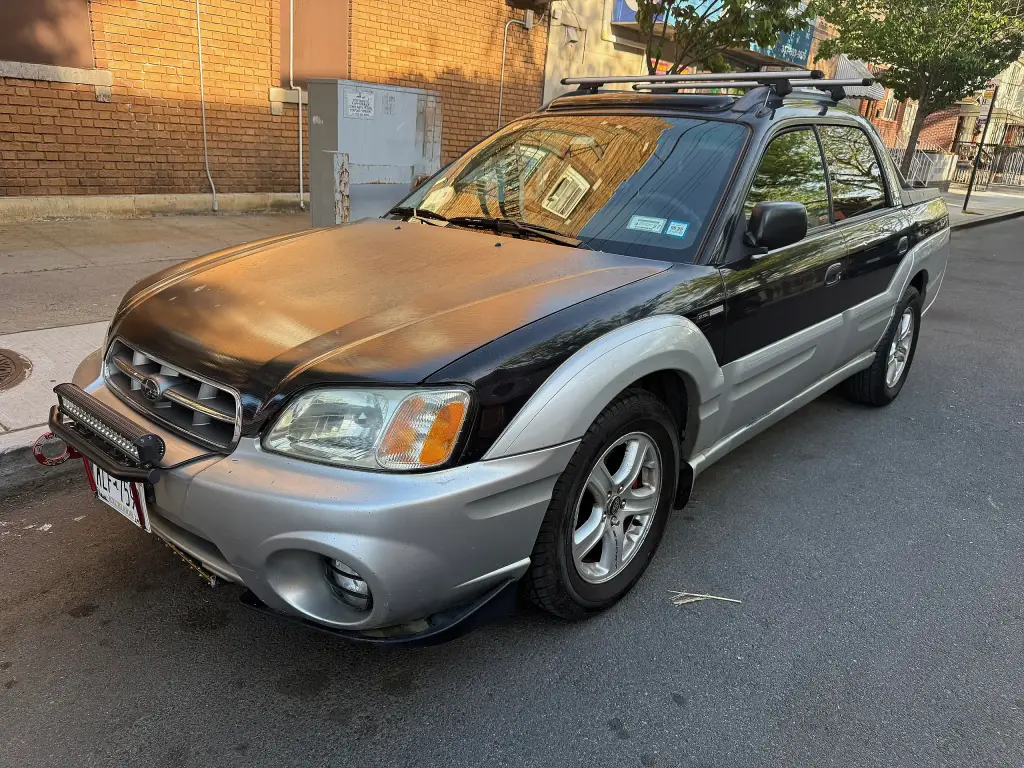
The Subaru Baja was a four-seat, all-wheel-drive coupé utility made from 2002 to 2006 and sold as a 2003 to 2006 model. It borrowed the platform and bodywork of the Legacy and Outback wagon and added an open load bed behind the cabin.
Subaru Baja at a glance
| Maker | Subaru of Indiana Automotive, Lafayette |
|---|---|
| Production | July 2002 – April 2006 |
| Model years | 2003–2006 |
| Based on | Subaru Legacy / Outback wagon |
| Layout | front engine, all-wheel drive |
| Seats | four |
| Bed length | 1,050 mm |
| Switchback | folding rear seat and mid-gate giving about 2.3 m of load length |
| Towing | 1,100 kg |
| Turbo engine | 2.5 litres, 210 hp, from 2004 |
| Ground clearance | 210 mm from 2004 |
| Sold | about 30,000 in four and a half years |
Based on one source, the English Wikipedia article on the Subaru Baja.
History of the Subaru Baja
The Baja was designed in the United States by a team led by Subaru senior designer Peter Tenn, with technical support from Japan, and followed the ST-X concept shown at the 2000 Los Angeles auto show. Tenn described the look as a homage to rally-race trucks: “It’s supposed to look funky, look different. It doesn’t fit any category.” Production began on 18 July 2002 at Subaru of Indiana Automotive in Lafayette, and the name comes from the Baja California peninsula, home of the Baja 1000 off-road race.
Body and bed
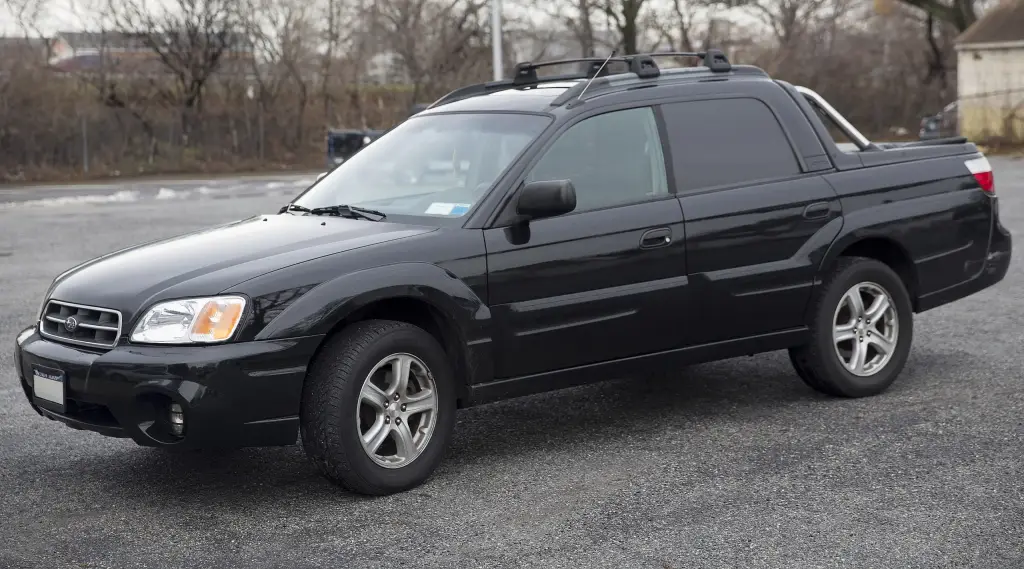
The Baja was 150 mm longer than an Outback. Behind the four-seat cabin was a 1,050 mm bed with a drop-down tailgate, and a system called Switchback let the rear seat fold and a small hatch open from the bed, giving about 2.3 m of load length to the end of the open tailgate; a light in the instrument cluster showed when it was open and a bed extender was optional. Two exposed stainless-steel buttresses behind the cabin, marketed as Sports Bars, stiffened the bodywork.
Practical details included an integrated bed liner, a dual-illumination bed light, four tie-down hooks, moulded recesses for 2×4 timber to make a two-level floor, roof rails with cross bars, a rear-seat power supply and an under-bed spare wheel wound down by a cable winch. A fold-down licence-plate holder kept the plate visible with the tailgate open.
Model years
The 2003 launch car had leather seats, a power driver’s seat and a sunroof, and a cheaper Sport version with cloth trim followed during the year. For 2004 Subaru added a 2.5-litre turbocharged model with 210 hp, a bonnet scoop and Sportshift automatic, and raised ground clearance to 210 mm; 2005 brought a further increase in ride height, and 2006 an option package with leather, heated seats and a hard bed cover.
Subaru had projected 24,000 sales a year but marketed about 30,000 over four and a half years. The press was cool — USA Today called it “a controversial fashion statement with limited utility” — yet it won J.D. Power APEAL awards in 2003 and 2004 and the highest Consumer Reports reliability score in the pickup class in 2006. Production ended in April 2006, and the Indiana line was later used to build Toyota Camrys.
Design and features
- Coupé utility body: a passenger-car cabin with an open bed behind it.
- Switchback: folding rear seat and mid-gate for long loads.
- Sports Bars: exposed stainless buttresses that stiffen the body.
- Turbo option: a 210 hp 2.5-litre engine from 2004.
- Outback base: Legacy and Outback mechanicals with all-wheel drive.
Subaru Baja versions
- Baja (2003): leather, power driver’s seat and sunroof.
- Baja Sport: cheaper cloth trim and manual seats.
- Baja Turbo (2004): 210 hp, bonnet scoop, Sportshift automatic.
- 2005 and 2006 cars: higher ride height, extra equipment, hard bed cover option.
The Baja was the spiritual successor to the BRAT and was built on the Outback. More Subarus are in the Subaru collection.
Video: 2005 Subaru Baja Turbo walkaround and review
Video by Redline Reviews on YouTube.
Sources
- Subaru Baja, English Wikipedia: design, body, model years, sales