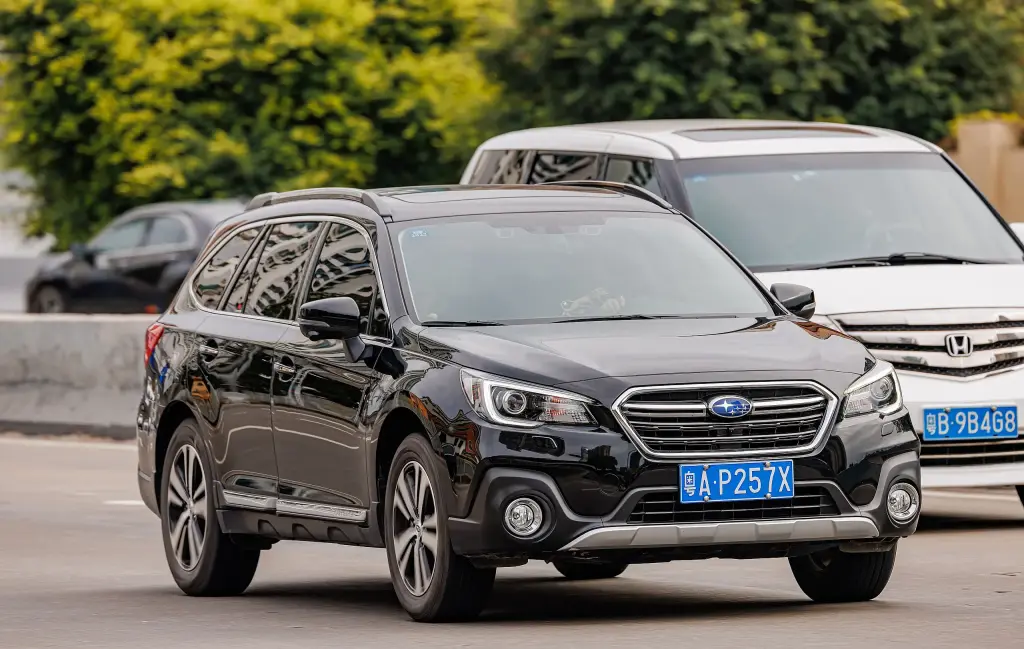
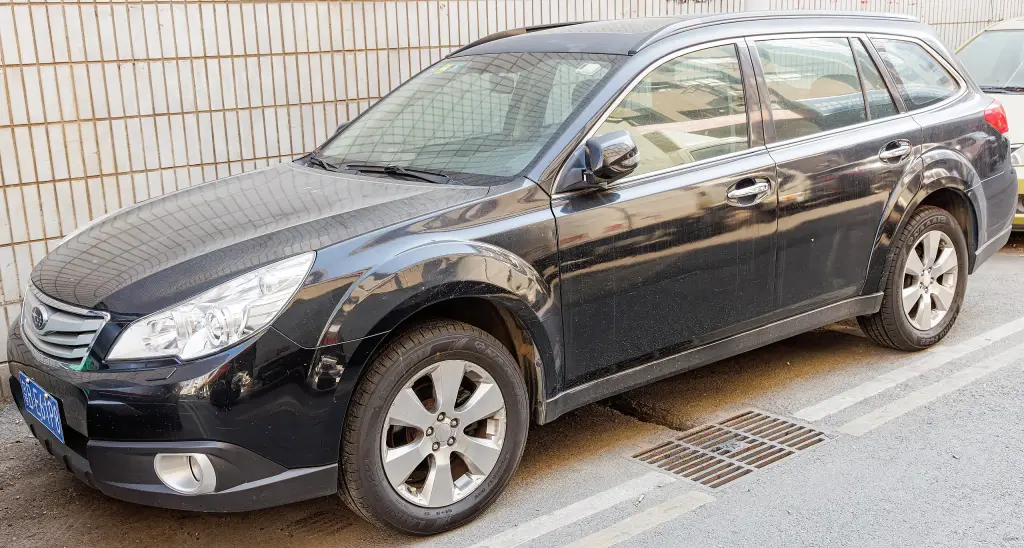
The Subaru Outback is the name Subaru uses for its Legacy-derived, off-road-styled wagon, sold since 1994. It began as a Legacy wagon with protective cladding and a raised suspension and quickly became the company’s most important model.
Subaru Outback at a glance
| Maker | Subaru, Japan |
|---|---|
| Production | since 1994 |
| Based on | Subaru Legacy wagon |
| First shown | New York Auto Show, 1994, as a 1995 model |
| Japanese name | Legacy Grand Wagon |
| Body cladding | partial plastic side protection |
| Engine at launch | 2.2-litre flat-four, 135 hp |
| Engine 1996 | 2.5-litre twin-cam, 155 hp |
| Engine 1997 | 2.5-litre, 165 hp |
| Ground clearance | 198 mm from 1996 |
| Drive | all-wheel drive as standard |
| Separate model | from 2000 |
Based on one source, the English Wikipedia article on the Subaru Outback.
History of the Subaru Outback
The Outback was the idea of Subaru of America, which was losing sales in the mid-1990s because it had nothing to offer in the growing sport utility market. Without the money for an all-new vehicle, Subaru added plastic body cladding and a suspension lift to its Legacy wagon. The result, named after the Australian outback, was first shown at the New York Auto Show in 1994 for the 1995 model year, with the actor Paul Hogan as spokesman in North America.
How it was made
At launch the Outback was a trim package on the Legacy L wagon, with heavy cloth upholstery, Berber carpet mats and a luggage rack. The only engine was a 2.2-litre flat-four with 135 hp, replaced for 1996 by a 2.5-litre twin-cam with 155 hp and then raised to 165 hp for 1997. The first cars kept the standard Legacy ride height and made their point with two-tone paint and fog lights; from 1996 they gained a more aggressive front bumper, larger driving lamps, taller tyres and 198 mm of ground clearance, and the 1997 model added a bonnet scoop without any extra performance.
The approach worked. Subaru had offered an air suspension on the previous Legacy wagon that could raise the car temporarily, but the Outback’s permanent lift proved more practical. Tim Mahoney, senior vice president of Subaru of America, said simply that the Outback “saved our company”. The same treatment was applied to the smaller Impreza wagon as the Outback Sport, sold in North America from 1995 to 2011.
Names and later life
In Japan the car was called the Legacy Grand Wagon from August 1995, a name meant to suggest something grander than the Legacy Touring Wagon. Australia shortened Legacy Outback to Outback when the car arrived in 1996, and other markets followed; in the United States the donor names were dropped for 1997, leaving simply Outback and Outback Sport. Subaru also sold a Legacy SUS sedan with similar modifications between 1997 and 2007. The Outback became a model in its own right in 2000, and by 2023 it was Subaru’s best-selling car.
Design and features
- Raised suspension: 198 mm of ground clearance from 1996.
- Body cladding: plastic protection along the lower body for rough roads.
- All-wheel drive: standard on virtually every Outback.
- Legacy base: almost all components shared with the Legacy wagon.
- Outback Sport: the same idea applied to the Impreza wagon.
Subaru Outback versions
- Outback (1995): a Legacy L wagon trim with cladding and two-tone paint.
- Outback 1996: taller suspension, 198 mm clearance, driving lamps.
- Legacy Grand Wagon: the Japanese name of the same car.
- Outback Sport: Impreza-based version sold in North America.
- Legacy SUS: sedan version with similar modifications, 1997–2007.
The Outback is a raised Legacy and the larger relative of the Forester. More Subarus are in the Subaru collection.
Video: Subaru Outback crossover estate test
Video by DW Deutsch on YouTube.
Sources
- Subaru Outback, English Wikipedia: origin, equipment, engines, names