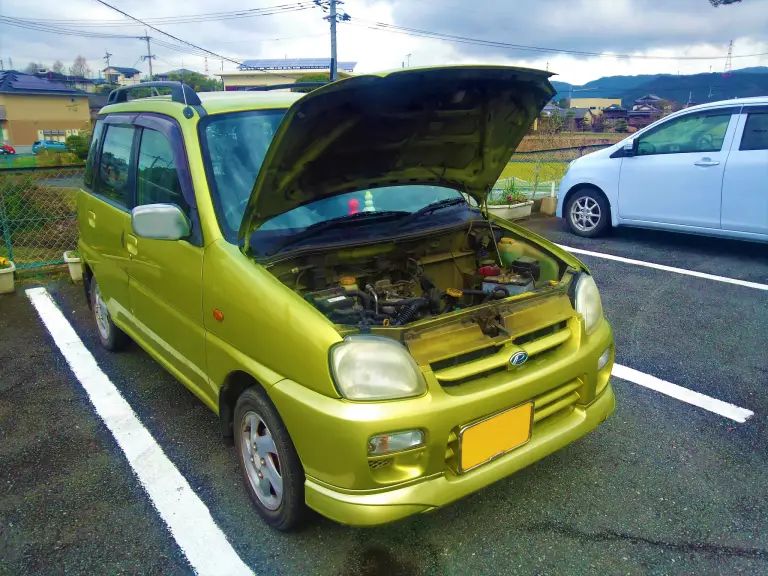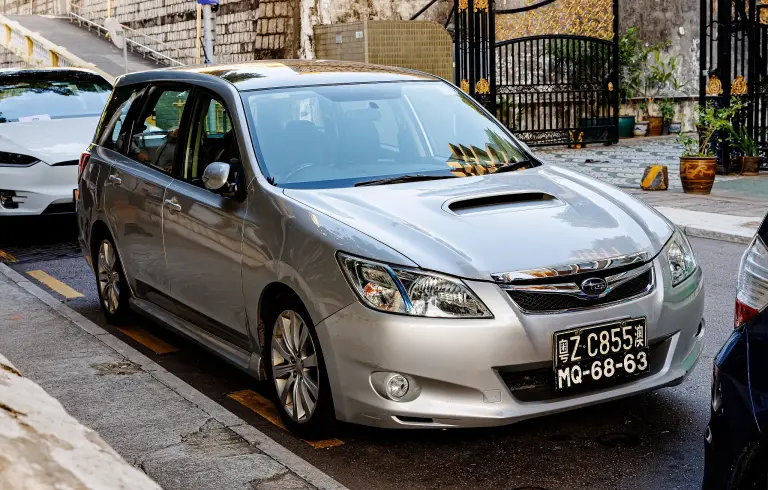
The Subaru Forester is a compact crossover that Subaru has built since 1997. The first two generations were tall station wagons on the Impreza platform; from the third generation the Forester took the shape of a proper crossover SUV.
Subaru Forester at a glance
| Maker | Subaru, Japan |
|---|---|
| Production | since 1997 |
| Class | compact crossover SUV |
| First generation | SF, 1997–2002 |
| Concept | Streega, shown at the 1995 Tokyo Motor Show |
| Platform | Subaru Impreza |
| Engine (first generation) | 2.5-litre EJ25D flat-four, 165 hp |
| Drive | all-wheel drive as standard |
| Second generation | SG, from 2002 |
| Performance model | Forester STi, Japan only |
| Slogan | “SUV tough, Car Easy” |
| Main markets | Japan, United States, Australia |
Based on one source, the English Wikipedia article on the Subaru Forester; it is long enough to describe only the first two generations here.
History of the Subaru Forester
The Forester began as the Streega concept at the 1995 Tokyo Motor Show and went on sale in Japan in February 1997, reaching the United States later that year as a 1998 model. Subaru built it on the Impreza platform but in the style of a taller station wagon, with a higher seating position and all-wheel drive as standard, and advertised it as “SUV tough, Car Easy”. It was one of the first crossovers and was reportedly inspired by Volkswagen’s approach.
First generation (SF, 1997)
In Japan the Forester replaced the Impreza Gravel Express, which was sold in the United States as the Outback Sport, and it competed with the Toyota RAV4, Mitsubishi RVR and Suzuki Grand Vitara. Its low centre of gravity meant it met American passenger-car safety standards and needed no rollover warning label on the sun visor. In size and price it sat between the Impreza and the Legacy.
The American car used the 2.5-litre EJ25D engine from the Outback, with 123 kW (165 hp) at 5,600 rpm and 220 Nm at 4,000 rpm. From 1999 the engine changed to a single-overhead-camshaft 2.5 and no turbo was offered in the United States. The 2001 model year brought a facelift to the front, rear and sides and a new dashboard, three-point seat belts for all five seats, force limiters in front and rear headrests. Trim levels were the L and the better equipped S, which added a viscous limited-slip differential in 2000, rear disc brakes, 16-inch alloy wheels, heated seats and mirrors and keyless entry.
Four-wheel-drive system
Automatic cars normally sent 60 per cent of torque to the front wheels and 40 per cent to the rear through a computer-controlled multi-plate transfer clutch, shifting power backwards when it detected a speed difference between the axles and reaching a 50/50 split under slip. Uphill acceleration moved weight rearwards and the clutch sent torque back; braking and downhill running did the opposite. In reverse or first gear the split was 50/50. Manual cars started from a near 50/50 split with more rear bias than the automatics.
Second generation (SG, 2002)
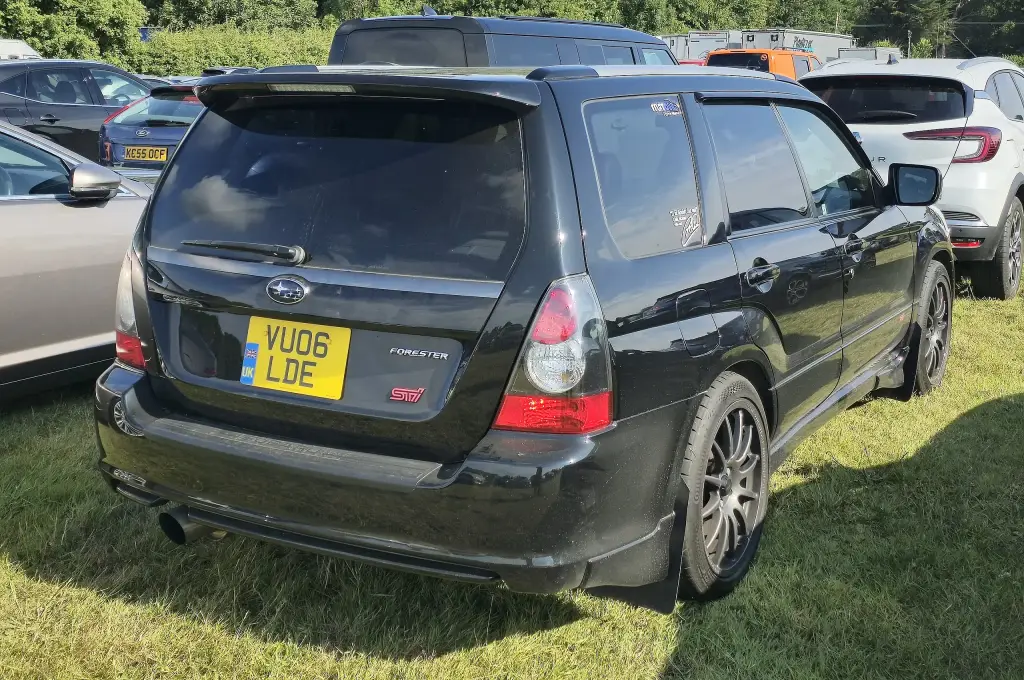
The second generation appeared as a 2003 model at the 2002 Chicago auto show on the new Impreza platform. It used weight-saving measures such as an aluminium bonnet, perforated rails and a hydroformed front subframe, and for the first time offered 2.5-litre engines, normally aspirated and turbocharged, with the turbo reaching the United States. In Japan a performance version, the Forester STi, was also sold.
Design and features
- Impreza platform: car-like handling with a taller body and higher seats.
- All-wheel drive: standard on every Forester from the start.
- Low centre of gravity: the boxer engine kept the Forester within passenger-car safety rules.
- Turbo models: a 2.5-litre turbo arrived with the second generation.
- STi version: a Japanese performance Forester tuned by Subaru Tecnica International.
Subaru Forester versions
- Forester L: the basic American trim with ABS, air conditioning and a roof rack.
- Forester S: alloy wheels, rear disc brakes, heated seats and a limited-slip differential.
- Forester GT (Australia): power raised from 125 to 130 kW in the 2001–2002 update.
- Forester STi: Japanese performance model of the second generation.
The Forester was built on the Impreza platform and sits below the Outback in size. More Subarus are in the Subaru collection.
Video: Subaru Forester off road in the snow
Video by ModFoz on YouTube.
Sources
- Subaru Forester, English Wikipedia: generations, engines, four-wheel-drive system, trims