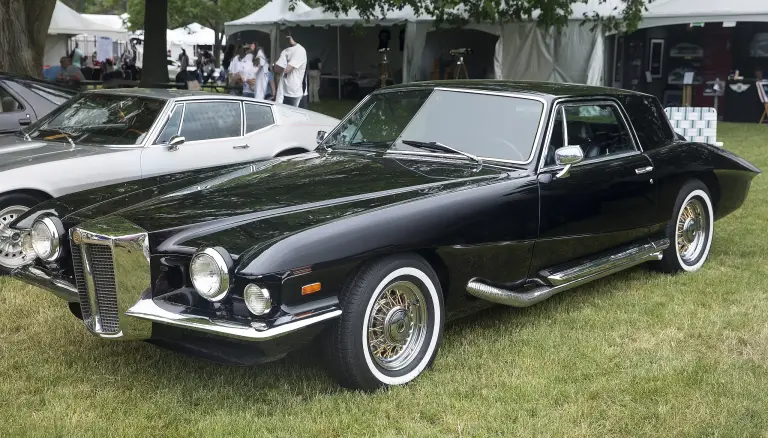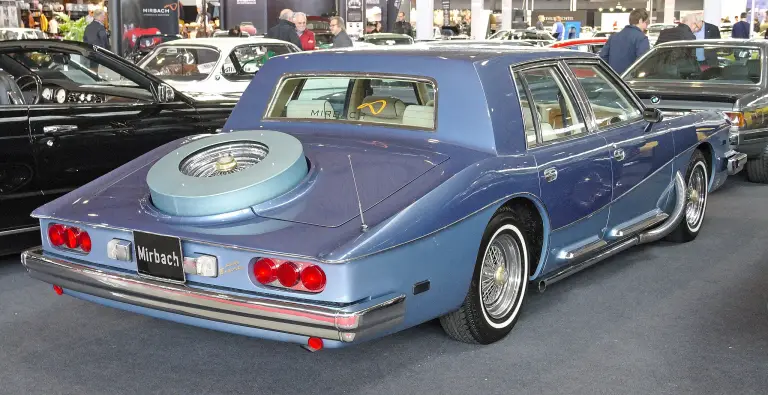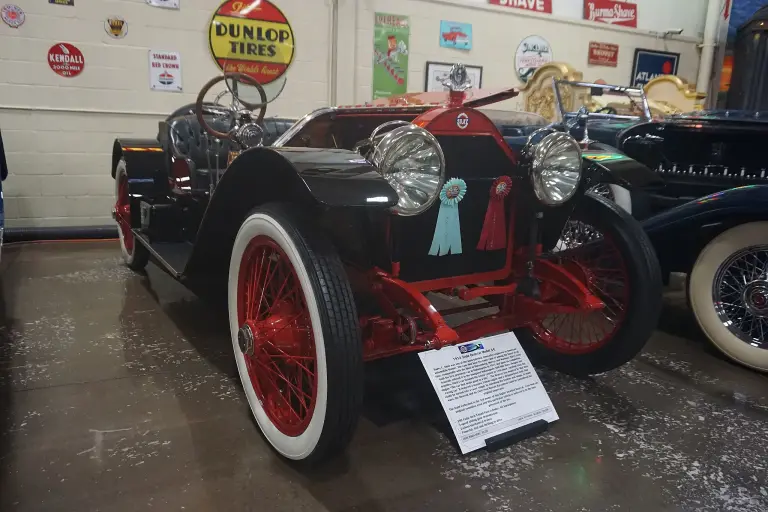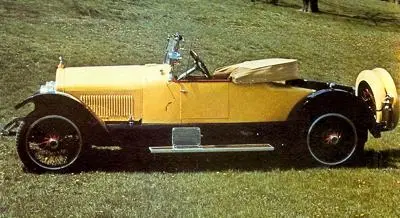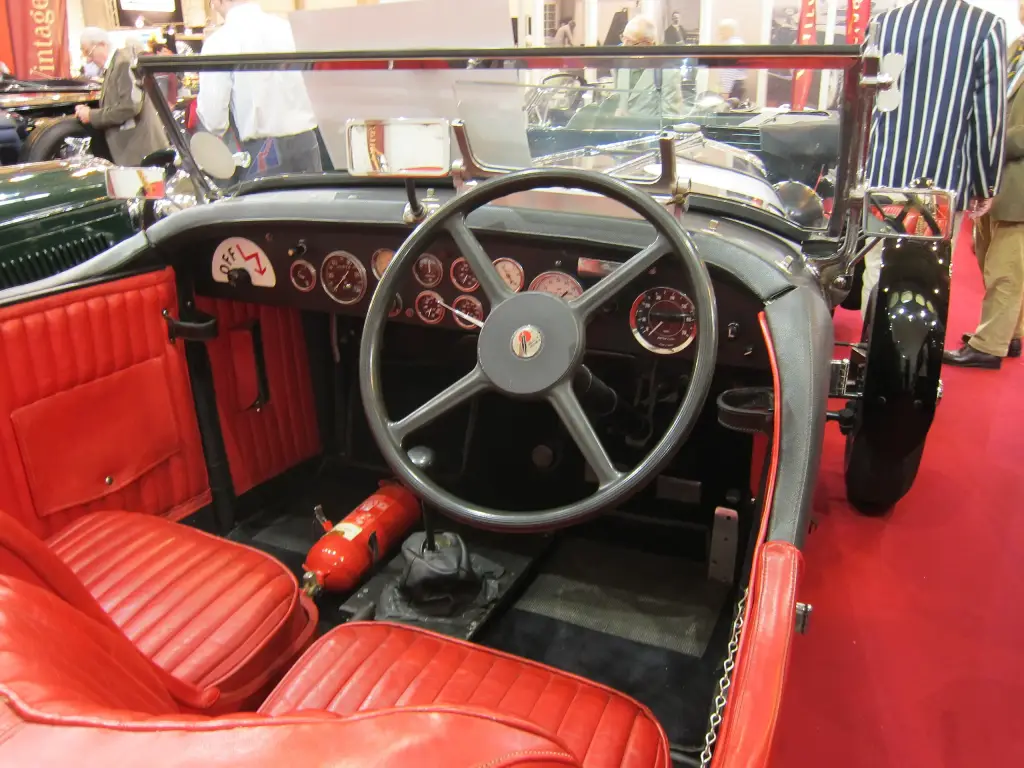
The Stutz Vertical Eight, also called the Stutz Model 8, was the Indianapolis company’s straight-eight luxury car of 1926 to the mid-1930s. It introduced the low-slung Safety Stutz chassis and the overhead-camshaft eight designed by Charles Greuter, and its sporting versions were among the fastest American production cars of the late 1920s.
Stutz Vertical Eight at a glance
| Maker | Stutz Motor Car Company, Indianapolis |
|---|---|
| Production | 1926 to the mid-1930s |
| Engine | 4.7 L SOHC inline-eight, about 92 hp, later up to 115 hp |
| Chassis | Safety Stutz, underslung frame with a low centre of gravity |
| Brakes | four-wheel Lockheed hydraulic with a vacuum booster |
| Wheelbases | 116 to 145 in depending on the body |
| Series | AA, BB, M, MA and MB |
| Later models | SV-16 (1930–1935) and DV-32 (1931–1935) |
| Coachbuilders | Brewster, LeBaron, Rollston, Waterhouse, Weymann |
| First-year sales | about 5,000 |
| Racing | second at Le Mans in 1928 with a Black Hawk |
Based on one source, the English Wikipedia article on the Stutz Vertical Eight.
History of the Stutz Vertical Eight
Origins and the Safety Stutz chassis
After the founder Harry C. Stutz left the company in 1919 it struggled until Frederick Moskovics took charge in the mid-1920s. Moskovics wanted to reposition Stutz as a high-performance luxury marque, and the engineer Charles Greuter designed a new straight-eight engine that appeared in 1926 as the Vertical Eight. The car was paired with the Safety Stutz chassis, which had a lower centre of gravity, semi-elliptic leaf springs and four-wheel Lockheed hydraulic brakes with a vacuum booster — advanced features for the period.
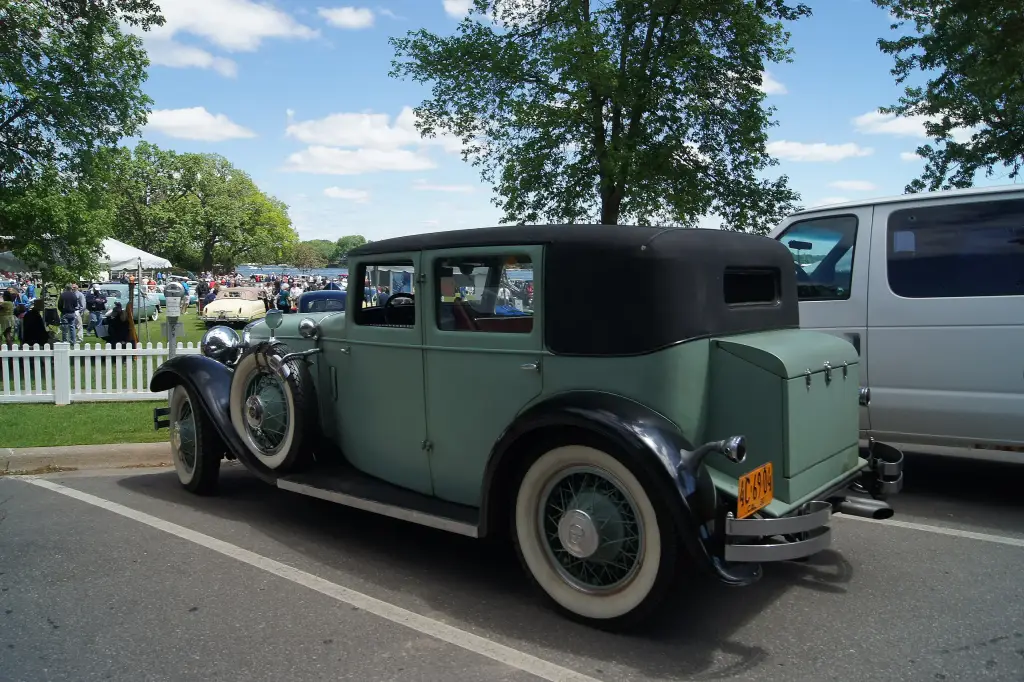
AA and BB series (1926–1928)
The 1926 AA was sold as the “Safety Stutz”. Its 4.7-litre single-overhead-camshaft eight produced about 92 hp, later up to 115 hp, with dual ignition and a nine-bearing crankshaft, and wheelbases ran from 130 to 145 inches. Bodies included sedans, touring cars and coupes, but the most memorable was the Black Hawk Speedster, a spiritual successor to the Bearcat with boat-tail styling and side-mounted spare wheels. The BB series continued with detail refinements, and the lighter sporting models were claimed to exceed 100 mph. A steel-bodied AA sedan set endurance records at Indianapolis.
M series and the SV-16 (1929–1935)
The Model M of 1929 was the senior line, with further engine development including supercharged options for racing and custom bodies with luxurious veneered interiors. A shorter-wheelbase Model L variant fed into the companion Blackhawk line. From 1930 the same platform continued as the SV-16, with a single-overhead-camshaft sixteen-valve eight of up to 5.28 litres and about 115 to 130 hp. It kept the Safety chassis and was offered with bodies such as the Weymann-bodied Monte Carlo sedan and convertible coupes, priced from about $2,700 to over $7,500 for custom coachwork.
The DV-32 (1931–1935)
The DV-32 was Stutz’s technological flagship: a double-overhead-camshaft eight with four valves per cylinder, 32 in all, giving 156 to 161 hp from 322 cu in at 3,900 rpm — exceptional specific output for the era. Higher compression could add more power, and roadster versions reached 106 mph. The engine was offered on several wheelbases, including a short 116-inch chassis for sporting models, with luxury bodies by LeBaron, Rollston and others. Fewer than 300 DV-32 cars were built.
Racing and the end
Stutz models excelled in stock-car racing and endurance events. Black Hawk Speedsters won the 1927–1928 AAA Stock Car Championship, and a 1928 Black Hawk finished second at Le Mans, the best American result until 1966. In 1929 supercharged Stutzes placed fifth at Le Mans, and in 1930 a Stutz set a U.S. production-car speed record of 106.53 mph at Daytona. Like other independent luxury makers, Stutz suffered badly in the Depression: Vertical Eight production fell sharply after 1930, and car manufacture ended in 1935.
Design and features
- Safety Stutz chassis: underslung frame, low centre of gravity, hydraulic brakes and safety glass.
- Overhead-camshaft eight: Greuter’s engine, smooth and willing to rev in an age of side-valve engines.
- Coachbuilt bodies: open and closed styles on wheelbases from 116 to 145 inches.
- Sporting versions: the Black Hawk Speedster with boat-tail bodywork and side-mounted spares.
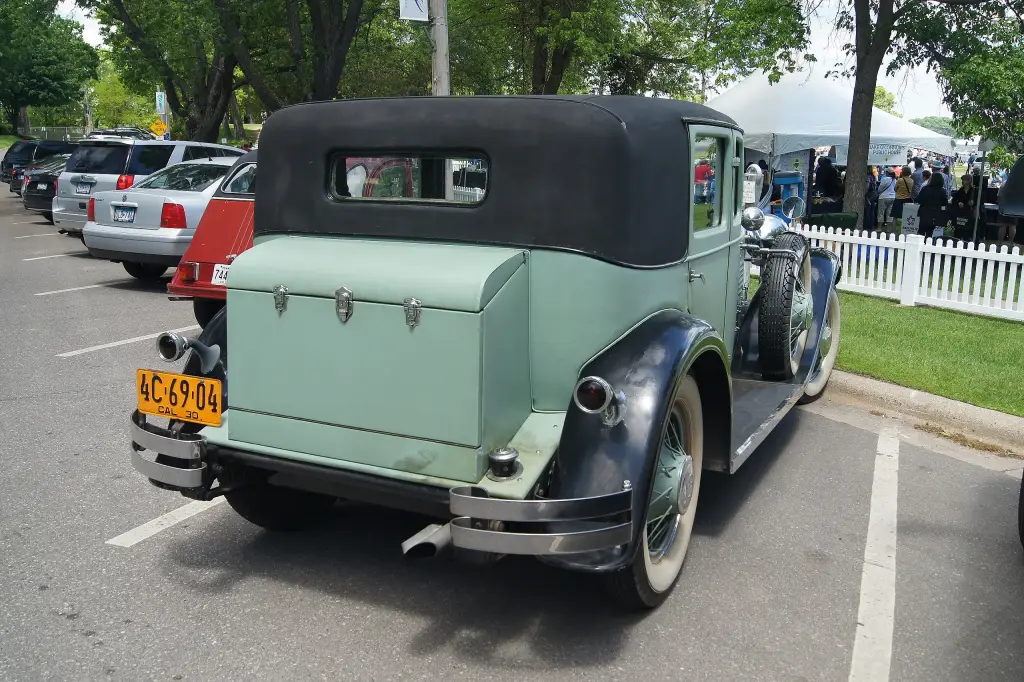
Stutz Vertical Eight versions
- AA (1926–1928): the first Safety Stutz, 4.7-litre eight.
- BB (1928): refined series, with sporting models above 100 mph.
- M and MA/MB (1929–1930): senior line with supercharged racing options.
- SV-16 (1930–1935): 5.28-litre sixteen-valve single-cam eight.
- DV-32 (1931–1935): four-valve twin-cam flagship, fewer than 300 built.
The engine is described in the article on the Stutz straight-eight, and the sporting ancestor is the Stutz Bearcat. More cars are in the Stutz collection.
Video: 1928 Stutz BB $60,500 SOLD!
Video on YouTube.
Sources
- Stutz Vertical Eight, English Wikipedia: series, chassis, engines, racing