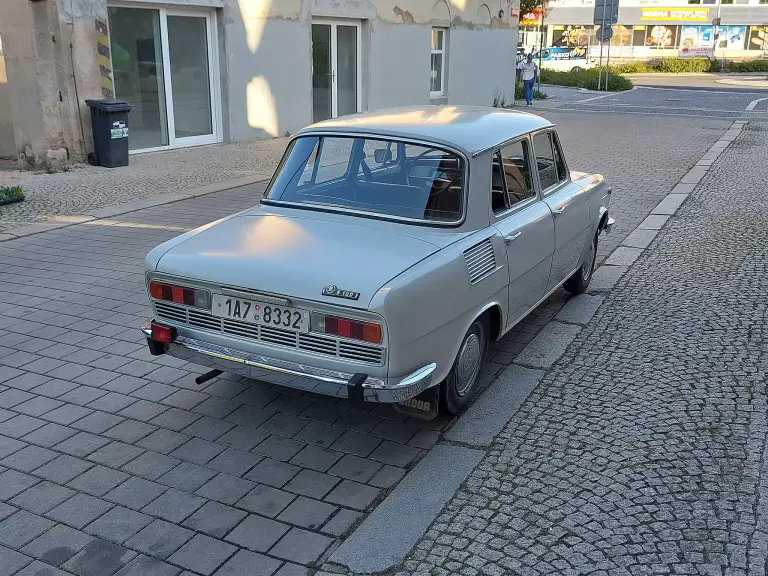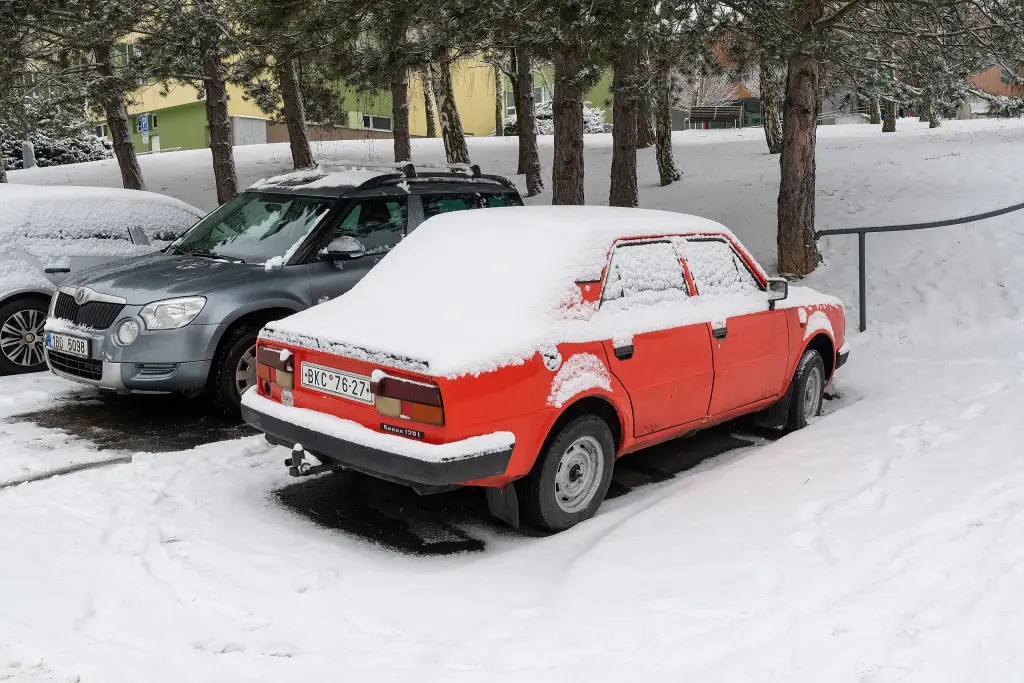
The Škoda 105 and Škoda 120 were the two original members of the Type 742 family of rear-engined, rear-wheel-drive small saloons built by AZNP in Mladá Boleslav between 1976 and 1990. A new body and a front-mounted radiator modernised a mechanical package that went back to the 100 and 110, and more than two million cars of the family were made in fourteen years.
Škoda 105/120 at a glance
| Maker | AZNP, Mladá Boleslav and Vrchlabí |
|---|---|
| Production | 1976–1990 |
| Internal type | 742 (135/136 from 1987: type 746) |
| Layout | rear engine, rear-wheel drive |
| Engines | 1,046 cc and 1,174 cc four-cylinder OHV |
| Power | 46 PS (105), 52 PS (120 L), 58 PS (120 LS and GLS) |
| Gearbox | four-speed manual |
| Front boot | 280 litres over the front axle |
| Cooling | front radiator with thermostatic fan, 11–12 litres of coolant |
| UK names | Super Estelle until 1984, then Estelle Two |
| French name | Škoda 1050, because Peugeot held the 105 trademark |
| Built | more than two million saloons |
History of the Škoda 105/120
An old layout in a new shell
At the start of the 1970s Škoda wanted a front-engined, front-wheel-drive successor to the 100/110, but the money and the licence were refused, so the company updated the existing saloon instead. The internal project began on 21 June 1971 as the Type 727 under chief engineer Ludvík Eimer: the floorpan, engine, gearbox and axles of the 100/110 were retained or lightly modified, and an entirely new body was drawn to meet the ECE safety rules due in 1975, with deformation zones, safety door locks, a collapsible steering column and the fuel tank moved behind the rear seats. The glass area grew by a third against the old car, which made the compact Škoda look larger than it was. The 105 and 120 went into production in August 1976, with a front-mounted radiator and thermostatic fan, the heater inside the dashboard and the fuel tank under the rear seat. One curiosity remained: the front boot lid was hinged at the side and opened like the lid of a concert grand.
Engines and criticism
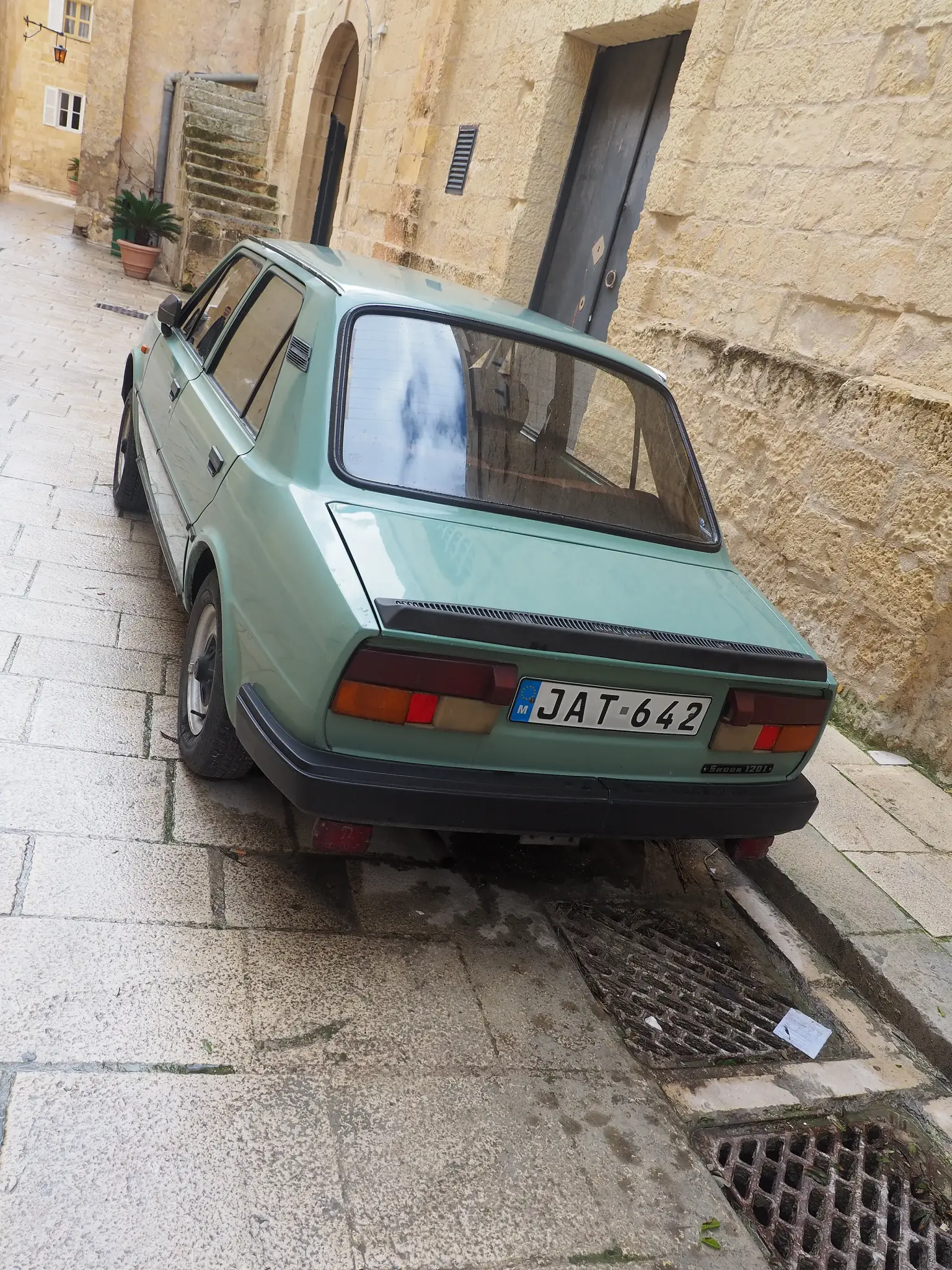
The 105 S and 105 L used a 1,046 cc engine of 46 PS, while the 120 L had a 1,174 cc unit of 52 PS; the 120 LS of 1977 and the 120 GLS of 1978 raised that to 58 PS and added equipment. Low-line cars had single headlamps and high-line cars twin lamps, and the basic 105 S was spartan, with fixed rear windows and no hazard lights until November 1979. In 1979 all versions moved to 13-inch wheels with 165 SR 13 tyres, except the 120 GLS on 175/70 R13. The press criticised the handling at the limit, and the remote front radiator, much more complex than the old rear-mounted one, was prone to airlocks, overheating and head gasket failures. On the other hand the cars kept winning their rally classes and were cheap, robust transport across Europe. In France, where Peugeot had trademarked 105 and similar three-digit numbers, the car was sold as the Škoda 1050.
Facelifts, the 130 and the Estelle
The range was revised in 1981, when oval headlamps replaced round ones, the 105 GL joined the line-up with GLS trim and black bumpers, and the Garde coupé arrived in November. A second facelift in August 1983 moved the indicators from the bumper up beside the headlamps and brought the 1.3-litre Škoda 130. The 135 and 136 of 1987 used the Favorit’s engine under the Type 746 code. In Britain the same cars were sold as the Super Estelle and, after 1984, the Estelle Two. Coupés were built in Kvasiny and at BAZ in Bratislava, fewer than 45,000 of them, against more than two million four-door saloons. Twelve years after production ended, in 2002, the Type 742 was still the most numerous passenger car type registered in the Czech Republic.
Design and features
- Front radiator, rear engine: a pressurised system holding 11–12 litres of coolant, efficient on the motorway but prone to airlocks.
- Side-hinged boot lid: the front luggage compartment opens sideways because the hinges could not be placed near the windscreen frame.
- Split fuel tank: the long gearbox forced a two-part tank under the rear of the cabin.
- Safety shell: a new body designed to the ECE rules due in 1975, on the old floorpan.
- Long service: still the commonest car on Czech roads in 2002.
Škoda 105/120 versions
- 105 S and 105 L (1976): 1,046 cc, 46 PS, single headlamps.
- 120 L (1976): 1,174 cc, 52 PS.
- 120 LS (1977) and 120 GLS (1978): 58 PS and more equipment, twin headlamps.
- 105 GL (1981): 105 mechanics with GLS trim and black bumpers.
- 130 (1983): 1.3-litre engine added with the second facelift.
- Estelle and Estelle Two: the British names for the 105/120 before and after the 1984 facelift.
The coupé relative was the Škoda Garde, and the family replaced the Škoda 100 and 110. More cars are in the Škoda collection.
Video: Škoda 105L takto baví ma to
Video by Michal Hakl on YouTube.
Sources
- Škoda Type 742, English Wikipedia: development, engines, criticism, facelifts, French name
- Škoda 742, Czech Wikipedia: project history, body, cooling system, production split, 2002 statistics