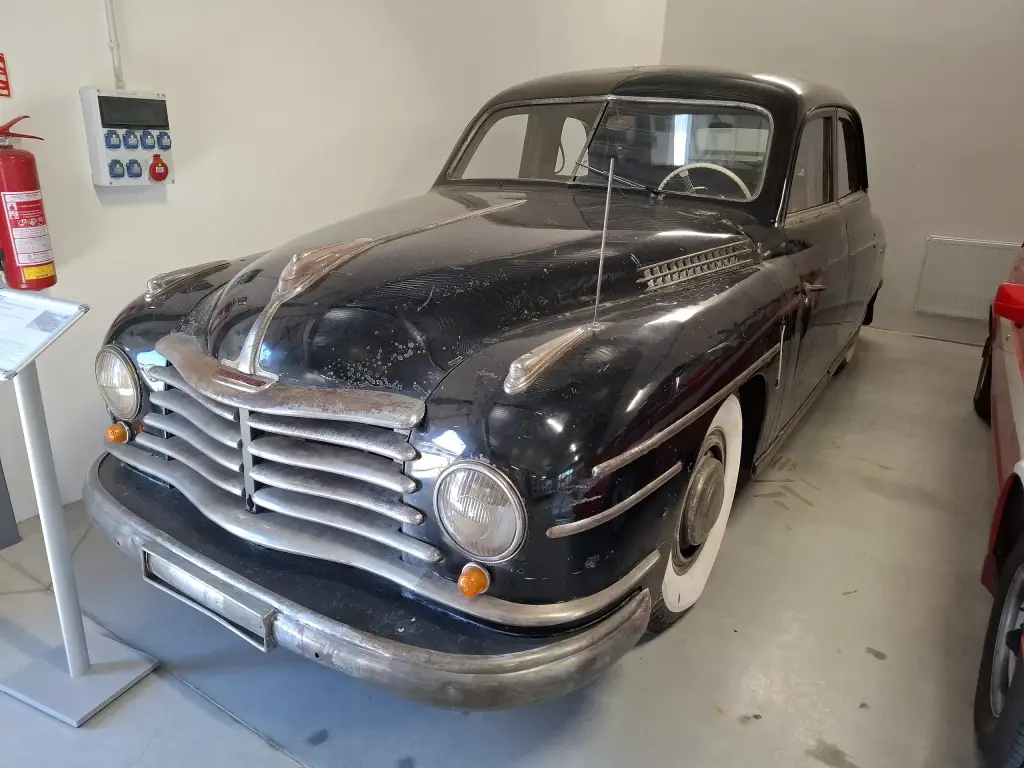
The Škoda VOS was a full-size armoured luxury car built by AZNP in Mladá Boleslav between 1949 and 1952 for senior political and military figures in Czechoslovakia and other socialist countries. It was never sold to the public, it weighed up to four and a half tonnes, and only 107 were made before the country’s elite moved to the Tatra 603.
Škoda VOS at a glance
| Maker | AZNP Mladá Boleslav, bodied by Sodomka, later Karosa |
|---|---|
| Production | 1949–1952 (Czech sources: 1948–1953) |
| Name | Vládní osobní speciál, the government’s personal special |
| Designer | Oldřich Meduna, previously a tank designer |
| Engine | 5.2-litre six-cylinder from the Praga N4TA lorry |
| Power | 120 PS (88 kW) |
| Weight | about 4.5 tonnes in the heavy armoured version |
| Top speed | 80 km/h, limited by order of the interior ministry |
| Consumption | about 30 l/100 km |
| Armour | 5 mm cobalt-steel plates; glass 52 mm heavy, 8 mm light |
| Equipment | air conditioning, hydraulic windows, doors opening against each other |
| Built | 107, at least 37 of them heavily armoured |
History of the Škoda VOS
Why the state needed a new limousine
In 1949 the Mladá Boleslav plant assembled the last Škoda Superbs, large six-cylinder cars in the American style of the late 1930s. The authorities wanted a more modern replacement, and the task went to AZNP after both Tatra and Praga refused it. The brief was drawn up by police general Josef Pavel for cars to be used ‘exclusively for passing through dangerous territory’: fifty heavily armoured cars for the top party and state officials and fifty lightly armoured ones for escorts, with no visible difference between the two. The work was led by Oldřich Meduna, the company’s chief designer, who had the most experience with armoured vehicles and who said afterwards that the VOS body was his first and last car design.
Armour, engines and air conditioning
The armour was made of 5 mm cobalt-alloy steel plates, with a steel mesh between the layers of the double armour to deflect bullets, and it formed the cabin’s own shell. Because the finished car would weigh close to five tonnes, a new chassis had to be designed and a suitable engine found outside AZNP: the 5.2-litre Praga N4TA six of 88 kW. The brakes were twin-circuit drums with Dutch lining. The tyres were so overloaded that Mitas had to develop a special construction with Egyptian cotton cord and imported raw rubber, and each of about 600 tyres was inspected before delivery. The glass was laminated from several panes and reached 52 mm in the heavy cars and about 8 mm in the light ones; the lighter glass looked different, so it had to be remade with a bluish tint to match. Windows this thick could be lowered only about 5 cm, and a pane weighed up to 80 kg, which is why they were hydraulically operated and why the heavy cars carried air conditioning, whose machinery filled the whole boot; luggage travelled in an escort car. The finished cars also had side doors that opened against each other. After the first working prototype the client decided the car must look like an elegant touring limousine rather than an armoured vehicle, so it was scrapped and the body was reworked by Karosa of Vysoké Mýto, then lengthened so that the first lady, Marta Gottwaldová, could get in more easily. The interior ministry complained about hard seats and ordered feather-filled cushions, and the springs were shortened at the request of Rudolf Slánský, whose pregnant wife found the ride too firm.
Owners and the end
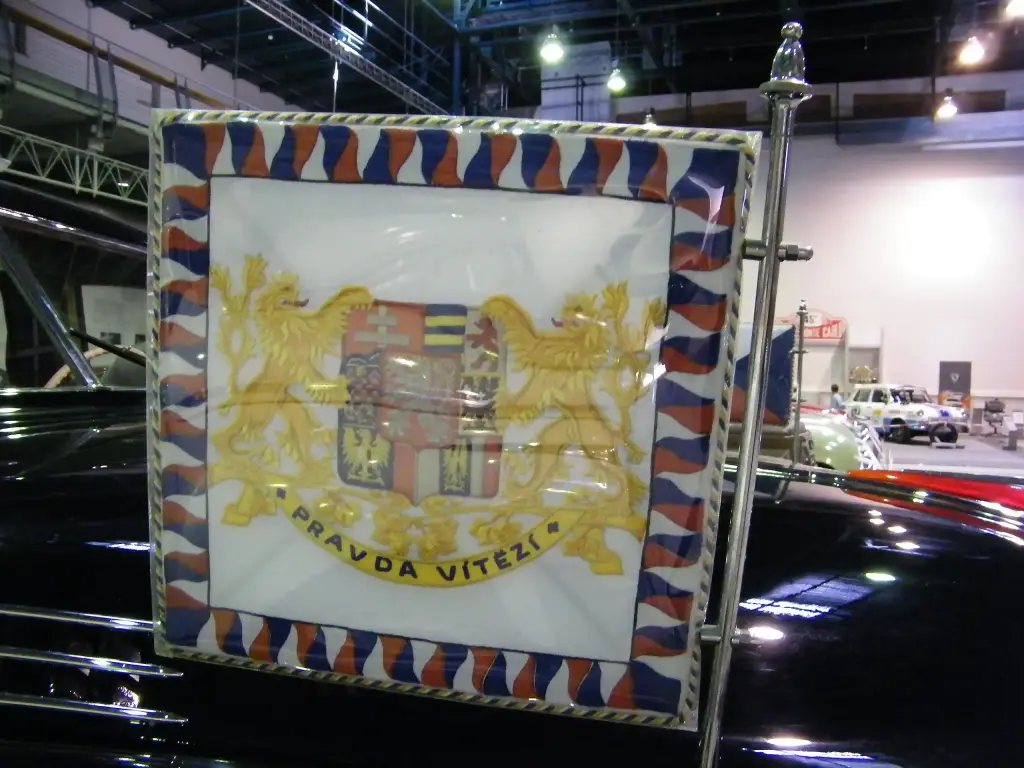
Testing took place at the Milovice firing range, where the cars were shot at with rifles and hit with bombs and grenades; when the original armour failed, a new cobalt-steel specification was developed at Poldi Kladno. The first finished cars were built in 1950, with chassis from AZNP and completion at Karosa. Owners included President Klement Gottwald, Enver Hoxha, Zhu De, Ana Pauker and Mao Zedong; one car was sent to China for Mao by a special delegation. Ana Pauker of Romania had a VOS converted to run on railway tracks, reaching 115 km/h at five tonnes and now displayed at Sinaia station, its windscreen smashed in an apparent attack near Roşiori Nord. Production ended in 1952, and Škoda was not asked to replace the car: the elite switched to the Tatra 603. At least two VOS cars survive in the Czech Republic, one in the regional museum at Vysoké Mýto and a lighter car in the Škoda museum in Mladá Boleslav.
Design and features
- Armoured shell: 5 mm cobalt-steel plates with a mesh layer in the double-armour cars.
- Thick laminated glass: 52 mm in the heavy cars, raised and lowered hydraulically.
- Air conditioning: rare in 1950 and fitted because the thick glass could barely be opened.
- Lorry engine: a 5.2-litre Praga six of 88 kW, needed to move four and a half tonnes.
Škoda VOS versions
- Heavy armoured car: at least 37 built, with air conditioning and full armour.
- Light armoured car: escort version with thinner glass and armour.
- Rail version: Ana Pauker’s car, converted to run on tracks.
- Preserved cars: one in the Vysoké Mýto museum, a light one in the Škoda museum.
The VOS replaced the pre-war Škoda Superb in official use. More cars are in the Škoda collection.
Video: Škoda VOS na dobových videách (1952)
Video by jaffarski on YouTube.
Sources
- Škoda VOS, English Wikipedia: production, engine, armour, weight, speed, air conditioning, owners
- Škoda VOS, Czech Wikipedia: design brief, armour and glass, tyres, development, surviving cars