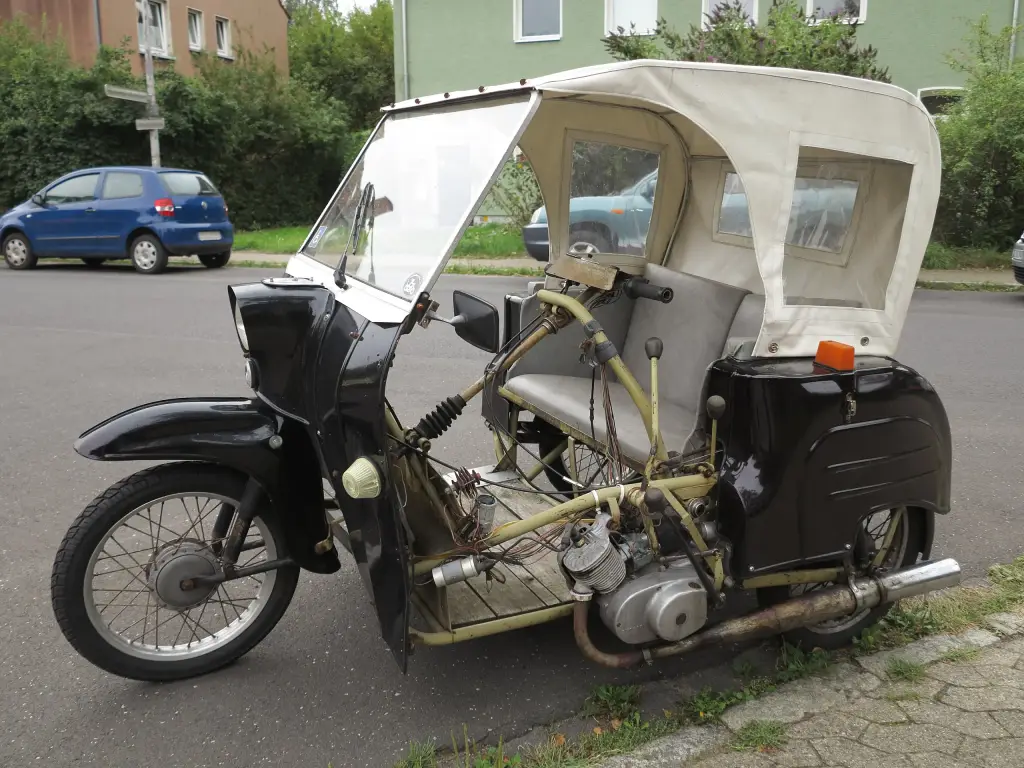
The Duo was a three-wheeled motorised invalid carriage for people with walking disabilities, built in the German Democratic Republic from 1961 to 1991. It was not a Simson: the maker was the Krankenfahrzeugfabrik Krause in Leipzig, later the VEB Fahrzeugbau und Ausrüstungen Brandis, and the Duo was assembled largely from modified Simson Schwalbe parts — which is why it is still often taken for a Simson.
Simson Duo at a glance
| Maker | Louis Krause, Leipzig; from 1972 the state works in Brandis |
|---|---|
| Production | 1961–1991 |
| Type | three-wheeled motorised invalid carriage, two seats |
| Engine | 49.6 cc single-cylinder two-stroke, 2.65 kW (3.6 PS) in the Duo 4/1 |
| Gearbox | three-speed with automatic centrifugal clutch |
| Top speed | about 60 km/h |
| Body | steel front and rear panels from the Duo 4 |
| Exports | Poland took about half of production; Albania also bought cars |
| Later price | from €5,500 for the small-series cars sold after 1991 |
Based on one source, the German Wikipedia article on the Duo. The Duo was marketed alongside Simson vehicles and is often listed as one, but its makers were Krause in Leipzig and later the Brandis works.
History of the Simson Duo
The firm Louis Krause was founded in Leipzig in 1880 and began building vehicles for disabled people at the end of the 1940s. At the Leipzig autumn fair in 1954 Krause showed several invalid carriages with MAW auxiliary engines or a modified IFA RT 125/1 engine. In 1955 the Krause Piccolo Trumpf laid the foundation for a line of motorised invalid carriages from which the Piccolo Duo models grew. In 1961 Krause built the first two-seat Piccolo DUO, derived from the Trumpf; in the same year a two-seat microcar with a light-alloy body and a 150 cc engine was shown at the Leipzig spring fair but never produced.
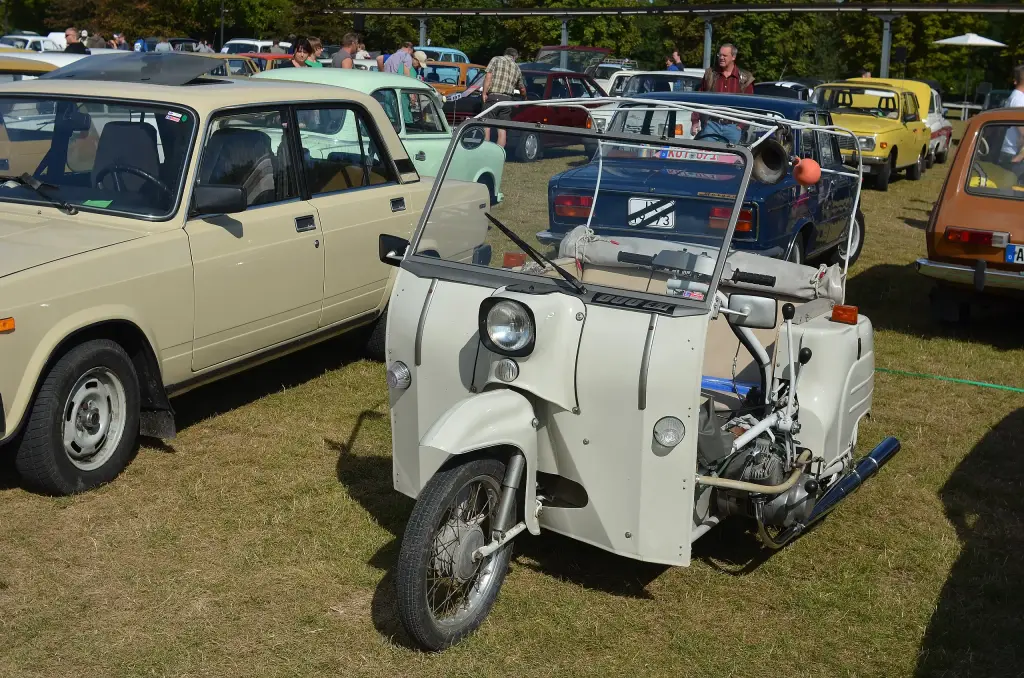
The Duo acquired its final shape in 1970 and was then built almost unchanged until 1991. In 1972 the Krause works were partly nationalised and production of the motorised carriages passed to the VEB Fahrzeugbau und Ausrüstungen Brandis, while Krause itself made only unpowered wheelchairs. In 1981 the Brandis works was renamed and attached to the VEB Robur-Werke Zittau as Works 5; in 1990 it became the independent Treuhand company Fahrzeugbau und Ausrüstungen Brandis GmbH.
Production in Brandis ended in March 1991, when the general type approval of the Kraftfahrt-Bundesamt expired, and spare parts were made until 31 December 1991. In 1992 the tooling was sold by the Treuhand to a company in Bohmte near Osnabrück. Despite the expired approval, the models 4/1 and 4/2 were still built there in small numbers at prices from €5,500 (as of 2002). Poland was the main export customer and took about half of all Duos; Albania was the other export market.
Design and features
- Schwalbe-based: the Duo used modified Simson Schwalbe components, including its engine, gearbox and front bodywork.
- Three wheels, two seats: a weather-protected cabin with a hood and a passenger seat beside the driver.
- No clutch pedal: a three-speed gearbox with an automatic centrifugal clutch in an oil bath made the car easy to drive.
- Long life: the basic design stayed in production for three decades with only detail changes.
Simson Duo versions
- Piccolo Duo (1961): the first two-seat Duo, derived from the Piccolo Trumpf.
- Piccolo Duo/2 (from about 1964): Simson Vogelserie parts, round “Ochsenauge” indicators, aluminium front and rear panels and cable steering; about 60 were reportedly built.
- Duo/3 (1968–1970): 25 W headlamp, 6 V/12 Ah battery, M53/1 engine and a yellow brake light in the middle of the rear panel; 55 km/h.
- Duo 4, 4/1 and 4/2 (1970–1991): the main production series, with steel panels, rectangular tail lights, steering linkage, a larger rear window and a 49.6 cc engine of 2.65 kW.
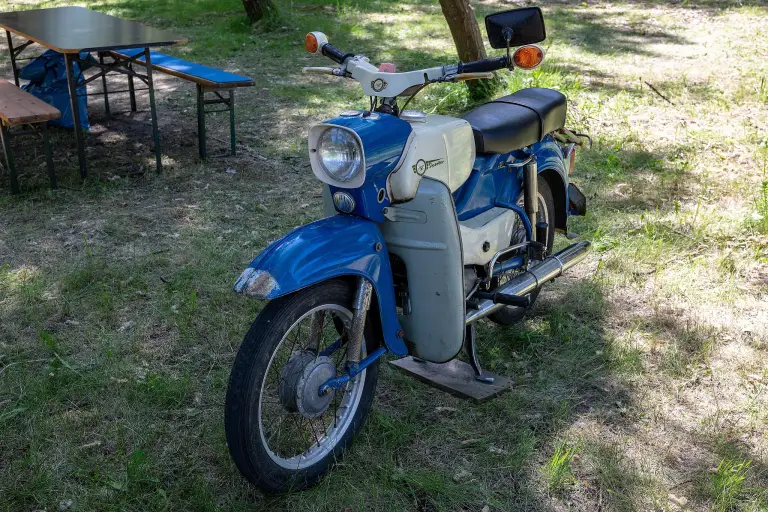
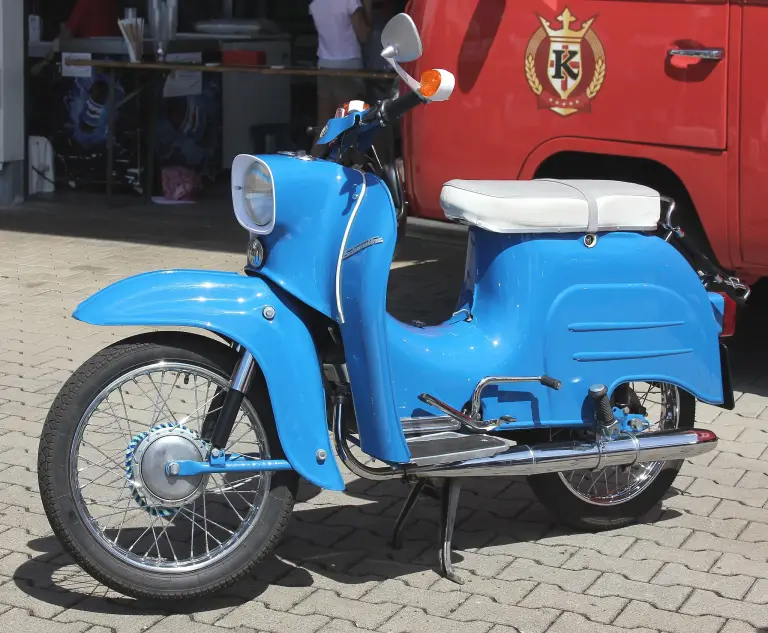
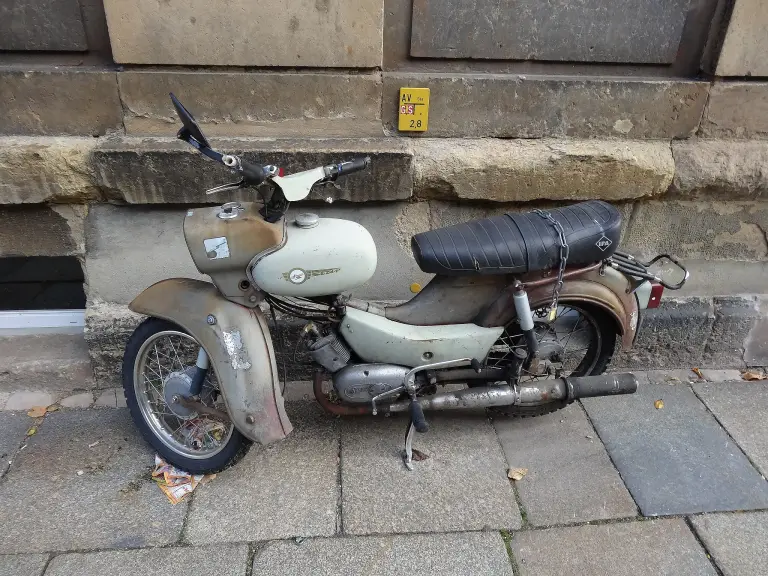
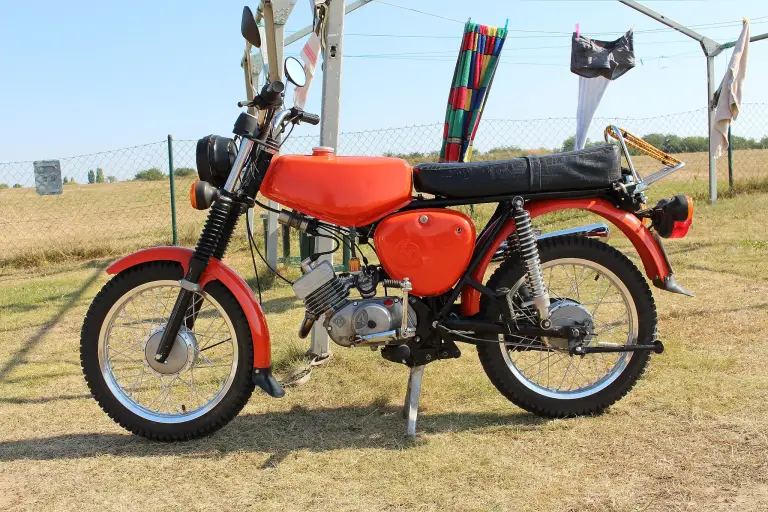
The Duo shares its engine and much of its running gear with the Simson Schwalbe, and its three-speed engine was also related to the units in the Simson S51. More vehicles are in the Simson collection.
Video: Simson Krause Duo 4/1 GoPro
Video by Valentin on YouTube.
Sources
- Duo (Krankenfahrzeug), German Wikipedia: history, models, production end, exports