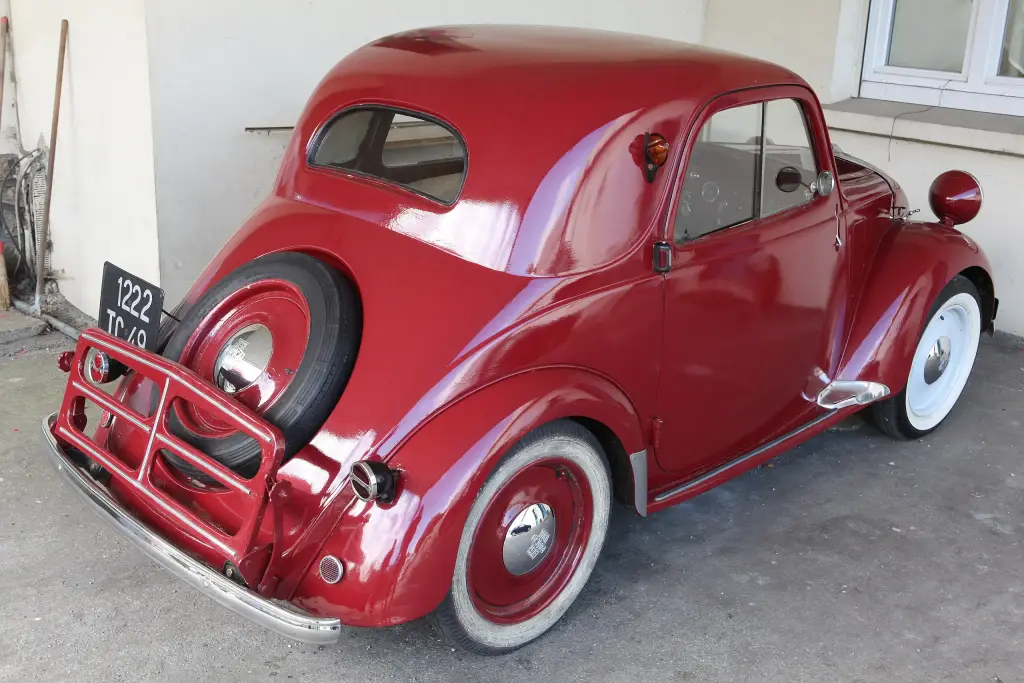
The Simca 5 was a small Franco-Italian car designed by Fiat engineers in Turin and built in France by Simca from 1936 to 1948. Almost identical to the Fiat 500 Topolino on which it was based, it was shown at Simca’s new Nanterre plant on 10 March 1936, three months before the Fiat version.
Simca 5 at a glance
| Production | 1936–1949 |
|---|---|
| Built | 46,472 |
| First shown | 10 March 1936, Nanterre |
| Based on | Fiat 500 Topolino |
| Tax class | 3 CV |
| Front suspension | independent |
| Gearbox | four speeds |
| Brakes | hydraulic drums on all four wheels |
| Electrics | 12 volts |
| Fuel economy | 5 litres for 110 km, about 4.55 l/100 km |
| Price at the 1938 Paris show | 13,980 francs for the standard car |
| Successor | Simca 6 |
History of the Simca 5
An Italian design built in France
The car was designed by Fiat engineers in Turin and produced in France by Simca, which had assembled Fiat models before the war. Simca presented it at its new factory at Nanterre on 10 March 1936, three months ahead of the Fiat equivalent. Production was delayed by the wave of strikes that followed the June 1936 electoral victory of Léon Blum’s Popular Front government. At its launch the maker boasted of being ahead of the “plans across the Rhine”, a reference to the already rumoured Volkswagen Beetle, which only appeared in 1938.
The car
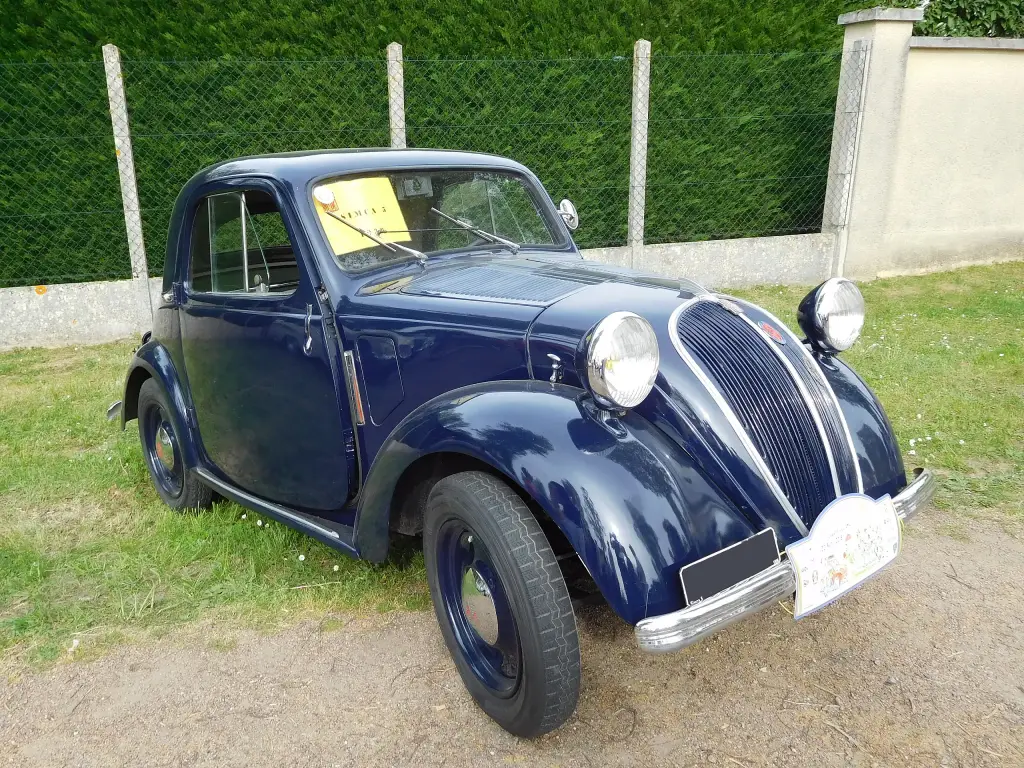
For a small car the Simca 5 was advanced: independent front suspension, a four-speed gearbox, hydraulically controlled drum brakes on all four wheels and a 12-volt electrical system. It also offered exceptional fuel economy, and in a test it covered 110 kilometres on five litres of fuel, about 4.55 litres per 100 km. With an engine size in the 3 CV tax band, the Simca 5 and its Fiat sibling could be presented as the smallest volume production car in the world.
Price and war
The car was originally intended to sell for less than 10,000 francs on the domestic market, but the fall in the value of the currency through the later 1930s overtook that aim: by the 32nd Paris Motor Show in October 1938 the listed price of the base standard-bodied car was 13,980 francs. Production was slowed, though never stopped entirely, by the war and the German occupation in the early 1940s, and a number of cars were commandeered by the German Army as staff cars. Production resumed in 1946.
The end
By the time the car was delisted by Simca in 1949, 46,472 had been built. It had already been replaced on the production lines by the similar but partly reskinned and slightly more powerful Simca 6. It was only the third model of the Simca brand, and its name was chosen to suggest how close it was to the Italian Fiat 500.
Design and features
- Advanced chassis: independent front suspension and hydraulic drum brakes on all four wheels were unusual in the class in 1936.
- Four-speed gearbox: a ratio more than most small cars of the period offered.
- Economy: 110 km on five litres in a published test.
- 12-volt electrics: a modern system for a cheap car of the 1930s.
Simca 5 versions
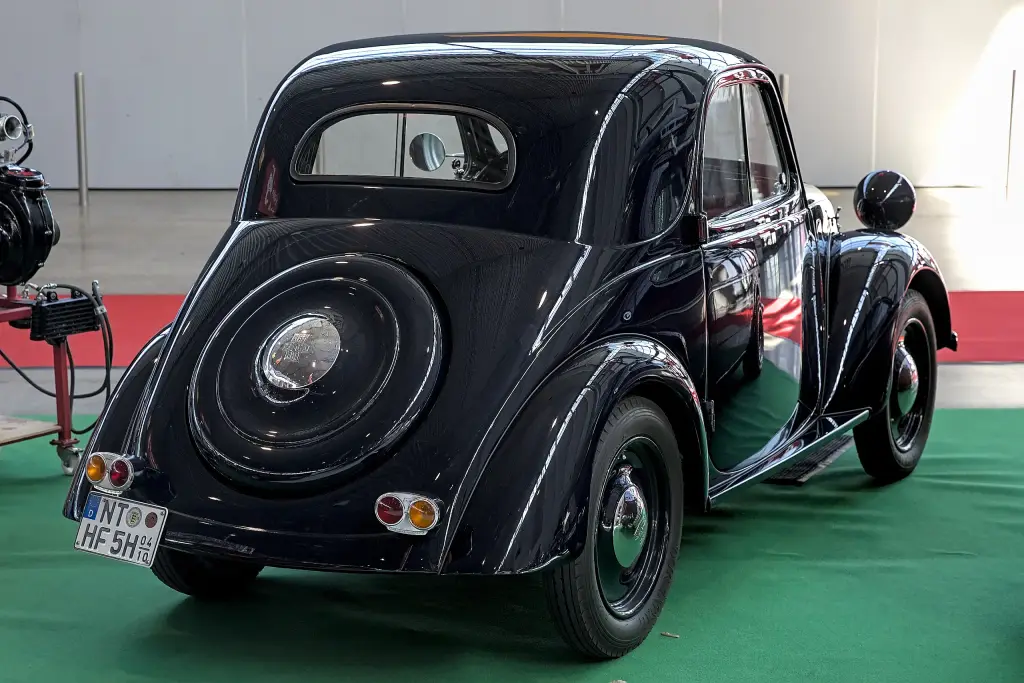
- Simca 5 standard (1936–1939): the base car with the standard body.
- Wartime cars: production slowed by the occupation, with cars taken over by the German Army.
- Post-war cars (1946–1949): production resumed after the liberation until the model was delisted.
The Simca 5 was replaced by the Simca 6, and its larger relatives were the Simca 8 and Simca 9. More cars are in the Simca collection.
Sources
- Simca 5, English Wikipedia: launch, equipment, economy, price, production
- Simca 5, German Wikipedia: Fiat background, presentation, production total