The Rosengart Supertraction was the ambitious car of a maker known for voiturettes. Built on front-wheel-drive technology licensed from the German Adler Trumpf, it competed for the first time with larger French cars — and it never sold in the numbers the investment required.
Rosengart Supertraction at a glance
| Maker | Automobiles L. Rosengart, Paris |
|---|---|
| Production | 1933–1940 (LR500, LR505, LR539) |
| Introduced | 1937 as the Supertraction |
| Layout | front-wheel drive |
| Base | Adler Trumpf, built under licence |
| Engine (LR539) | 1,911 cc Citroën 11 Perfo four-cylinder |
| Power | 56 hp |
| Gearbox | three-speed |
| Top speed | 120 km/h |
| Bodies | two-door coupé and cabriolet |
| Rivals | Peugeot 402, Berliet Dauphine |
History of the Rosengart Supertraction
Rosengart and Adler
In the early 1930s Rosengart teamed up with the German manufacturer Adler, offering licence-built copies of the Adler Trumpf and Trumpf Junior, small front-drive cars that broadened the range. It also added a conventional rear-driven car along the lines of a stretched and widened Austin. The development of the front-wheel-drive models led to the elegant Supertraction in 1937.
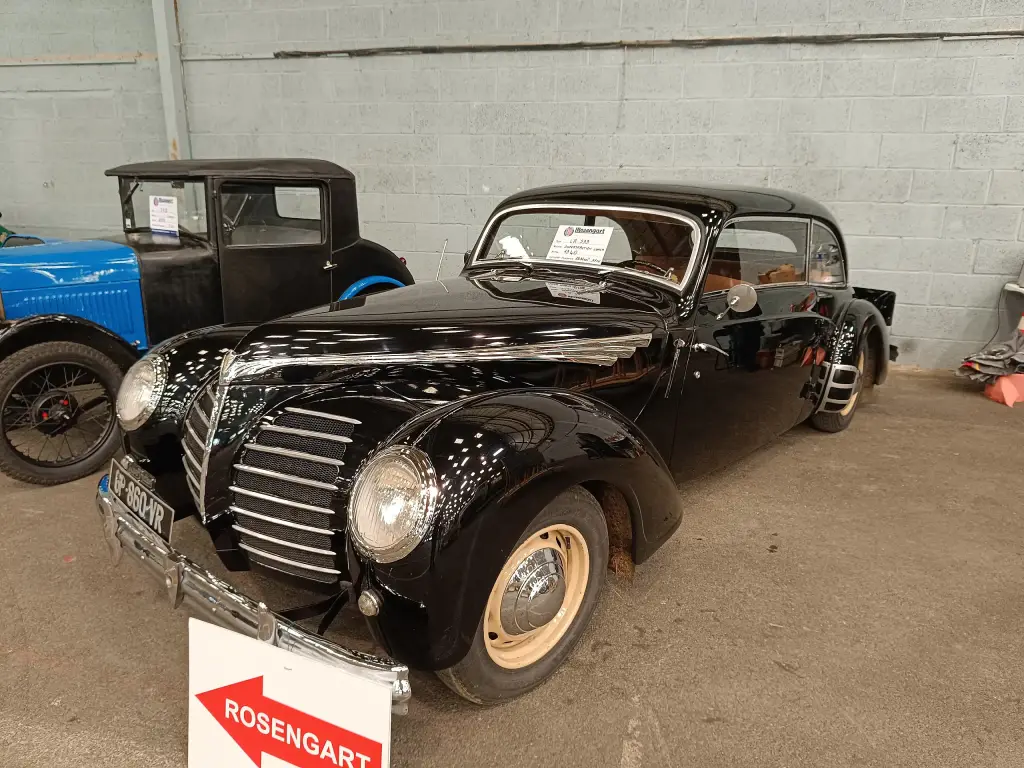
The Supertraction competed with larger cars such as the Peugeot 402 and the Berliet Dauphine — for the first time in Rosengart’s short history. That was the point of the model: the small cars sold in reasonable numbers but at slim margins, and the company wanted a foot in the more profitable class above them.
The LR539
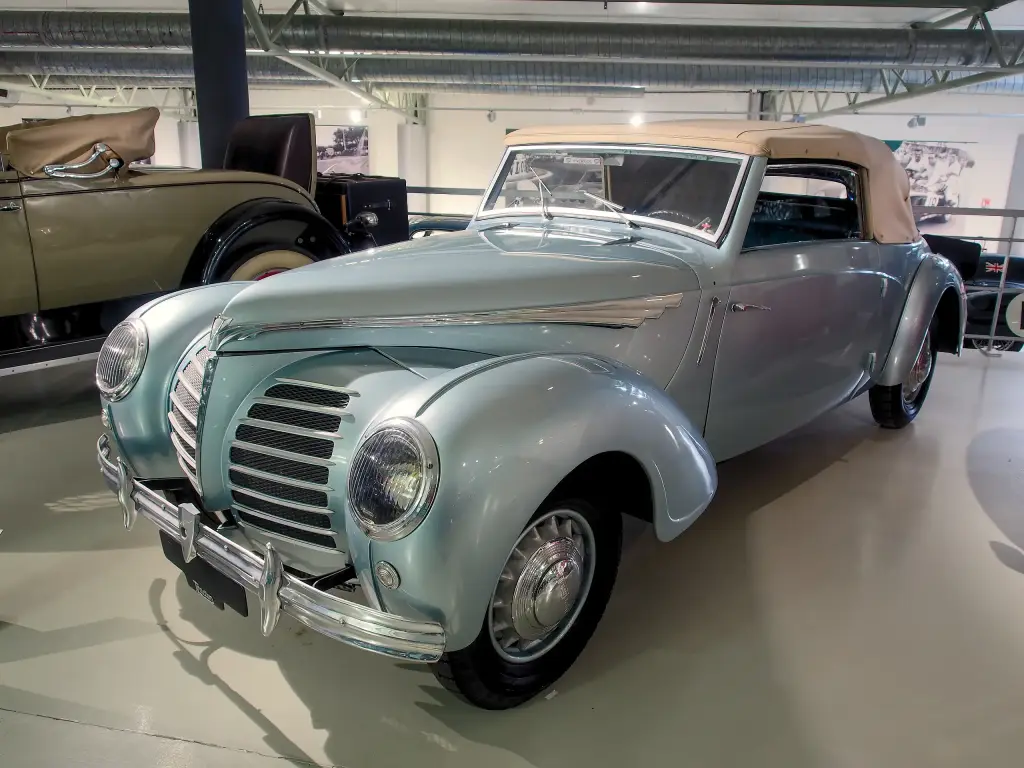
French Wikipedia dates the LR539 Supertraction to 1938–1940 and describes it as an elegant two-door front-wheel-drive car built on the base of the German Adler Trumpf, whose licence Lucien Rosengart had acquired. Its engine was the 1,911 cc Citroën 11 Perfo four from the Traction Avant, giving 56 hp through a three-speed gearbox and a top speed of 120 km/h. It was offered as a coupé or a cabriolet.
The model code was not the first Supertraction: the French list of production models records the LR500 Supertraction of 1933–1935 and the LR505 Supertraction of 1935–1937 before the LR539. All of them shared the front-wheel-drive layout taken from Adler.
Too few buyers
The larger cars failed to sell in numbers sufficient to justify the investment, while the small cars continued to provide the volume on thin margins. Production of the Supertraction was never large, and the factory was destroyed by the German Army after the invasion. The business survived the occupation but did not build cars during the conflict, and the Supertraction was not revived afterwards.
Design and features
- Front-wheel drive: the layout came from the Adler Trumpf licence, unusual in France at the price.
- Citroën power: the LR539 used the 1,911 cc 11 Perfo engine of the Traction Avant, good for 56 hp.
- 120 km/h: a genuine touring speed, well beyond the voiturettes the marque was known for.
- Two bodies: a two-door coupé and a cabriolet, both on the same chassis.
- Move upmarket: aimed at buyers of the Peugeot 402 and Berliet Dauphine.
Rosengart Supertraction versions
- LR500 Supertraction (1933–1935): the first front-wheel-drive Rosengart, on the Adler licence.
- LR505 Supertraction (1935–1937): the second series of the same idea.
- LR539 Supertraction coupé (1938–1940): Citroën-engined two-door with 56 hp.
- LR539 Supertraction cabriolet (1938–1940): the open version of the same car.
The Supertraction sat above the LR4 in the range, and its failure pushed the company back towards small cars such as the Ariette. More cars are in the Rosengart collection.
Sources
- Automobiles L. Rosengart, English Wikipedia: Adler licence, 1937 launch, rivals, end of production
- Rosengart, French Wikipedia: LR539 specification, LR500 and LR505 dates