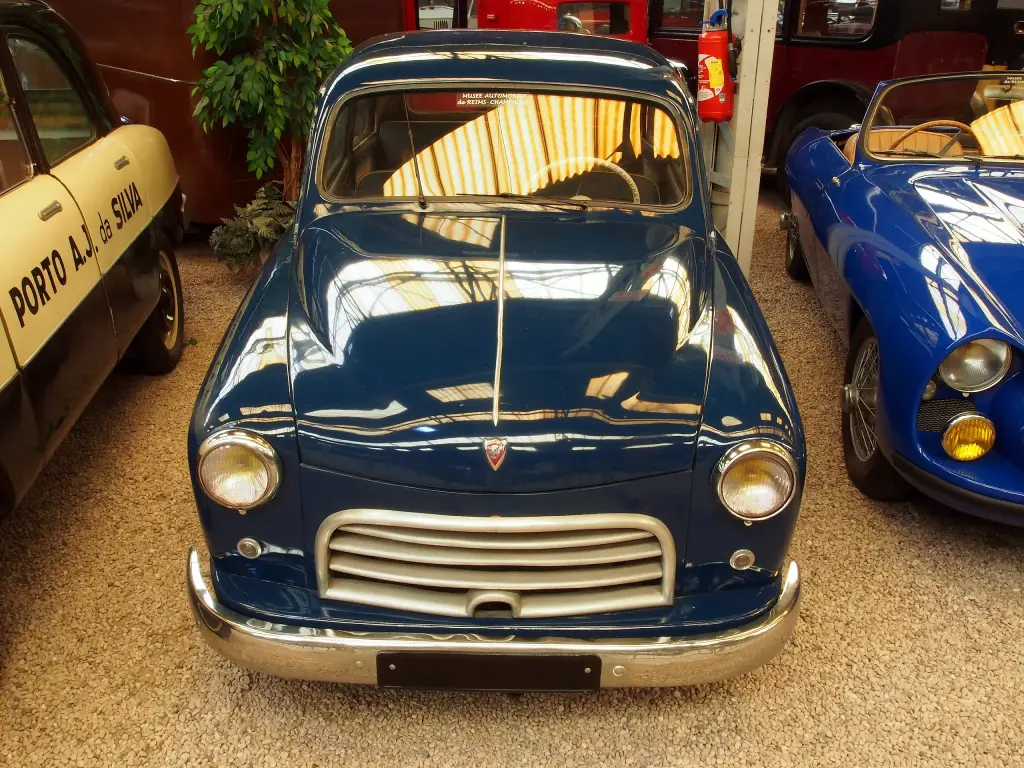
The Rosengart Ariette was the last car of the French marque. Introduced at the Paris Motor Show late in 1951, it wrapped modern styling by Philippe Charbonneaux around a 747 cc engine that dated from the Austin 7 — a combination that made it too expensive for what it offered.
Rosengart Ariette at a glance
| Maker | Automobiles L. Rosengart (SIOP), Neuilly |
|---|---|
| Production | 1951–1955 |
| Launched | Paris Motor Show, late 1951 |
| Body | two-door four-seater, styled by Philippe Charbonneaux |
| Engine | 747 cc four-cylinder |
| Power | 21 hp |
| Gearbox | four-speed, synchromesh on the top two ratios |
| Weight | 720 kg |
| Price (1952) | 668,500 francs |
| Rival | Renault 4CV, 21 hp, 458,000 francs |
| Versions | saloon, break (1952), Artisane (1953), cabriolet and coach |
History of the Rosengart Ariette
A modern body, an old engine
The last Rosengart car, the Ariette, was introduced at the Paris Motor Show towards the end of 1951. The small two-door four-seater had a modern body styled by Philippe Charbonneaux and was well received on the stand, but the styling could not distract attention from the car’s “anaemic” performance. The 747 cc engine had offered adequate power when the Austin 7 first used it in 1922, and the 21 hp claimed for the 1951 Rosengart was more than the company had managed when it first used the unit in 1927 — but that was not saying much.
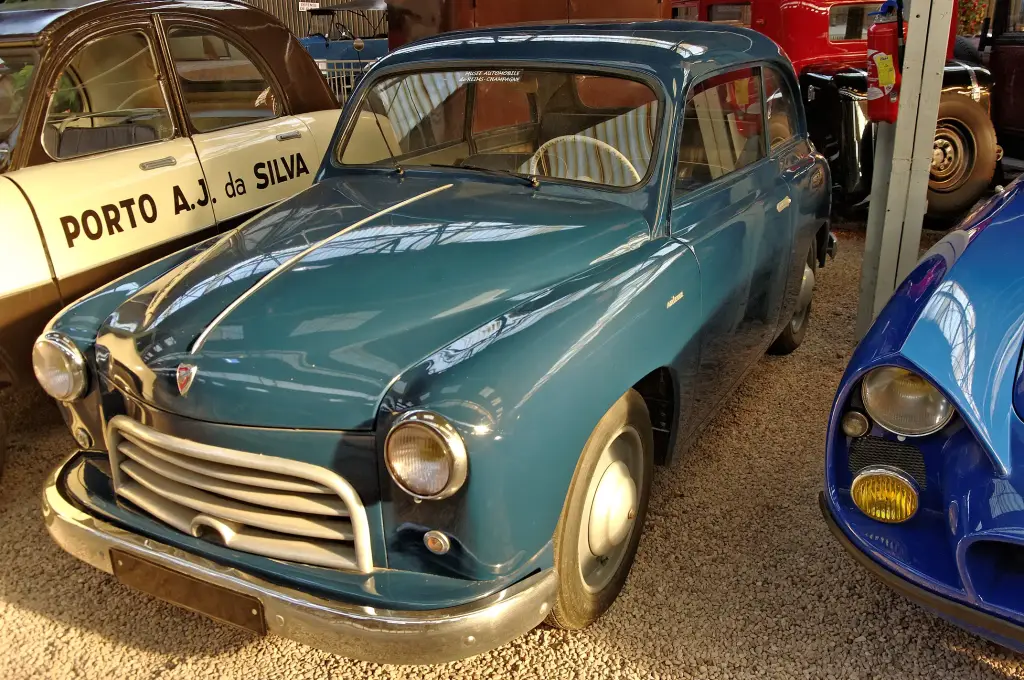
A four-speed gearbox with synchromesh on the top two ratios and a relatively light 720 kg should have made the best of the available power. In the event the engine in the modern-looking car was old and outclassed, and the power was inadequate against the asking price: by 1952 the Ariette cost 668,500 francs, while a standard 21 hp Renault 4CV cost 458,000 francs, or 399,000 for the reduced-specification 4CV Service.
Break and Artisane
In 1952 came an Ariette break to replace the unsuccessful Vivor van. The estate was about 15 kg heavier than the saloon at 735 kg and could carry up to 500 kg. Early in 1953, mindful of the uncompetitive price, the company introduced a stripped-down version called the Artisane: the same body shell without the chrome décor or wheel trims, bumpers finished only in paint, the car available only in a dark shade of grey, and everything that could be removed taken out of the interior, including the back seat. At 599,000 francs it saved more than 10 per cent.
The end
A few weeks after the 1952 Paris Motor Show, SIOP, the company that had owned Rosengart since 1936, was forced to file for bankruptcy. Late in 1952 the gates of the Neuilly plant closed with the loss of 1,700 jobs. After negotiation with bankers and creditors the plant reopened early in 1953 and Ariette production resumed at about four cars a day, with plans for a rapid increase in volume.
The underlying problem could not be solved: the car could not be sold at a competitive price without selling in large numbers, and it could not sell in large numbers because the price was not competitive. The company closed its doors in the summer of 1955 after failing to launch its new car, the Sagaie, a development of the Ariette with a flat-twin engine.
Design and features
- Charbonneaux styling: a modern two-door four-seater body by Philippe Charbonneaux, well received at the 1951 show.
- Old mechanicals: the 747 cc side-valve engine and its 21 hp came from the Austin 7 lineage of the 1920s.
- Four-speed gearbox: synchromesh on the top two ratios, which helped the modest power.
- Light body: 720 kg for the saloon, 735 kg for the break with a 500 kg load capacity.
- Artisane: a cheaper, stripped version from early 1953 without chrome, wheel trims or a back seat.
Rosengart Ariette versions
- Ariette saloon (1951–1955): the standard two-door four-seater with the 747 cc engine.
- Ariette break (1952–1953): three-door estate replacing the Vivor, 735 kg, 500 kg payload.
- Ariette cabriolet (1951–1953): open version listed in the French production tables.
- Ariette coach (1951–1953): two-door closed version alongside the saloon.
- Artisane (from early 1953): stripped-down Ariette at 599,000 francs.
- Sagaie (1953–1954): the flat-twin development of the Ariette that never reached the market.
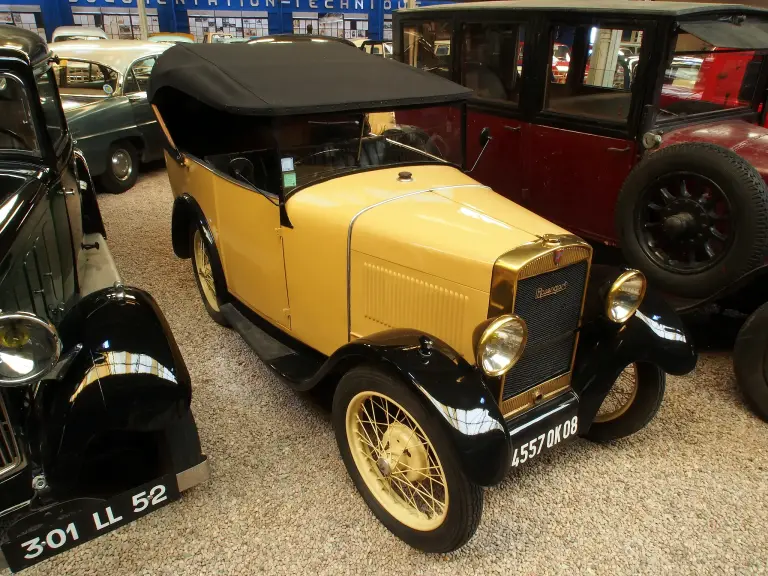
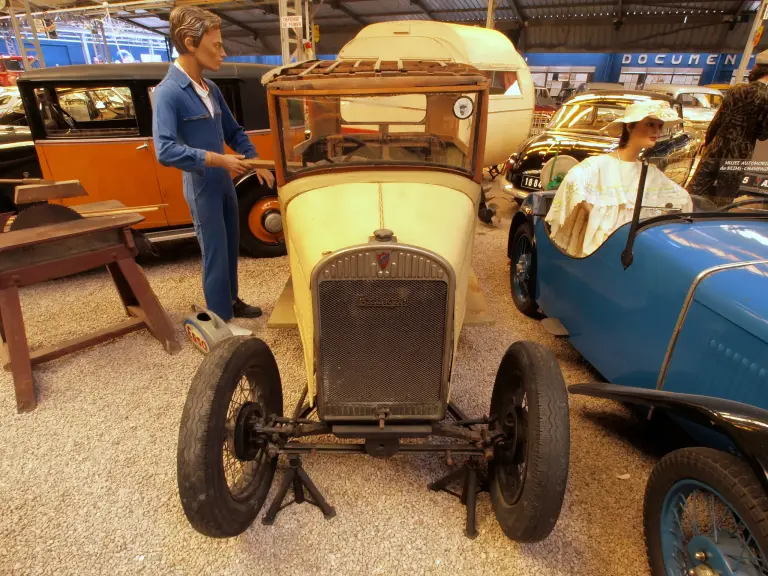
The Ariette used the engine of the Rosengart LR2 and LR4, and it followed the failed Supertraction upmarket attempt. More cars are in the Rosengart collection.
Sources
- Automobiles L. Rosengart, English Wikipedia: launch, styling, engine, prices, break, Artisane, closure
- Rosengart, French Wikipedia: body variants and production dates