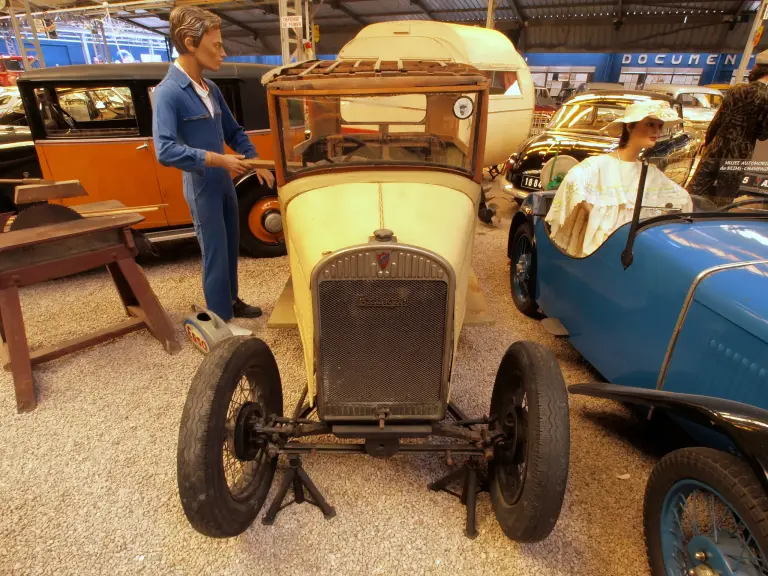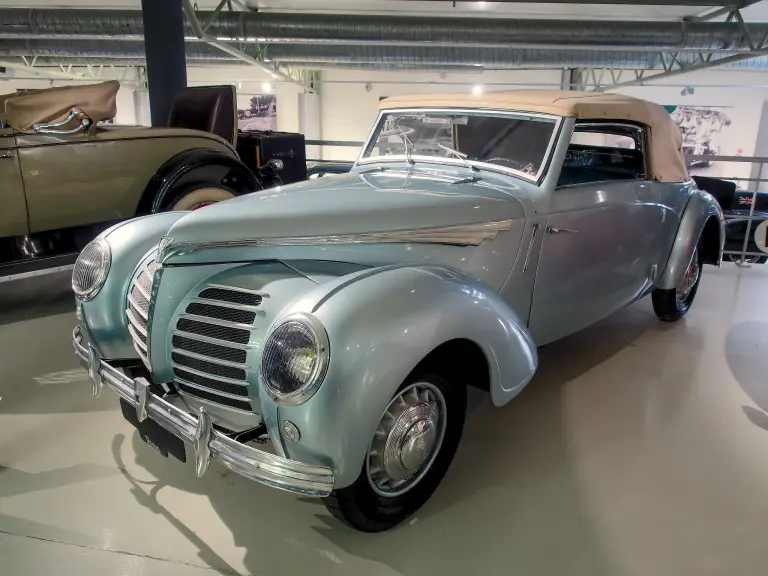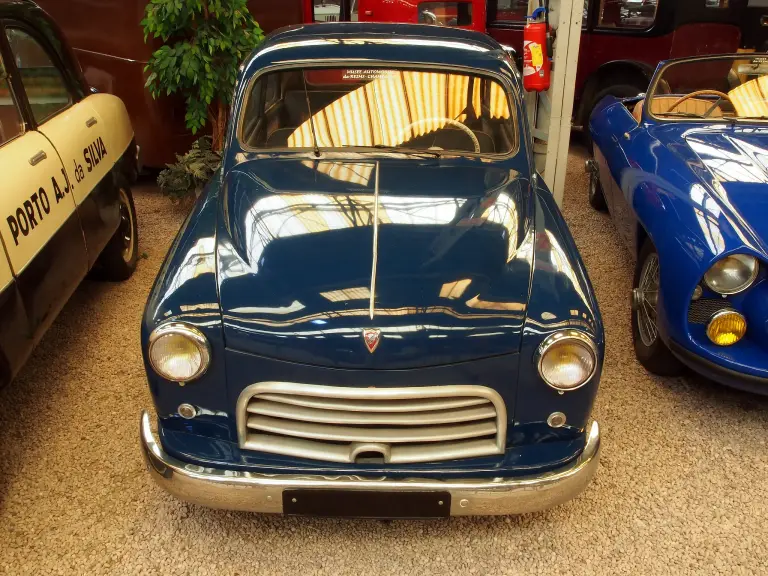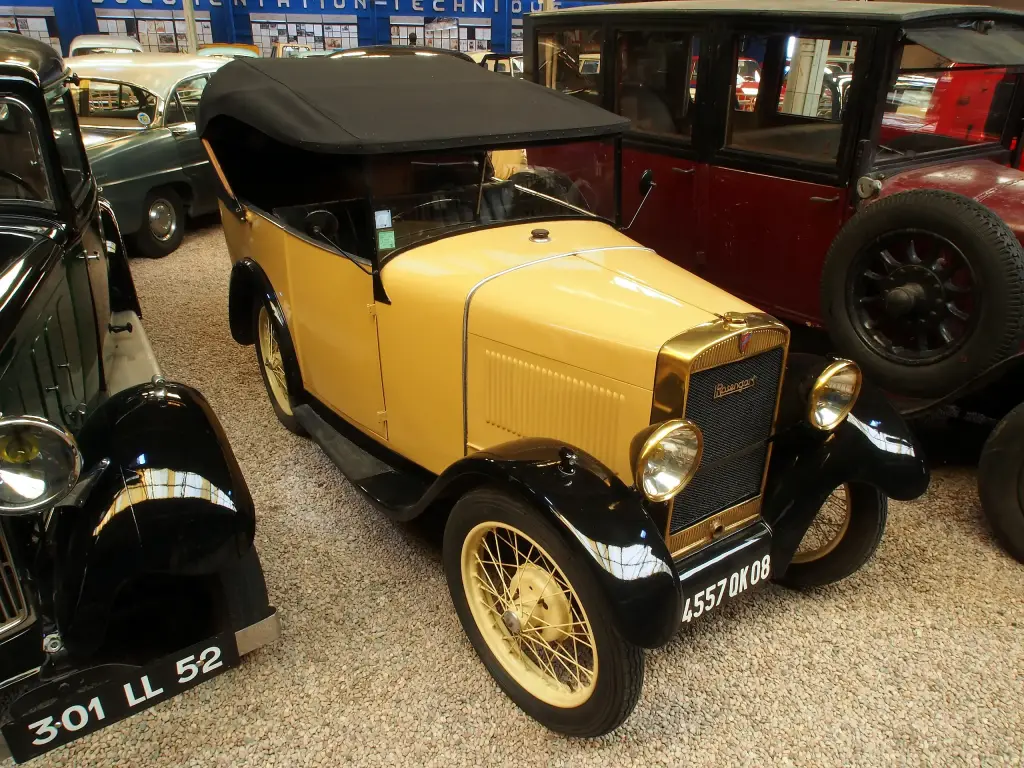
The Rosengart LR2 was the first car of the French manufacturer Automobiles L. Rosengart. It was an Austin 7 built under licence, presented at the end of 1928 and sold as a small, cheap voiturette — and it became a marketing success on the strength of its reliability.
Rosengart LR2 at a glance
| Maker | Automobiles L. Rosengart, Paris |
|---|---|
| Production | 1928–1939, in several variants |
| Based on | Austin 7, built under licence |
| Factory | former Bellanger works, Boulevard de Dixmude, 17th arrondissement |
| Engine | 747 cc four-cylinder |
| Gearbox | three-speed |
| Wheelbase | 2.20 m (short chassis of the small Rosengart family) |
| Endurance run | 100,000 km at 900 km a day |
| Competition record | class win in 80 of 81 sporting trials |
| Team | Lucien Rosengart with the engineer Jules Salomon |
History of the Rosengart LR2
The licence and the factory
Lucien Rosengart (1881–1976) was an engineer and businessman who had built a successful engineering business by the age of 24. In the mid-1920s he saw room in France for a very small car that the major makers were not offering. In 1923 he bought a licence to build the English Austin 7 and, with the support of the engineer Jules Salomon, bought the old Bellanger factory in the 17th arrondissement of Paris.
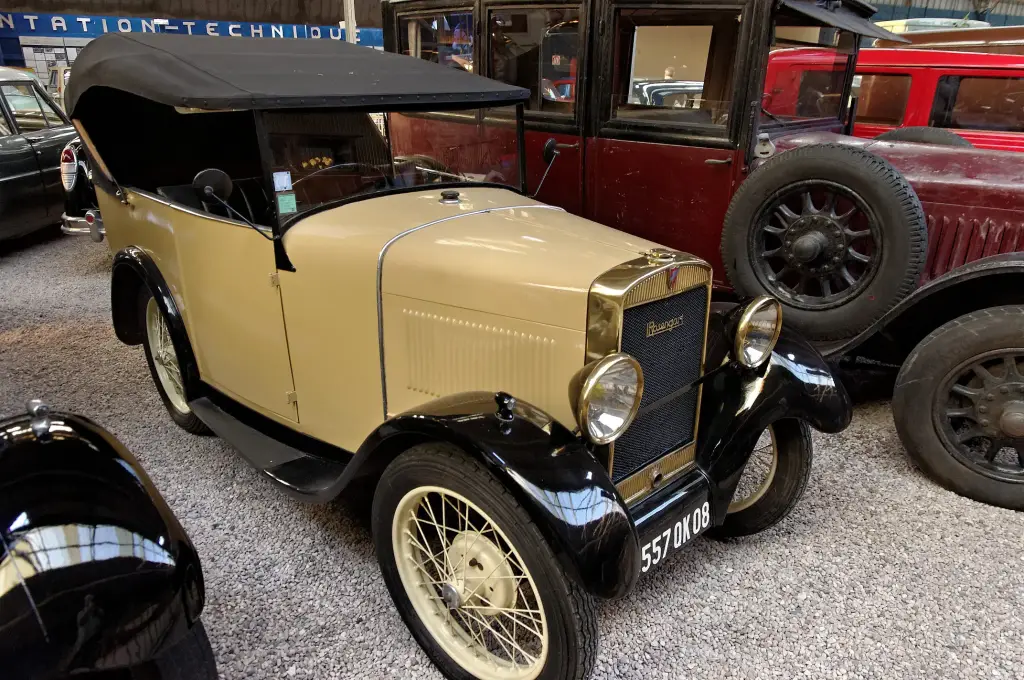
At the plant on the Boulevard de Dixmude production of the LR2 began in 1927 and the car reached the market in 1928 — at the same time as the Austin 7 built under licence that preceded the first BMW appeared in Germany. French Wikipedia calls the LR2 a voiturette and notes that, thanks to clever promotion, it was as successful as its English sister had been some years earlier.
Reliability as advertising
The LR2 was promoted for its reliability. A production car driven by François Lecot covered 900 km a day for more than three and a half months until it had covered 100,000 km without any major mishap, and in the same period an LR2 took a class win in 80 of the 81 sporting trials in which it competed. That record did as much for sales as any catalogue figure.
Numerous variants of the LR2 were produced, and the car remained in production at least until 1939. From 1931 the design appeared in modified form as the LR4, by then heavily differentiated from its Austin origins, although it kept the same 747 cc engine, the same three-speed gearbox and the short 2.20 m wheelbase that the family would retain into the 1950s.
Design and features
- Austin 7 under licence: the LR2 was a direct licence-built copy of the English car, as the Dixi was in Germany.
- Voiturette size: a very small, cheap car aimed at a part of the French market the big makers left alone.
- Endurance record: 100,000 km at 900 km a day without major mishap, used as the car’s main advertising argument.
- Competition record: 80 class wins in 81 sporting trials in the same period.
- Long production life: variants were still being built in 1939, eleven years after the launch.
Rosengart LR2 versions
- LR2 (1928–1931): the original licence-built Austin 7 copy, offered in numerous body styles.
- Open and closed variants: the English and French sources both stress that many versions were made, from torpedo to coupé.
- LR4 (from 1931): the modified successor, mechanically related but redesigned away from the Austin pattern.
The LR2 was developed into the Rosengart LR4 in 1931, and the marque later moved upmarket with the Supertraction. More cars are in the Rosengart collection.
Video: Rosengart LR2 bordino 1930
Video on YouTube.
Sources
- Automobiles L. Rosengart, English Wikipedia: licence, factory, endurance and competition records
- Rosengart, French Wikipedia: launch date, voiturette class, place in the range