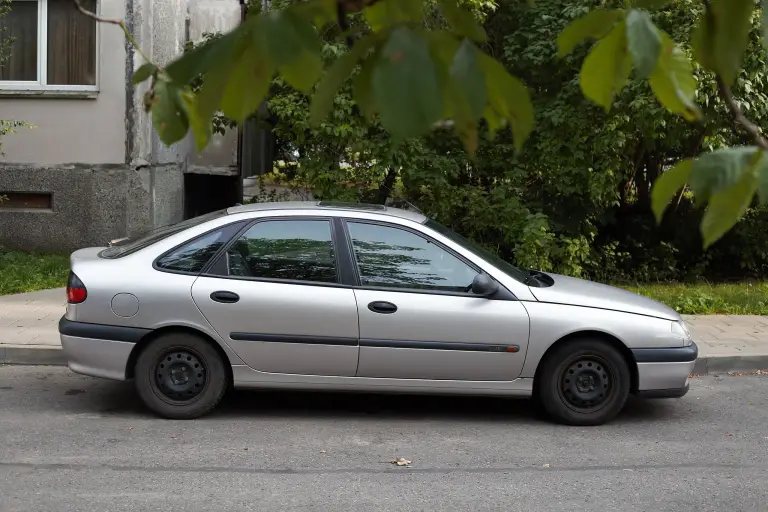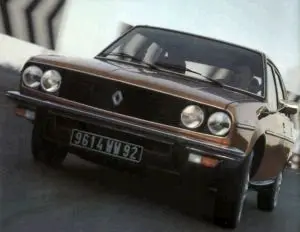
The Renault 20 and Renault 30 are two executive cars produced between 1975 and 1983 and built at Sandouville near Le Havre. The 30 was the larger-engined and more expensive of the two, and was the first Renault with more than four cylinders since the pre-war Vivastella.
Renault 20/30 at a glance
| Maker | Renault, Sandouville, France |
|---|---|
| Production | 1975–1983 |
| Body | five-door hatchback |
| R30 launch | Geneva Motor Show, March 1975 |
| R20 launch | Paris Salon, November 1975 |
| R30 engine | 2,664 cc PRV V6, 130 PS, 185 km/h |
| R20 engine | 1,647 cc four from the Renault 16 TX, 90 PS |
| Headlights | 20 with two rectangular, 30 with four round |
| Built | over 622,000 Renault 20 and 145,000 Renault 30 |
| Award | Renault 20, What Car? Car of the Year 1978 |
Based on one source, the English Wikipedia article on the Renault 20/30.
History of the Renault 20/30
The flagship
The Renault 30 TS was launched in March 1975 at the Geneva Motor Show as Renault’s flagship, and was the first Renault with an engine of more than four cylinders since the pre-war Vivastella. It was one of the first three cars, with the Peugeot 604 and Volvo 264, to use the new 2,664 cc PRV V6 developed jointly by Peugeot, Renault and Volvo; with 130 PS it gave the R30 a top speed of 185 km/h. The hatchback body was derived from the successful Renault 16.
The cheaper 20
The Renault 20 was presented at the Paris Salon in November 1975, exactly eight months after the 30 TS, with the same hatchback body but two rectangular headlights instead of the 30’s four round ones. It was effectively the successor to the Renault 16 in a larger shell, with the 1,647 cc four-cylinder engine of the Renault 16 TX rated at 90 PS. It also had drum rear brakes, 13-inch wheels and a smaller 60-litre fuel tank, and came in L, TL and GTL trim. In November 1979 the 20 received an all-new 2,068 cc diesel engine, Renault’s first diesel car. Both cars had front and rear crumple zones and side impact protection, and for the first two model years unusual downwards-folding door handles, replaced by conventional units in August 1976.
In the market
The two were effectively badge-engineered versions of one car with separate numbers, and the 20 won the 1978 What Car? Car of the Year award. Over 622,000 Renault 20s and 145,000 Renault 30s were built. The 30 gained a reputation for heavy depreciation: Motorists Guide quoted a new 30 TX Automatic at £11,950 in May 1984, while by June 1986 a good example was worth about £3,450 in the trade.
Design and features
- PRV V6: the joint Peugeot-Renault-Volvo engine, first used in the 30 TS.
- Renault 16 hatchback shape: a practical five-door body in the executive class.
- Renault’s first diesel: the 2,068 cc unit fitted to the 20 from November 1979.
- Safety features: crumple zones front and rear and side impact protection.
Renault 20/30 versions
- 30 TS (1975): the V6 flagship with four round headlights.
- 20 L, TL and GTL (1975): four-cylinder versions with rectangular headlights.
- 20 diesel (1979): Renault’s first diesel passenger car.
- 30 TX Automatic: the best-equipped V6, with a reputation for fast depreciation.
The 20/30 replaced the Renault 16 and were replaced by the Renault 25. The 30 TX gearbox later went into the Renault 5 Turbo; more cars are in the Renault collection.
Video: Renault R30 road test
Video by Motorvision Deutschland on YouTube.
Sources
- Renault 20/30, English Wikipedia: launch, engines, equipment, production