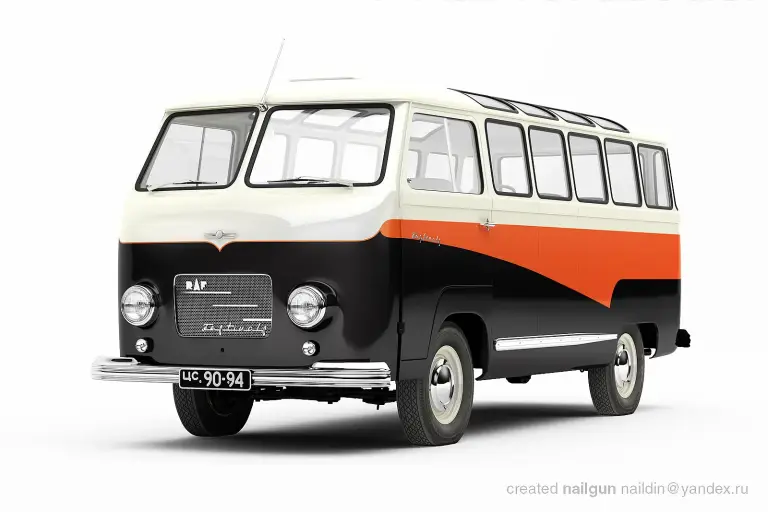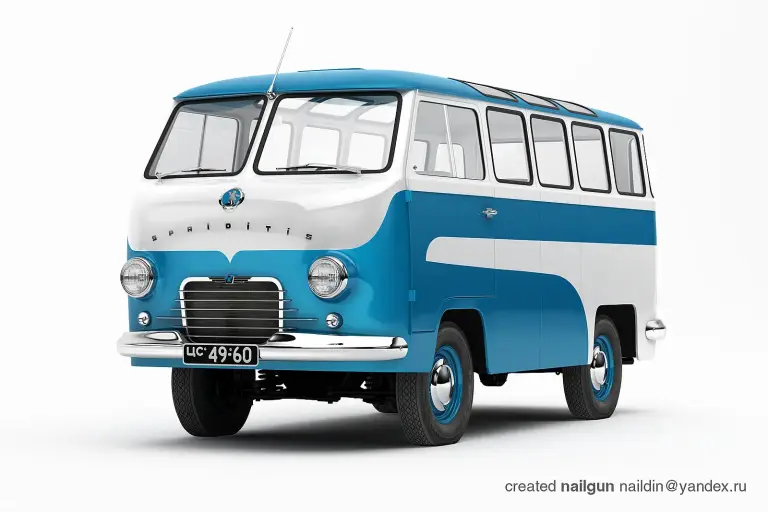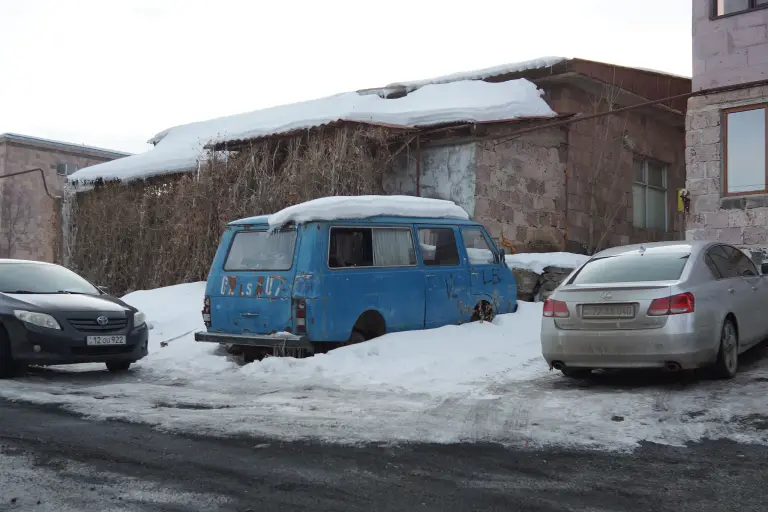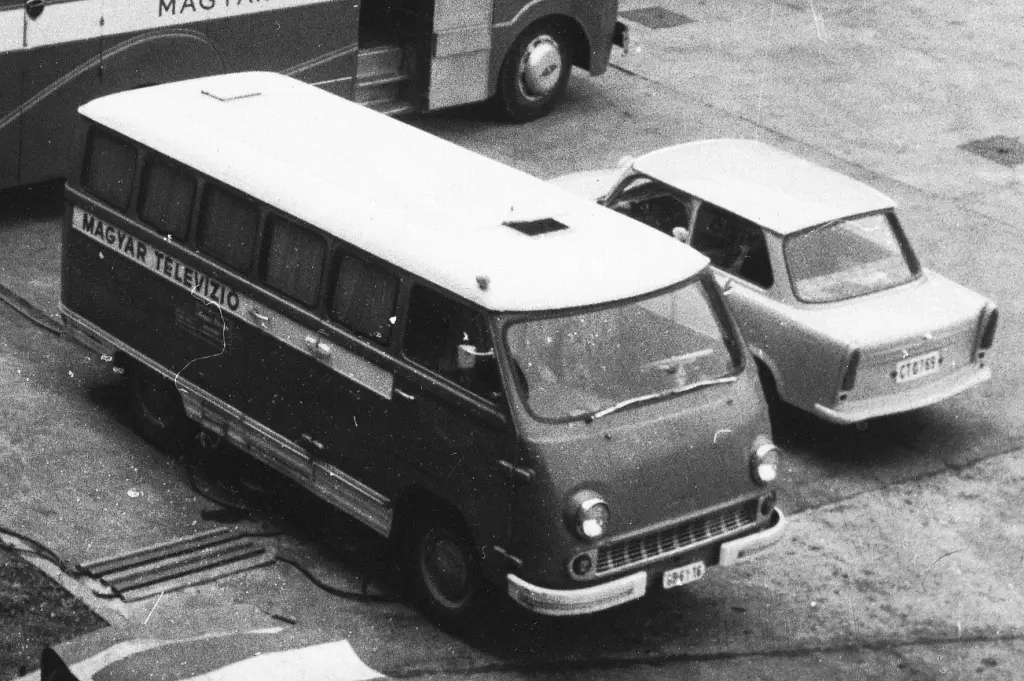
The RAF-977 Latvija was the minibus that made the Riga Automobile Factory known across the Soviet Union. Built from 1958 to 1976 on GAZ-21 Volga components, it served as a route taxi, ambulance, tourist bus and mobile laboratory, and it was replaced only by the RAF-2203.
RAF-977 at a glance
| Maker | Riga Automobile Factory (RAF), Riga |
|---|---|
| Production | 1958–1976, series from 1959 |
| Based on | GAZ-21 Volga units |
| Body | all-metal, load-bearing, cabover wagon |
| Seats | 10 including the driver |
| Doors | four: two right, one left, one rear |
| Kerb weight | 1,675 kg |
| Top speed | 100 km/h |
| Fuel tank | 55 litres |
| Consumption | about 12 litres per 100 km at 40 km/h |
| Successor | RAF-2203 Latvija |
The English article says the 977 was never promoted for export, while the Latvian and Russian articles record state supplies to several countries from the late 1960s; the two statements are reconciled here as sales to state organisations rather than private buyers.
History of the RAF-977
The RAF-977 grew out of the RAF-10 Festival. In 1957 the factory built the RAF-10 prototype on GAZ-M20 Pobeda units; in 1958 an improved Festival with GAZ-21 units and a better body was shown in Moscow, won support, and the factory was given money to produce it. Before series production began the design was refined again and the van was renamed RAF-977 Latvija. The first ten were built in December 1958, and full series production began in 1959.
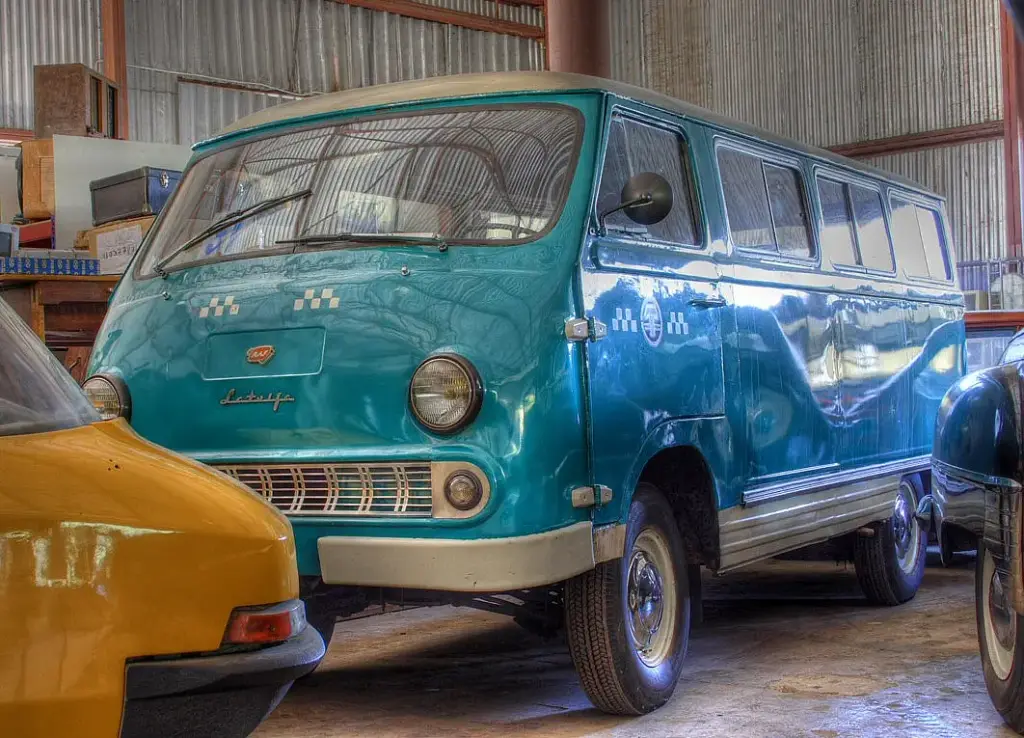
The 977 used the GAZ-21 engine and running gear, with an all-metal load-bearing body, independent double-wishbone front suspension with coil springs and a leaf-sprung rear axle. It seated ten including the driver and had four doors: two on the right, one on the left and one at the back. Maximum speed was 100 km/h, the fuel tank held 55 litres and consumption was about 12 litres per 100 km at 40 km/h. The first cars were replaced in 1960 by the modernised RAF-977B. In 1961 came the RAF-977D, with a completely new and more production-friendly body, a one-piece windscreen instead of the split one, a Volga steering wheel, and the engine moved slightly rearward to ease the load on the front axle.
The range soon spread beyond the passenger van. The 977I, later 977IM, was an ambulance; the 977E, later 977EM, was a tourist bus for Intourist with better seats, roof lights and a sunroof. The RAF-983 was a fire service vehicle, and the shortened RAF-978, powered by the Moskvitch-407’s 45 hp 1,360 cc engine, was not a success because the engine lacked torque and the short wheelbase spoiled the ride. The 977K one-ton cargo van could not be built in Riga in quantity, since the plant’s capacity was only about 3,000 vehicles a year; production moved to Yerevan, where it began on 1 May 1966 as the ErAZ-762, nicknamed Yeraz. The van was also assembled in small numbers at the Lugansk repair works as the LARZ-977.
In 1969 the base model was modernised into the RAF-977DM, with a wider passenger door and fewer but longer side windows: three on the driver’s side and two on the passenger side instead of five and three. The ambulance became the 977IM and the tourist version the 977EM, both with the same window arrangement. The vans were not sold to private buyers; from the late 1960s examples were supplied to state organisations in Bulgaria, Hungary, Cuba, Iran, Nigeria, Finland and elsewhere. Production ended in 1975–1976, when the RAF-2203 Latvija took over; by the early 1980s most 977s had gone from Soviet roads, and today the model is rare.
Design and features
- Volga mechanicals: the GAZ-21 engine and gearbox, with independent front suspension and a live rear axle.
- Ten seats: driver plus nine passengers in a compact all-metal body.
- Four doors: two on the right for passengers, one on the left for the driver and one at the rear for luggage.
- Long model life: updated repeatedly between 1958 and 1976 without a full redesign until the RAF-2203.
RAF-977 versions
- RAF-977 Latvija (1958–1960): the first series version with a split windscreen.
- RAF-977B (1960): the first modernisation of the base van.
- RAF-977D (1961): new body, one-piece windscreen, Volga steering wheel, engine moved rearward.
- RAF-977I / 977IM: ambulance versions.
- RAF-977E / 977EM: Intourist tourist buses with better seats, roof lights and a sunroof.
- RAF-977DM (1969): wider passenger door and fewer, longer side windows; built to the end.
The 977 was developed from the RAF-10 Festival and was replaced by the RAF-2203 Latvija. The eight-seat RAF-8 Sprīdītis was its smaller predecessor. More Riga-built vehicles are in the RAF collection.
Sources
- RAF-977, English Wikipedia: models, variants, ErAZ and LARZ production
- RAF-977, Latvian Wikipedia: development, dimensions, performance
- РАФ-977, Russian Wikipedia: history, ambulance and tourist versions, exports