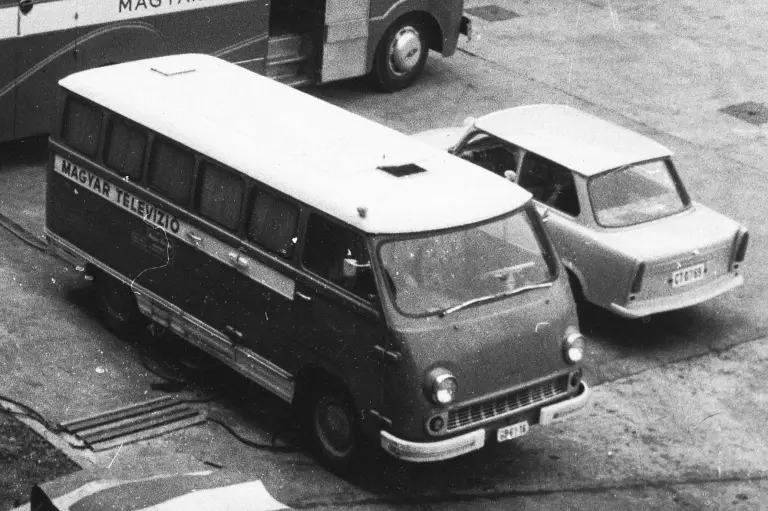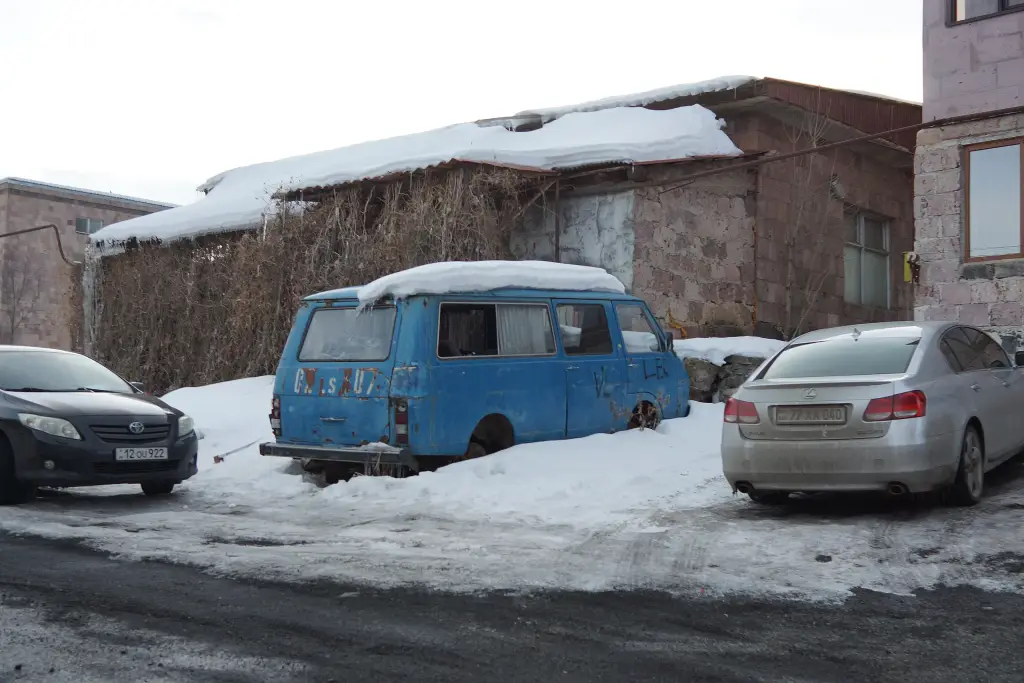
The RAF-2203 Latvija, nicknamed Rafik, was the most common Soviet minibus of the 1970s and 1980s. Built at the new RAF plant in Jelgava from 1976, it served as a route taxi, ambulance, police van and delivery vehicle, and it stayed in production until the factory’s bankruptcy.
RAF-2203 at a glance
| Maker | Riga Automobile Factory (RAF), Jelgava |
|---|---|
| Production | 1976–1997 |
| Predecessor | RAF-977 |
| Engine | ZMZ 2,445 cc four-cylinder petrol, 95 hp |
| Torque | 190 Nm at 2,400 rpm |
| Gearbox | four-speed manual |
| Layout | front engine between the seats, rear-wheel drive |
| Length | 4,980 mm |
| Width | 2,035 mm |
| Wheelbase | 2,630 mm |
| Kerb weight | 1,670 kg |
| Seats | 11 plus the driver |
History of the RAF-2203
Work on a replacement for the RAF-977 began in 1965. At first the body was to be made of glass-reinforced plastic, but the Soviet programme for non-metal materials was wound up a year later and the factory returned to steel. Two independent design teams then competed, one led by A. Miezis and the other by A. Bergs. Both vans had to be twelve-seat and to use GAZ-21 Volga units. Miezis’s RAF-982-I, nicknamed Ciklons, met the brief but looked conservative and was too heavy; Bergs’s RAF-982-II of 1968 had a futuristic wagon body drawn by the artist Arturs Eiserts, but only eleven seats and no better weight distribution. A Moscow commission first chose the 982-I; the factory director Ilya Pozdnyak preferred the 982-II, and after a second round in 1971 the commission approved it for production.
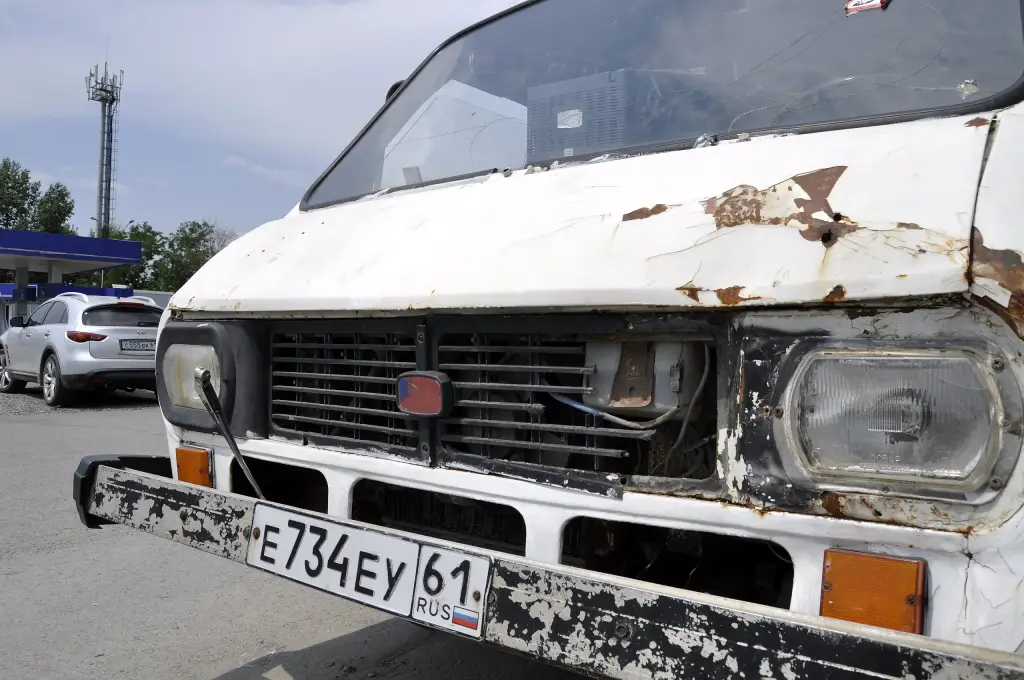
The Riga plant could not build enough vans for the whole country, so construction of a new factory began in Jelgava on 25 July 1969. It opened in February 1976, and the RAF-2203 Latvija came off its line, now with the units of the newer GAZ-24 Volga. The production van differed considerably from the prototype. It was a cabover design with the 2,445 cc engine between the front seats, independent front suspension from the GAZ-24 with springs from the GAZ-13, headlights and brakes from the Moskvitch-412, door handles from the Moskvitch-408 and 15-inch wheels from the GAZ-21. The single rear door was hinged at the top rather than at the side.
The plant planned 17,000 vans a year and regularly built more than 15,000; in 1987–1990 output even exceeded the plan. The main passenger model, the 2203, carried ten passengers plus the driver and a front passenger and had a 95 hp engine with 8.2:1 compression. The 22032 route taxi seated twelve on longitudinal benches and used a low-compression 85 hp engine for 76-octane petrol; a propane version, the 2203-02, followed. The ambulance 22031 made up about a third of all 2203s built, and there were vans for blood-donor clinics (22035), fire brigades (22034) and the militia (22033 and 22036), as well as prototype electric vehicles. In 1987 the modernised 22038 appeared with GAZ-24-10 units, a new grille and aluminium bumpers with plastic side sections; in 1993 the 22039 raised capacity to thirteen passengers.
The van was popular but crude. It rusted readily, especially in the frame rails, was unpleasant in bad weather, and suffered from indifferent assembly quality, oil leaks, axle bearing failures, overheating, vibration, front suspension failures and high fuel consumption; access to the cab was difficult despite the forward-control layout. After the collapse of the Soviet Union sales fell sharply. A plan to sell the model to GAZ came to nothing, RAF went bankrupt in 1998 and production stopped. The idea of a van on Volga passenger-car units was taken up again by the GAZelle, which replaced the RAF-2203 across the former Soviet Union.
Design and features
- Cabover layout: the engine sat between the front seats, with the driver and a passenger ahead of it.
- Volga units: the 2,445 cc GAZ-24 engine, gearbox and rear axle, with independent front suspension.
- Shared parts: Moskvitch-412 lamps and brakes, Moskvitch-408 door handles, GAZ-21 wheels.
- Top-hinged rear door: a single rear door lifted upwards instead of swinging sideways.
- Many roles: passenger van, route taxi, ambulance, fire and militia vehicle, delivery van.
RAF-2203 versions
- RAF-2203 (1976): the main passenger van, ten passengers plus the driver and front passenger.
- RAF-22032: twelve-seat route taxi with longitudinal benches and a low-compression 85 hp engine; the 2203-02 ran on propane.
- RAF-22031: ambulance, about a third of all 2203s built; the 22035 served blood-donor clinics.
- RAF-22034 / 22033 / 22036: fire, militia and military-police versions.
- RAF-22038 (1987): modernised van with GAZ-24-10 units, new grille and aluminium bumpers.
- RAF-22039 (1993): thirteen-seat version with a reduced luggage compartment.
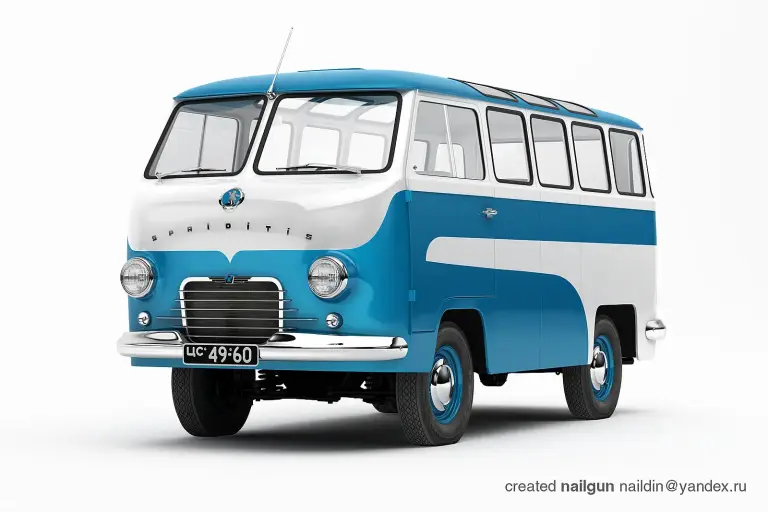
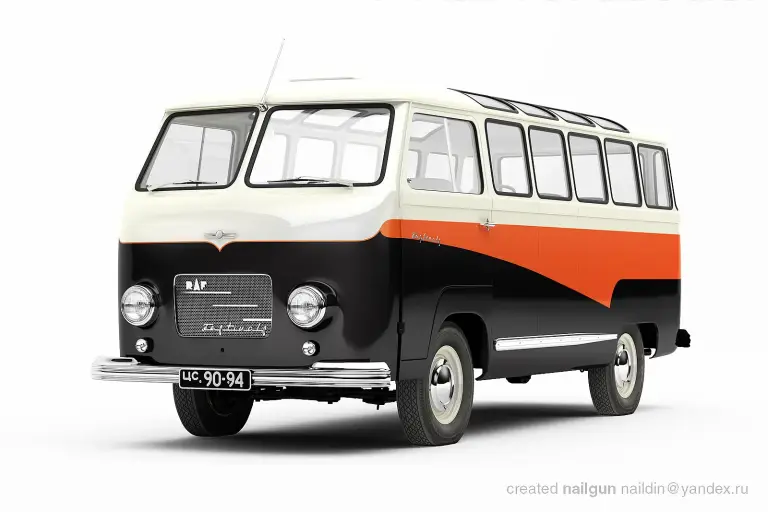
The 2203 replaced the RAF-977 Latvija and was the last series model of the factory, which had begun with the RAF-10 Festival and the RAF-8 Sprīdītis. More Riga-built vehicles are in the RAF collection.
Video: RAF-2203 Latvija
Video on YouTube.
Sources
- RAF-2203, English Wikipedia: engines, versions, faults, end of production
- RAF-2203, Latvian Wikipedia: development, production, dimensions, specifications
- РАФ-2203, Russian Wikipedia: prototypes, factory history, applications