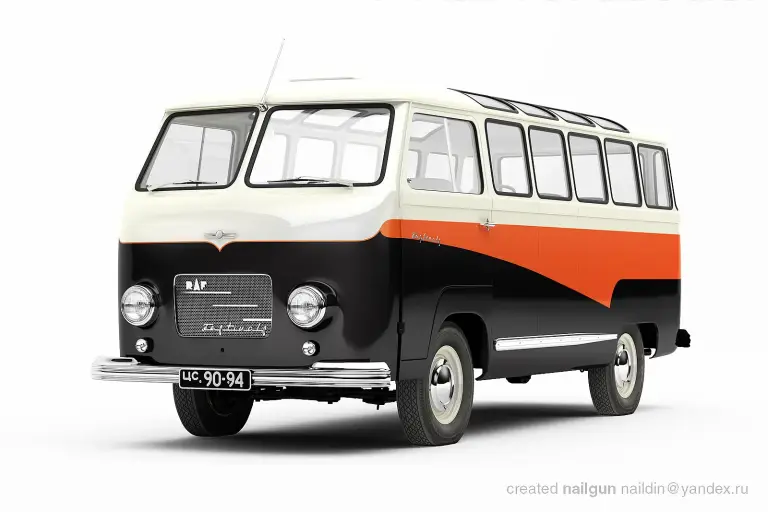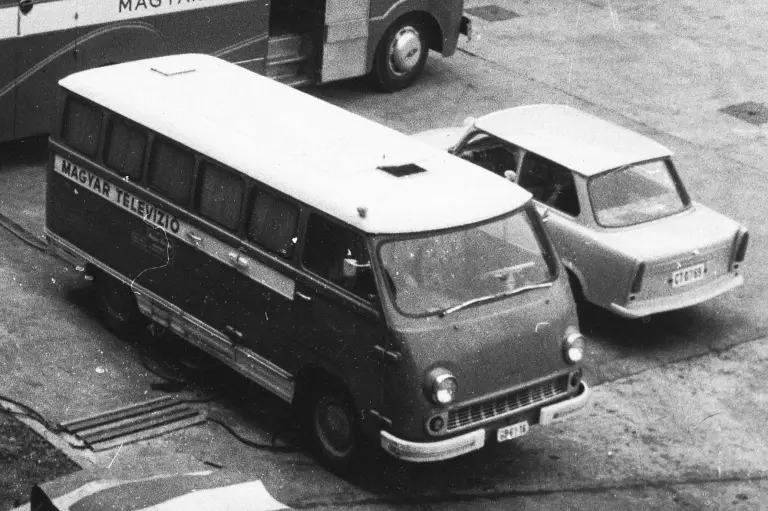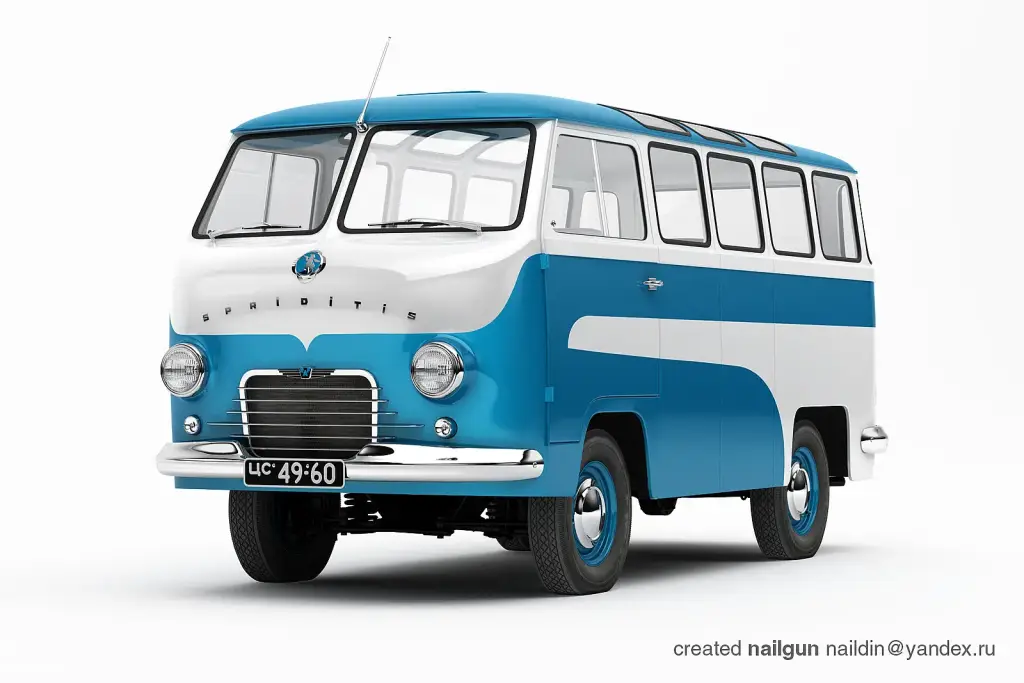
The RAF-8, nicknamed Sprīdītis after the small hero of Latvian fairy tales, was an eight-seat minibus developed at the Riga Automobile Factory in 1958–1960. It shared its body with the larger RAF-10 but used Moskvitch-407 units, and it was never built in large numbers.
RAF-8 at a glance
| Maker | Riga Automobile Factory (RAF), Riga |
|---|---|
| Developed | 1958–1960 |
| Based on | Moskvitch-407 units |
| Body | all-metal, load-bearing, wagon layout |
| Seats | 8 passengers |
| Seat layout | 1+2+3+2, rear row removable |
| Doors | four: driver’s, two passenger, luggage |
| Suspension | GAZ-21 Volga |
| Wheels, tyres, brakes | GAZ-21 Volga |
| Later version | RAF-978 with GAZ-21 units, small batch |
There is no English Wikipedia article on the RAF-8; this page is based on the Latvian and Russian articles. The photograph is a 3D reconstruction of the van, not an original press picture.
History of the RAF-8
The RAF-8 was developed in 1958, while the factory was still building the RAF-10. Its body closely resembled the RAF-10; in the Latvian sources the main difference in appearance is the extra length, gained by adding one section, together with a slightly altered front. The number eight in the index stood for eight passenger seats. The van was named Sprīdītis after the boy of Latvian folk tales who set out to seek his fortune, a character comparable to Tom Thumb.
Mechanically the RAF-8 relied on the Moskvitch-407: the engine, clutch, gearbox and other units came from the small Moscow car, while the suspension was taken from the GAZ-21 Volga. The wheels, tyres and braking system were also Volga items. The body was a fully metal, load-bearing wagon type with four doors: one for the driver, two for passengers and one for the luggage compartment. The eight seats were arranged with one beside the driver, two in the second row, three in the third and two in the fourth; the last row could be removed to make room for luggage.
As the project developed, the factory adopted the styling, body construction and the more reliable Volga suspension and steering of the RAF-977. Vans built with GAZ-21 units were given the designation RAF-978, and only a small industrial batch was made. The RAF-8 and the RAF-10 together led directly to the RAF-977, the model that made the Riga factory’s name.
Design and features
- Eight seats: the number in the model name refers to passenger places, not to a series number.
- Small-car mechanicals: engine, clutch and gearbox came from the Moskvitch-407.
- Volga running gear: suspension, wheels, tyres and brakes were borrowed from the GAZ-21.
- Removable rear bench: the last row could be taken out to free space for luggage.
RAF-8 versions
- RAF-8 prototypes (1958): the first examples, on Moskvitch-407 units.
- RAF-978: the version with GAZ-21 Volga units, built in a small industrial batch.
- RAF-977: the model that grew out of the RAF-8 and RAF-10 programme and entered series production.
The RAF-8 was a smaller stablemate of the RAF-10 Festival, and both led to the RAF-977 Latvija. More Riga-built vehicles are in the RAF collection.
Sources
- RAF-8, Latvian Wikipedia: seats, body, layout, mechanicals
- РАФ-8, Russian Wikipedia: development, name, RAF-978