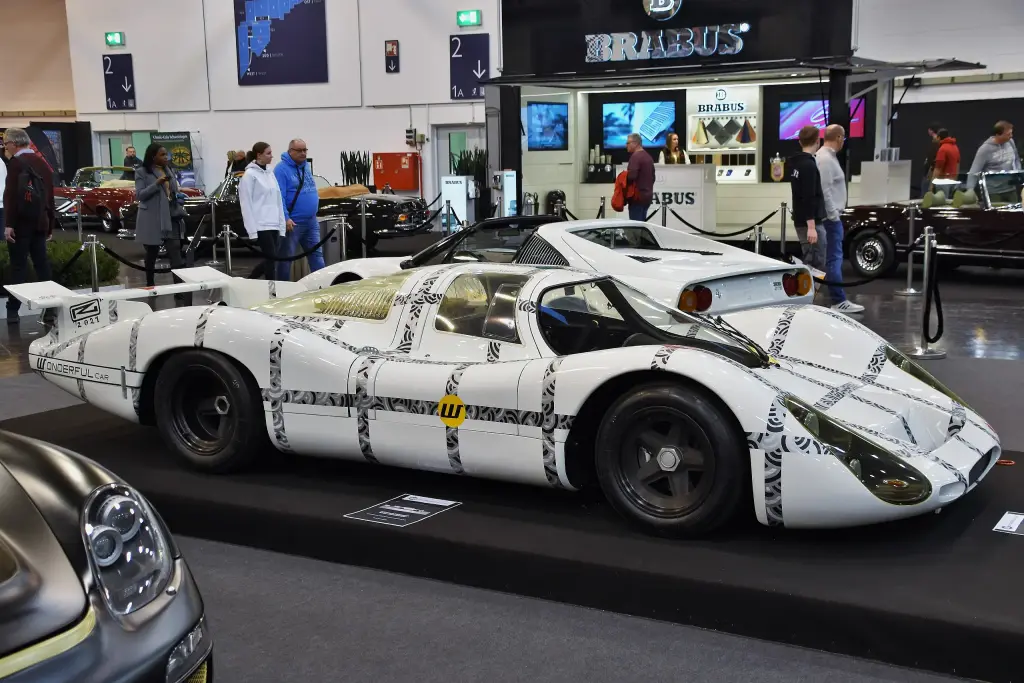
The Porsche 908 is a racing car introduced for the 1968 World Sportscar Championship as a three-litre flat-eight prototype coupé. It was raced by the factory through 1971 in open spyder forms and helped win the world championships of those years alongside the 917, and some chassis were still racing in the early 1980s.
Porsche 908 at a glance
| Maker | Porsche, Stuttgart |
|---|---|
| Introduced | 1968, at the 1000 km of Monza |
| Chassis designer | Helmuth Bott |
| Engine designer | Hans Mezger |
| Project leader | Ferdinand Piéch |
| Engine | 3.0-litre air-cooled flat-eight, Type 908 |
| Power | 350 PS at 8,400 rpm, later 370 PS |
| Valves | two per cylinder |
| Body | fibreglass, closed Langheck coupé then open spyders |
| Forms | 908 Langheck, 908/02 spyder, 908/03 |
| Career | factory racing 1968–1971, privateers into the early 1980s |
History of the Porsche 908
After the big-engined cars reached very high speeds at Le Mans in 1967, the FIA limited Group 6 prototype-sports cars to 3,000 cc, as Formula One had been since 1966. The 908 was designed by Helmuth Bott for the chassis and Hans Mezger for the engine under racing chief Ferdinand Piéch, as the first Porsche sports prototype meant to have the maximum permitted engine size. It continued the line of “plastic Porsches” with fibreglass bodies that had begun with the 904 in 1964 and gone on through the 906 and 907.
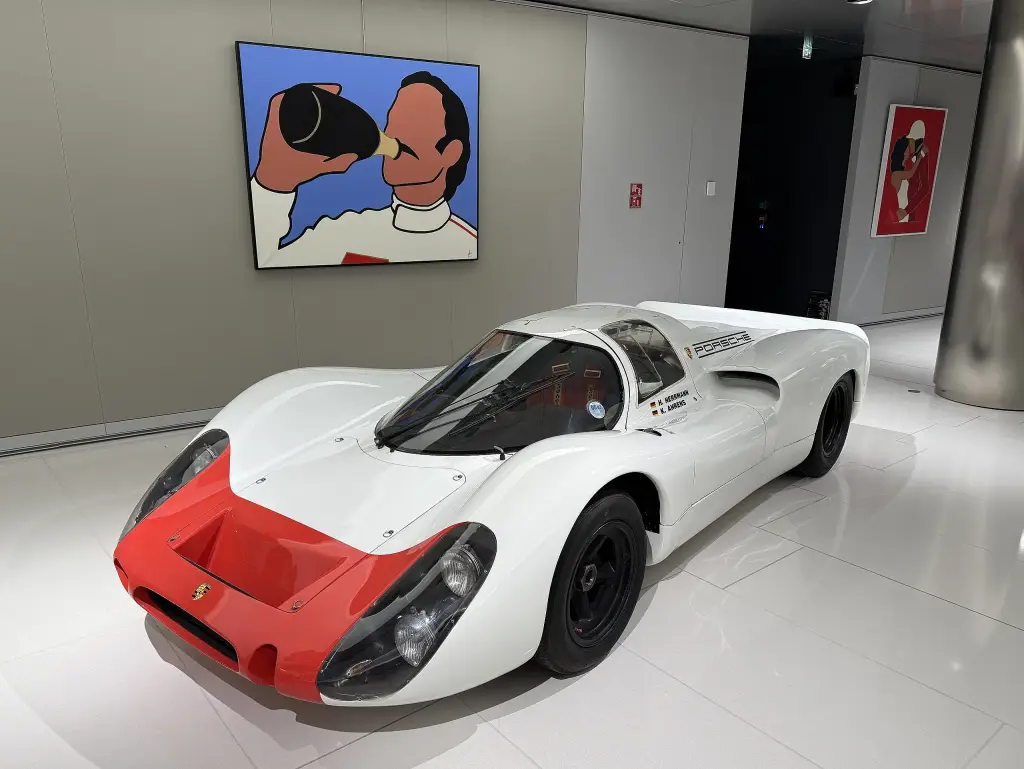
The previous 907 had only the 2,200 cc Type 771/1 flat-eight, derived from the 1962 1.5-litre Formula One car and good for 270 PS. The new three-litre Type 908 flat-eight produced 350 PS at 8,400 rpm, later 370. Because Porsche still had ties with Volkswagen the engine stayed air-cooled with two valves per cylinder, so it made less power than the water-cooled four-valve Formula One designs of over 400 hp, but those were not suited to six- and 24-hour racing until the 1970s.
The first 908, sometimes called the 908 Langheck or 908LH, was a closed coupé for low drag at fast tracks. It was not ready for the first three rounds of 1968, and Porsche won the North American rounds with the 2.2-litre 907 instead; the 908 appeared at the 1000 km of Monza, where two cars finished 11th and 19th with teething problems, and took its first win at the 1000 km of Nürburgring. At Le Mans in 1968 an old Gulf-Wyer Ford GT40 still won, because more than 50 had been built to GT rules and it was allowed to score championship points with a five-litre engine.
When the FIA lowered the minimum number to 25 for 1969, Porsche answered by building 25 cars of a new type, the 917, whose 4.5-litre flat-twelve was essentially the 908 flat-eight with four more cylinders. The 908 itself was then raced mainly as the 908/02, a lighter open spyder, which won many races and finally the world championship, though an old Wyer Ford won Le Mans again. A more compact 908/03 arrived in 1970 to complement the heavy 917K on twisty tracks such as the Targa Florio and the Nürburgring: in four races across two seasons the same chassis, 008, won three of them, missing only the 1971 Targa.
With a higher minimum weight for 1972 the nimble but underpowered 908/03 was retired by the factory and the cars were sold to privateers. Some came back in 1975 with 2.1-litre turbocharged flat-six engines based on the 934, and the 908 model number was still racing with some success in the early 1980s in Porsche 936 bodywork, a career that stretched across three decades.
Design and features
- Three-litre flat-eight: 350 PS, later 370 PS, air-cooled with two valves per cylinder.
- Langheck coupé: a closed low-drag body for fast circuits.
- 908/02 spyder: lighter and open, the car that won the championship.
- 908/03: compact spyder for twisty tracks, winner of three of four races in 1970–1971.
Porsche 908 versions
- 908 Langheck (1968): the original closed coupé.
- 908/02 (1969): open spyder, lighter and easier on its tyres.
- 908/03 (1970–1971): short, compact hill-and-twisty-track car.
- Turbo privateer cars: 2.1-litre flat-six turbo conversions from 1975.
- 936-bodied cars: 908 chassis still racing in the early 1980s.
The 908 followed the Porsche 907 and shared its engine design with the Porsche 917. More cars are in the Porsche collection.
Sources
- Porsche 908, English Wikipedia: rules, engine, seasons, variants